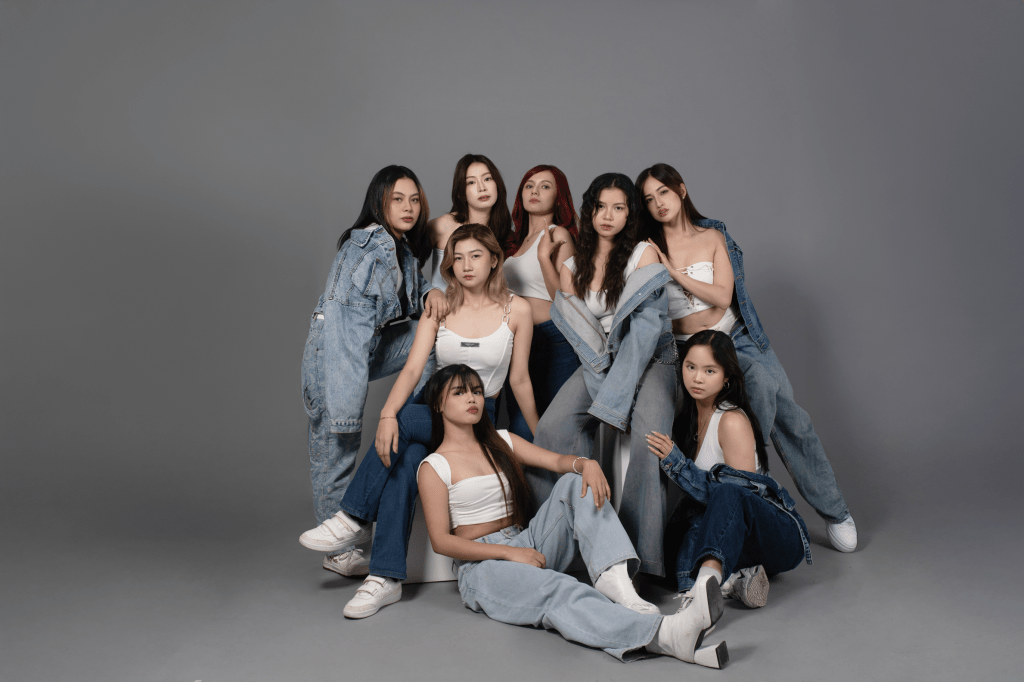
Doc Studios‘ DS 001 project has been generating significant buzz in the P-pop scene. This interview follows the journey of AIZEL, ZANI, JEZZIE, Tin, ATARI, Gael NYRAH, and RANE as they prepare for their debut, revealing the hard work, dedication, and camaraderie that define their path to success.
DS001 is described as a “pioneering P-pop artist trainee project.” What makes it pioneering compared to other similar projects in the Philippines?
[DOC Studios] DS001 is described as a pioneering P-pop artist trainee project because it is the first of its kind under DOC Studios. While it may not be the first P-pop trainee project in the Philippines overall, it is a groundbreaking initiative for our organization. It represents a bold and experimental step in developing future P-pop artists through a structured training program that includes dance, vocals, performance, and media exposure. This makes DS001 a trailblazer within our vision for contributing to the local P-pop scene.
How does DS001 encourage personal growth and artistic experimentation among its trainees, aligning their development with individual strengths and interests? Can you give a specific example?
[DOC Studios] At DOC Studios, we’ve always prioritized both personal growth and artistic exploration. We encourage our members, including those in DS001 to pursue opportunities not only within the team but also beyond it. This allows them to explore various paths, expand their networks, gain new skills, and discover passions that enhance their individual talents.
Since DS001 is our first official P-pop artist trainee project, we’ve brought this same philosophy into the program with an added focus on teamwork. Trainees are given the freedom to explore their unique styles and interests while also learning to collaborate and grow as a cohesive unit.
For example, we encourage members to propose individual creative projects, such as dance pieces, vocal covers, or experimenting with different genres. If one member prefers hip-hop while another leans towards a more feminine or contemporary style, the group tries them all together. This not only celebrates diversity in artistry but also builds a well-rounded skill set across the team.
What is the selection process for potential DS001 trainees? What qualities or skills are you looking for in candidates?
[DOC Studios] The selection process for DS001 trainees involves several stages and considerations. Since this project aims to develop future P-pop artists, we look for individuals who already have a basic background in both dancing and singing. However, we don’t limit opportunities based solely on skill level, we also value potential, passion, and a willingness to grow.
For the first batch of DS001, the trainees were selected from existing members of DOC Studios who had already undergone internal training and had adapted to our team’s environment. While they were already part of the organization, they still went through a separate screening process, as DS001 is a distinct and more intensive project compared to our usual activities.
For future candidates, open auditions will be announced by the management. We’ll be looking for talented individuals who show not only technical skills, but also creativity, discipline, strong work ethic, and the ability to collaborate in a team setting.
Can you describe the typical day-to-day life of a DS001 trainee? What does their schedule look like?
[ZANI] As the current leader of DS001 and a working professional, I take part in managing our team’s schedule to ensure it aligns with everyone’s availability, balancing work, school, and training. We usually train in the evenings on weekdays, which allows us to stay committed to our development without compromising our personal responsibilities. Weekends are more intensive, often reserved for full-day rehearsals, performance preparation, and events. This system keeps us consistent in our growth as artists while still being present in our individual lives.
[GAEL] By day, I’m focused on work and making time for my family, who are my biggest source of strength through life’s challenges, including the demands of being a trainee. Recently, I’ve picked up cooking as a hobby, exploring new dishes whenever I can. Our training sessions in the evening help me transition from my workday to pursuing my dreams. While it can be tiring, the energy and support from DS001 always help me push through with a lighter heart.
[RANE] Working the night shift has taught me to manage my time with intention. I prioritize rest whenever I can so I can show up at training ready to focus. Though I may occasionally arrive a little late due to my schedule, I make it a point to make every minute of practice count, constantly reviewing our routines and making sure I stay on track with the group.
[NYRAH] My weekdays revolve around work, and once that’s done, I head straight to practice. When I arrive a bit late, I make sure to stay focused and work extra hard to keep up with the team. Weekends give me more time to train, which I use to improve and polish areas I need to work on.
[ATARI] As a first-year Nursing student currently in my mid-year semester, I spend most of my day in classes and clinical work. After school, I shift gears and head straight to training, embracing my performer side. I’ve learned to keep a clear boundary between my responsibilities as a student and my passion for performing. Evenings are for training, and late nights are for studying, preparing myself for both my academic and performance goals.
[JEZZIE] As a DS001 trainee, our day-to-day life is definitely busy. Some of us are balancing school, while others are working, so it really takes extra effort to manage our schedules. But what’s great is that we support each other. If someone needs to adjust, we try to make it work even if it means shifting things just a little. We really try to meet halfway as much as possible.
How does DS001 ensure that trainees are prepared for the demands of the competitive entertainment world?
DS001, along with DOC Studios and its management team, works closely to ensure that trainees are fully prepared for the demands of the competitive entertainment industry, especially in the evolving P-pop scene in the Philippines.
Before debut, trainees undergo a series of structured training and projects designed to build their skills, confidence, and stage presence.
These preparations cover not only dance and vocal performance, but also media training, teamwork, and artist development. We understand that breaking into the industry can take time, sometimes years, so the timeline for debut depends on the team’s overall progress. More importantly, we make sure that each member is ready both mentally and physically for the pressure and fast-paced nature of the entertainment world. Our goal is to produce well-rounded, resilient artists who can adapt and thrive in any situation.
What’s the biggest challenge the trainees have faced during their training, and how did they overcome it?
[ZANI] One of the biggest challenges we’ve encountered in training is juggling our individual schedules. With each of us managing different commitments like work, school, or personal responsibilities, finding a common time to train can be tough. But over time, we’ve learned to be more organized, communicative, and flexible with one another. By constantly coordinating and adjusting, we’re able to move forward as a unified group despite the hurdles.
[RANE] For me, the challenge also lies in scheduling. There are days when my work overlaps with training, which makes it difficult to attend on time or at all. Still, I do my best to make it work by catching up and staying focused during practice.
[NYRAH] A personal challenge I face is learning choreography at a slower pace compared to others. It takes me longer to pick up steps, so I dedicate extra time outside of regular training to repeat and refine the routines. Even though it can be frustrating, I stay committed to improving so I can perform with confidence alongside my team.
[ATARI] Scheduling is definitely a shared struggle among us. Each member has different priorities and daily routines, so syncing everything can be difficult. Another challenge I personally deal with is commuting from one place to another, especially from school to training or events. Long travel hours and traffic take a toll, but I try to stay driven by focusing on my purpose and passion.
[GAEL] One challenge I constantly face is managing my energy throughout the day. After fulfilling my morning responsibilities, it can be tough to shift into training mode by evening. There are days when exhaustion hits hard, but I always remind myself of why I started, my love for performing and the bigger goal we share as DS001 trainees. That mindset keeps me going.
[JEZZIE] Right now, I think the biggest challenge is having limited time to train. We have deadlines for our goals, so most of our time is focused on training. I honestly wish we had more time to bond outside of that, not just during practice. But I understand that this is part of the process. We’re working hard now, and I believe we’ll get to that point where we can enjoy more bonding and the rest we deserve.
What’s one thing the trainees have learned about themselves through the DS001 program?
[ZANI] One of the most valuable lessons I’ve learned so far is balancing leadership with teamwork. Being in a group with diverse personalities and work styles taught me how to adjust, communicate better, and lead in a way that uplifts everyone without overshadowing anyone. It’s helped me grow not just as a leader, but as a member of the team.
[RANE] What I’ve learned is the importance of adapting to constant changes especially with our ever-shifting schedules and unexpected challenges. Learning to stay flexible and focused despite the uncertainty has made me stronger and more prepared for whatever comes next.
[NYRAH] Recently, I’ve been introduced to media training, which has been eye-opening for me. I’ve never been one to post much on social media, but through this experience, I’ve learned how to use it more effectively not just for updates, but as a tool to connect with future supporters and share our journey.
[ATARI] One meaningful lesson I’ve learned is how to both give and receive support. With everyone balancing school, work, and training, we all have moments when we fall short. I used to feel uncomfortable accepting help, but I’ve come to realize that leaning on each other is part of what makes our team strong. It’s not a sign of weakness, it’s how we grow together.
[GAEL] Something I truly value about DS001 is how humbling the journey has been. It made me realize that I still have so much to learn not just in terms of skills, but also in refining my character. Being surrounded by passionate individuals opened my eyes to new possibilities and areas of growth. I’ve always loved challenging myself, and this program gives me endless opportunities to do just that, which makes every step even more fulfilling.
[JEZZIE] Personally, I’ve learned that when you’re surrounded by the right people and your visions align, there’s really nothing you can’t do. Things may not always go perfectly, but everything feels possible, and you’re able to accomplish more than you ever expected.
How does the DS001 program help trainees develop their individual artistic voices and styles?
[DOC Studios] The DS001 program, under DOC Studios and our dedicated management team, offers a wide range of activities and projects designed to help each trainee discover and develop their unique artistic voice.One of the key ways we do this is by engaging in various performance-based projects such as dance and vocal covers from different artists with distinct styles.
Through these projects, we’re exposed to a broad spectrum of genres, concepts, and techniques. It allows us to experiment, adapt, and eventually recognize what style suits us individually, while also understanding how we fit within the group’s overall identity.
The program creates a space where we’re encouraged to explore, make creative choices, and continuously evolve not just as performers, but as artists with our own voice and story.
What’s the best thing about being part of the DS001?
[GAEL] What I love most about being in DS001 is the constant growth, not just as a performer, but as a person. I’ve learned so much about myself, about others, and about the community we’re part of. But one of my favorite moments is when people cheer for us, even if it’s their first time seeing us perform. That connection, that spark, is something truly special.
[ZANI] The best part of being in DS001 is the shared passion within the group. We’re all walking the same path, supporting each other through every challenge and celebrating each win, big or small. There’s a unique sense of harmony in our team, we connect so naturally that it feels more like a family than just a group of trainees.
[RANE] Being in DS001 has helped me open up more, especially in an industry where connections and teamwork are everything. I’ve grown more comfortable around people and learned so much from my fellow members, many of whom already have experience and inspire me to keep improving.
[ATARI] For me, the most beautiful part of DS001 is the sisterhood. It’s like having your own version of girlhood in one team, Ates who help with makeup and styling, friends to laugh and cry with, and co-dreamers who understand what it means to chase something big. It’s a safe space and a dream space all in one.
[NYRAH] Through this program, the most meaningful part has been meeting my fellow members. They’ve become both my motivation and support system. I’ve grown so much through the training, not just in skills, but in confidence. And stepping onto that stage for the first time? That moment reminded me of what I’m capable of when I commit to something wholeheartedly.
[JEZZIE] The best part, for me, is having people by my side who support me and share the same passion. It’s so comforting to have friends almost like sisters who correct you not to bring you down, but because they genuinely want you to grow. That kind of environment is really rare, and I’m grateful for it.
What advice would the trainees give to aspiring P-pop artists?
[GAEL] If I were to give genuine advice to anyone aspiring to be a P-pop artist, it would be this: continue exploring and enjoy the process. Always remember why you started, and make sure that reason is for you. One piece of advice I wish I heard more often is to take care of your passion, not just through training, but by taking breaks, trying new hobbies, and learning more about yourself outside of performing. Stay grounded and never stop growing. It might sound cliché, but stepping out of your comfort zone is one of the best ways to evolve. And above all, believe in yourself. You got this!
[RANE] Don’t lose hope, and always follow what your heart wants. There’s no easy road to reaching your dreams, but you’ll eventually find your own path. It may take time, but when the right moment comes, you’ll realize it was all worth it.
[ATARI] P-pop isn’t just about standing in the spotlight, it’s about being part of a community that aims to uplift a culture, a sound, and even a nation. My hope is that we stay rooted in our “whys,” stay humble in every step, fuel our passion, and discover our purpose through this art form.
[ZANI] As someone who’s been in the entertainment scene for a long time and holds a big vision for P-pop and the industry as a whole, I’ve learned that it requires a lot of personal sacrifice. This isn’t just about passion, it’s also a business, and that means aspiring artists need to be ready to invest in themselves, their team, and the community. My advice is to study and observe before diving in. Just like going to school before applying for a job, preparation is key. Yes, it’s driven by passion, but it’s also a career. Still, with all the sacrifices and effort comes happiness and deep fulfillment especially when it’s aligned with your dreams. Most importantly, don’t be afraid to try. You’ll never know what you’re capable of unless you do. There’s no such thing as “I can’t”, we all start like babies learning to walk. You just have to take the first step.
[JEZZIE] Nothing comes easy, so always ask yourself how much you really want it. Be brave and keep pushing. As long as you’re doing what you love and you’re not stepping on anyone else, go for it. Also, never stop working on your weaknesses and be open to criticism. It’s a big part of growth.
If the DS01 trainees were to form a band, what genre would they play and what would their band name be?
[ATARI] I think DS 001 screams very much of the Pop Rock genre. It’s a concept that is both fun and authentic to the identity of the members. For the name, I will stick with DS 001 because it’s a brand I’ve become really attached to and I think it suits us a lot.
[RANE] I personally want to try a baddie and girl crush vibe in the future. For the name of the group, please anticipate it in the future!
[ZANI] If DS001 were to form a band, I think our sound would be a unique blend of Pop Rock and Girl Hip-hop, something that balances bold energy with emotional depth. We’re a mix of strong personalities, diverse styles, and shared passion, so our music would reflect both our fierceness and our femininity. As for the band name, that’s something for you to look forward to. Right now, we’re still exploring and discovering our individual styles and group synergy. Since we all have different vibes and strengths, the name will naturally come to life once we find that perfect balance.
[JEZZIE] Even as a band, I’d love for us to try different genres. I think it would be interesting to show our versatility and explore different sounds, instead of sticking to just one style.
What’s the most embarrassing thing that’s happened to one of the trainees during practice or a performance?
[ATARI] During our first stage performance, I froze up during one of the blocking changes in “Gnarly” and accidentally bumped into a member while performing. I did my best to stay composed and recover quickly, but now it’s one of those moments we laugh about whenever we look back on that stage. Definitely embarrassing at the time, but also a learning moment!
[RANE] For me, it was during our first performance, I completely forgot the last step right before we finished. I was so frustrated with myself afterward, but I used that moment as motivation. I promised myself I’d do better next time, and that small mistake pushed me to work even harder in the following practices.
[ZANI] Honestly, I tend to be very self-aware, I always observe my actions, performances, and even the way I speak because I want to keep improving. One moment that stands out was during our first performance as trainees. After the performance, we had an interview, and I ended up being super redundant. I repeated a few words, and even though they had slightly different meanings, it still came off as repetitive. On top of that, I felt like I was oversharing a bit too much. When I rewatched the video, I couldn’t help but cringe a little. It’s just me overthinking, haha! But in the end, it was a learning experience. It reminded me to be more mindful and to continue improving not just onstage, but offstage too.
[JEZZIE] So far, nothing too embarrassing has happened to me personally, yet! But there was one time during a performance when someone made a blocking mistake. Luckily, their brain was quick and they managed to fix it right away. It was a small moment, but we laugh about it now!
Follow DS 001’s journey to P-pop superstardom! Stay updated on their latest news, behind-the-scenes moments, and more by clicking the social media icons below. 👇
 Welcome to City Writer
Leave a comment