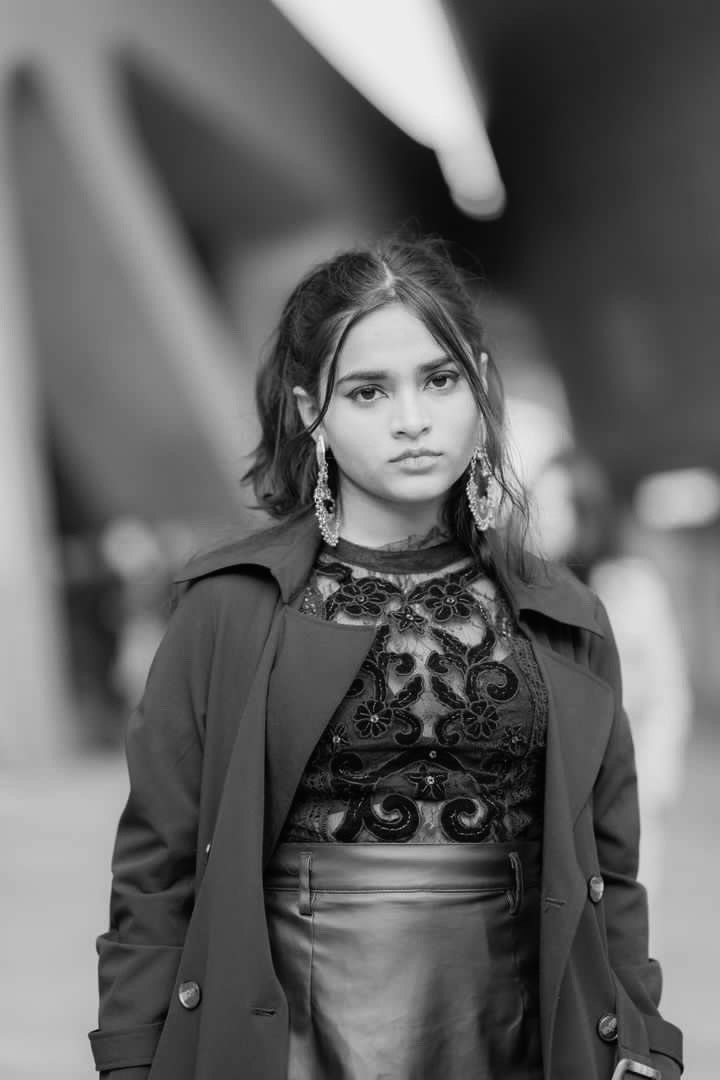
Photo Courtesy of Siddhi Konduskar
We are pleased to present this interview with Siddhi Konduskar, a prominent Indian filmmaker and producer based in South Korea. Her work encompasses short films and music videos, and she has gained valuable insights into the K-industry through interviews with artists such as NMIXX and Aimers, and collaborations with Hanumakind. This conversation delves into her experiences and perspectives.
Your short film “Ankahi” uses dance in a powerful way to convey emotion. Can you discuss your creative process in integrating choreography into the narrative? What were the challenges and rewards of this approach?
Dance wasn’t just a stylistic choice—it was the language of the story. I worked closely with the choreographer from the concept stage to ensure every movement felt like a continuation of the emotion, not just a break for performance. The biggest challenge was syncing emotional beats with physical ones. But the reward was watching audiences feel the unspoken pain and connection without a single line of dialogue.
“Ankahi” and “Dastak” explore very different themes. What draws you to these particular subjects, and how do you approach developing the visual language for each project?
I’m drawn to emotional silences and internal chaos. “Ankahi” was about unspoken feelings through movement, while “Dastak” was about internal self-acceptance amidst external rejection. For each, I build the visual world based on the protagonist’s mental state—framing, lighting, and pacing shift accordingly. “Dastak” was colder, rawer. “Ankahi” was more fluid and stylized. The subject defines visual grammar.
Your work often focuses on relationships and emotions. What inspires you to tell these kinds of stories, and how do you strive to create an emotional connection with your audience?
A lot of it comes from lived experiences—either mine or stories I’ve closely observed. I focus on small, human moments: a hesitation, a glance, the silence after an argument. I try not to manipulate emotion but present it truthfully, hoping the audience finds their own reflection in it.
As director, cinematographer, and editor on some projects, you wear many hats. How do you manage these various roles, and how does each contribute to your overall vision?
Wearing multiple hats is exhausting but clarifying. When I shoot, I already know the edit. When I direct, I know what not to shoot. Editing then becomes more efficient and purposeful. I won’t always want to multitask, but when resources are limited, it forces you to be precise.
What are some of the biggest challenges you’ve faced as a filmmaker working in South Korea, and how have you overcome them?
Language and cultural barriers were the biggest at first—not just in communication, but in understanding the social subtext. I had to unlearn certain approaches and be very observant. I spent time understanding how stories are told here, what’s left unsaid, and what hits emotionally. Working with local crew and adapting has helped a lot.
What are your aspirations for future filmmaking projects? Are there specific genres or themes you’d like to explore?
I want to explore slice-of-life narratives centered around immigrants or outsiders in Korea—stories of loneliness, resilience, and humor. Genre-wise, I’d like to try something with magical realism next. Grounded in emotion, but with a surreal touch.
Can you describe your typical workflow from concept to completion of a short film?
It starts with a single emotional beat or visual I can’t shake off. From there, I build the script, keeping visuals and rhythm in mind. I storyboard obsessively, especially if I’m also shooting. During production, I keep a tight shot list but allow space for organic moments. In post, I edit quickly to get the first draft out, then take a break before refining. Sound and music come last and are key to sealing the emotional tone.
Your interviews with artists like NMIXX, Aimers, provide a unique insight into the K-industry. What is your approach to conducting these interviews, and what are you hoping to achieve through them?
I approach interviews like mini-character studies. I research their recent work but also look for what hasn’t been asked. My goal is to break past the surface-level PR answers and let the artist show a bit more of their personality—be it through humor, nostalgia, or vulnerability.
What are some of the most memorable moments or insights you’ve gained from your interviews with K-industry artists?
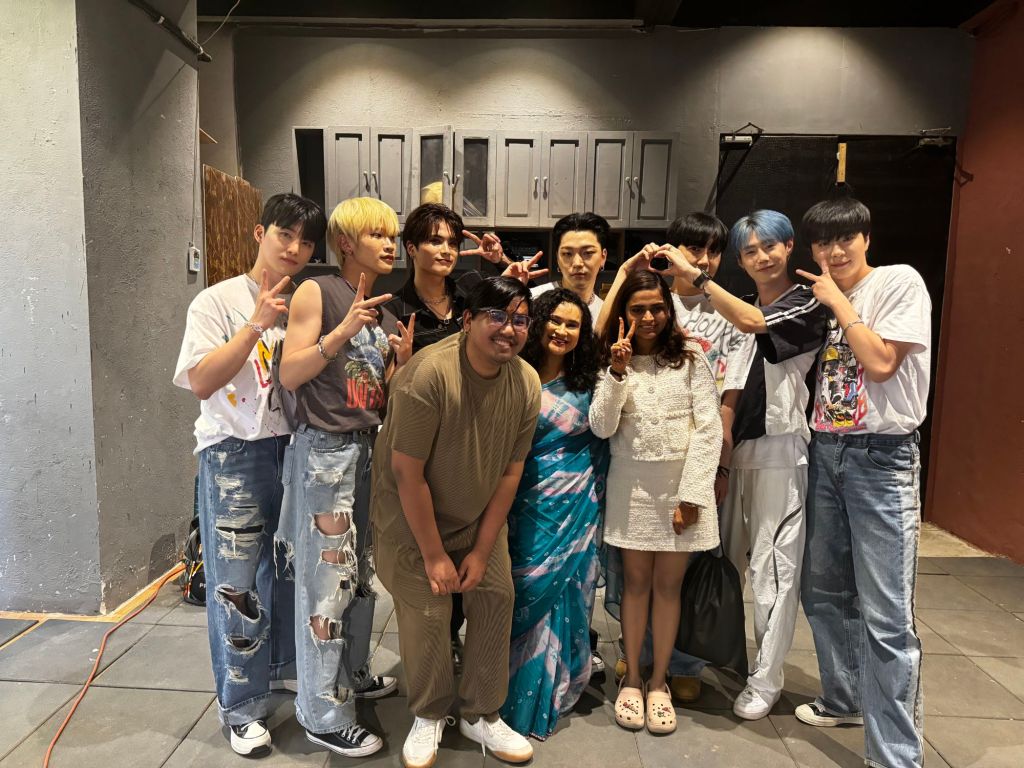
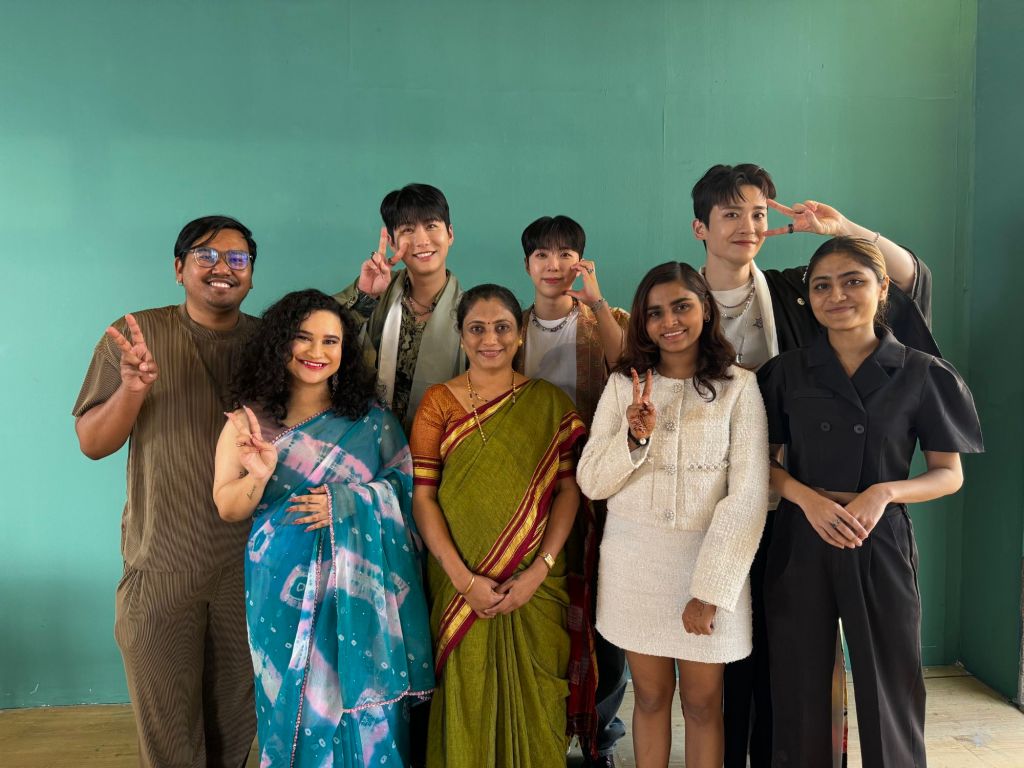
With NMIXX, it was teaching them Indian words and seeing their genuine curiosity—it wasn’t scripted, they had fun with it. With AIMERS, it was a last-minute, no-PR setup, but we connected quickly, it made the interaction raw and spontaneous. Hanumakind was all about mindset—his clarity was refreshing.
How does your experience as a filmmaker inform your approach to interviewing artists?
Pacing and rhythm. I think in cuts. I know when to pause, when to push further. Also, I care about lighting, framing, and how the interview feels visually—not just what’s said. That makes the content more immersive.
What are the key differences between working on a film project and conducting an interview?
Filmmaking is control-heavy—you’re shaping everything. Interviews are about adapting, reading the room, and creating comfort. In film, you direct the moment. In interviews, you wait for it.
What are some of the challenges and rewards of working within the South Korean entertainment industry?
Biggest challenge: breaking into an industry where relationships matter more than resumes. But once you’re in, people value consistency and trust. The reward is seeing global content come to life and knowing you helped bridge cultures, even in small ways.
What advice would you give to aspiring filmmakers who are interested in working in South Korea or the K-industry?
Don’t come here expecting instant opportunities. Build a strong portfolio first. Respect the culture, listen more than you speak initially, and find your niche—whether it’s visual storytelling, editing, or cross-cultural content. And learn the language. Even a little goes a long way.
What are some of your favorite films and filmmakers, and how have they influenced your work?
I’m drawn to Hirokazu Kore-eda for his minimalism and emotional clarity. Greta Gerwig for her voice and rhythm. Park Chan-wook for the visual mastery. I often pull inspiration from how they use silence, movement, and composition as narrative tools.
Follow Siddhi’s journey! Click the icons below to stay updated on her latest projects and adventures.
 Welcome to City Writer
Leave a comment