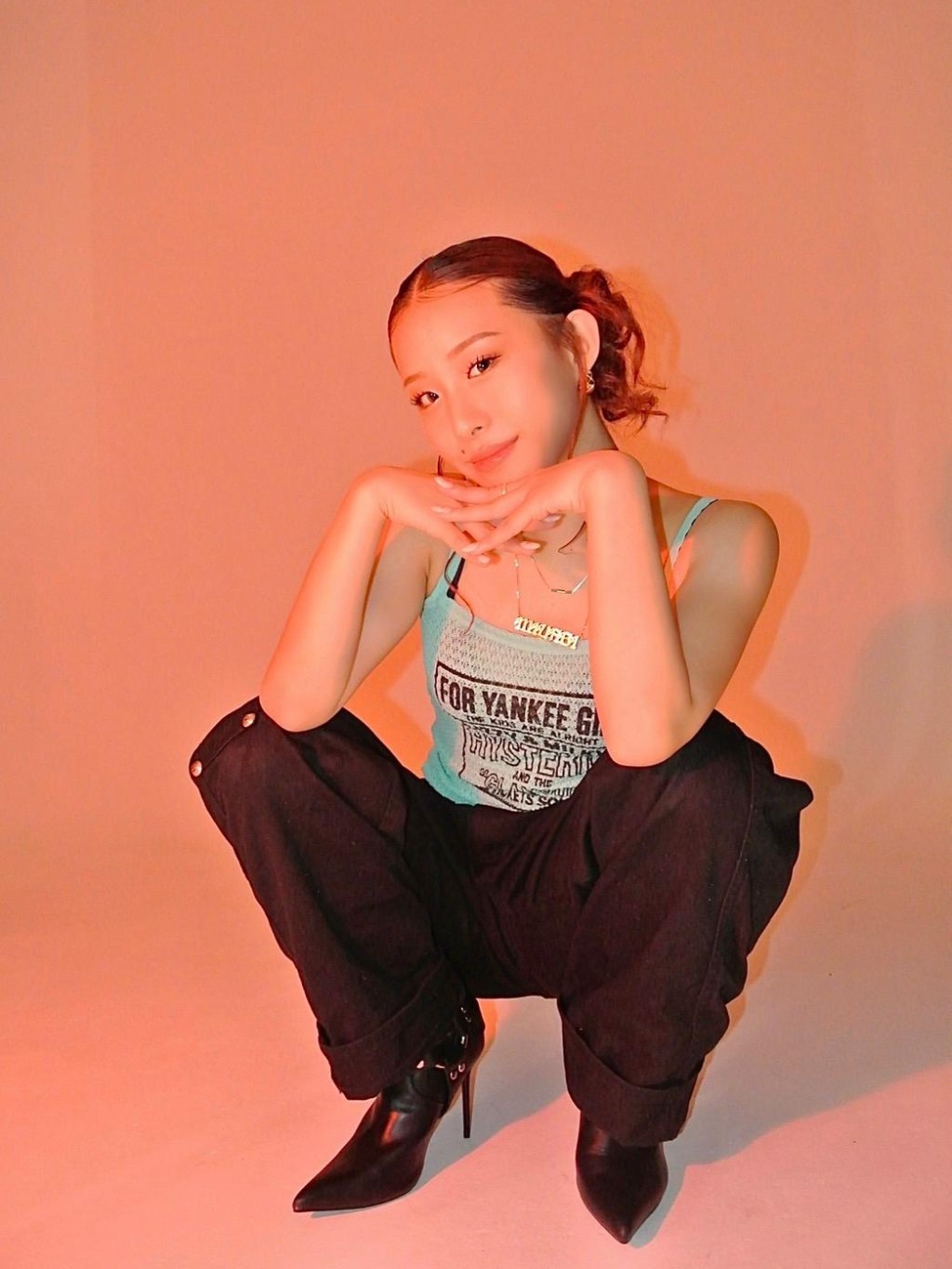
Photo Courtesy of MIYABI
Get ready to go behind the scenes with Miyabi, the sensational dancer from Jam Republic! In this exclusive interview, we explore everything from her early influences to her most memorable performances. Miyabi opens up about her creative process, her challenges, and her dreams for the future. Whether you’re a seasoned dancer or simply a fan of her incredible talent, you won’t want to miss this insightful conversation.
Could you share a bit about your journey into dance? What initially sparked your interest?
I started dancing before I even turned two, thanks to a family friend whose parents were dance instructors. At first, I began with breaking and hip-hop, but when I was around ten years old, I transitioned into jazz. From there, I went on to study various styles like ballet, heels, and jazz funk, which have all helped shape my current style.
I don’t really remember exactly what drew me to dance at the beginning, but I think it was the freedom to express myself through music. Being able to move however I wanted to the rhythm just felt natural to me—it was something I could truly enjoy from a very young age.
Who were some of your earliest dance influences, and how did they shape your style?
One of my earliest dance influences was Kirsten. When I was in elementary school, I used to watch Justin Bieber’s “Sorry” music video over and over again because I loved it so much. There was one dancer in the video who really stood out to me—and that was her. I didn’t realize it until after Street Dance Girls Fighter 2 ended, and I was honestly shocked. It means so much to me that she’s now my mentor. I’m incredibly proud of that.
I was also influenced by dancers like Yanis Marshall and Jojo Gomez. As for artists, I was really inspired by Fifth Harmony. I used to watch their music videos and listen to their songs all the time when I was younger—they had a big impact on me.
Growing up in Japan, how did the local dance scene influence your development as a dancer?
I’m really glad that I had the opportunity to learn to dance in Japan. I’m currently based in Tokyo, but before moving here, I spent a lot of time building a strong foundation in my hometown. I believe that experience has played a big role in the dancer I am today.
After moving to Tokyo, I was able to explore even more dance styles and learn from a wide range of teachers. Looking ahead, I hope to go to the U.S. to further grow both my technique and my ability to express myself through dance.
What was it like sub-leading Team Jam Republic on Street Dance Girls Fighter 2? What were some of the biggest challenges and rewards?
At first, I wasn’t the sub-leader of the team. But after some conflicts within the group, I ended up stepping into that role. At the time, I couldn’t understand English or Korean at all, so I often felt like I wasn’t fully part of the team.
However, becoming the sub-leader gave me more confidence to share my thoughts, and I think it helped bring the team closer together. It made us feel more like a real team.
How did your experience on Street Dance Girls Fighter 2 change you as a dancer and a leader?
For someone like me, who’s naturally shy, it was an incredibly big challenge. But this experience completely changed my life—it was a 180-degree shift.
It allowed me to take a huge step toward my dream of performing internationally, and it also gave me the motivation to start learning English, something I had always wanted to do. Through this show, I was able to grow not only as a dancer, but also as a person.
Your dance style is often described as powerful and fluid. How do you balance these elements in your choreography and performance?
When it comes to “power,” I always try to give 120% of myself every time I dance. I put my whole energy and emotion into each movement.
As for “fluidity,” I think it comes not only from being naturally flexible but also from the effort I’ve put into stretching seriously. I don’t just stretch to become more flexible—I do it to expand my range of motion, improve body control, and strengthen my core through training. I believe that kind of fluidity comes from building both flexibility and control over time.
You’re known for your versatility and ability to execute technical tricks. How do you approach learning new styles and techniques?
Because I spent so much time focusing on the basics when I was younger, I’ve developed a habit of closely watching my teacher’s movements and trying to copy them as accurately as possible when learning something new.
Once I’m able to copy the movement, the next step is to absorb it and make it my own. I take what I’ve learned and add my own personality and style to it.
What role does storytelling play in your dance performances? How do you use movement to convey emotions and narratives?
When I dance, I especially value the atmosphere and feeling of the music. I try to make sure that the emotion or tone of the sound or effects is clearly communicated to the audience.
To do that, I carefully control each movement—its speed, the angles of my body and face, and how I use expressions. Even without words, I aim to express emotions and scenes purely through music and movement. This is how I bring storytelling into my performances in my own way.
Which choreographers have influenced your work the most? What aspects of their style or approach do you admire?
Recently, I was deeply inspired by Todd’s choreography. His routines require a lot of skill to perform, but because I’ve spent years developing my technique, I truly enjoyed dancing to his choreography.
I also absolutely love Yanis Marshall’s work — his music choices and movements are incredibly cool, and I’ve admired him for a long time.
Since I’ve learned from many different teachers, I don’t aim to be “like someone else.” Instead, I want to take everything I’ve learned and use it to create my own unique style.
Where do you find inspiration for your choreography? Is it music, art, nature, personal experiences, or something else?
I get most of my choreographic inspiration from music. I don’t usually draw much from everyday life — instead, I spend a lot of time watching dance videos and listening to a wide variety of music. Based on the genre or song that I feel like dancing to at the moment, I start building my choreography.
Sometimes I consider following current trends in K-pop, but to be honest, I’m quite spontaneous. I tend to trust how I feel in the moment and create based on what genuinely excites me at that time.
How has your own experience as a dancer shaped your approach to choreography?
When I create choreography, I always try to avoid making it feel the same every time.
As I’ve gotten older, I’ve had more opportunities to explore different dance styles, and that exposure has really helped me expand the range of my own choreography. I put a lot of thought into each piece so that I can keep discovering new movements and bring more variety into my work.
What advice would you give to young dancers who are just starting out?
Everyone has their own relationship with dance, but if you’re aiming to become a professional, I believe it’s absolutely essential to spend time learning the basics. Without a strong foundation, it’s really difficult to grow and succeed as a dancer.
Take classes from dancers you think are the coolest — the ones who truly inspire you. You’ll gain so much from learning directly from them.
And lastly, don’t forget to take breaks once in a while. If you focus only on dance every single day, there may come a time when you hit a wall or start to lose your love for it.
To keep loving dance the way you did when you first started, make time for other experiences too. They’ll help you stay inspired and balanced.
I’ll keep working hard as well — and I hope to meet you somewhere along the way!
August 16th, 5 PM: Unleash your inner jam at Knapsack Dance Studio! Elevate your dance game with this powerhouse instructor.
August 23rd: Join Miyabi in Cebu for a special workshop produced by XEBU Dance Studio! Get ready for her signature blend of hip-hop, jazz funk, and heels.
 Welcome to City Writer
Leave a comment