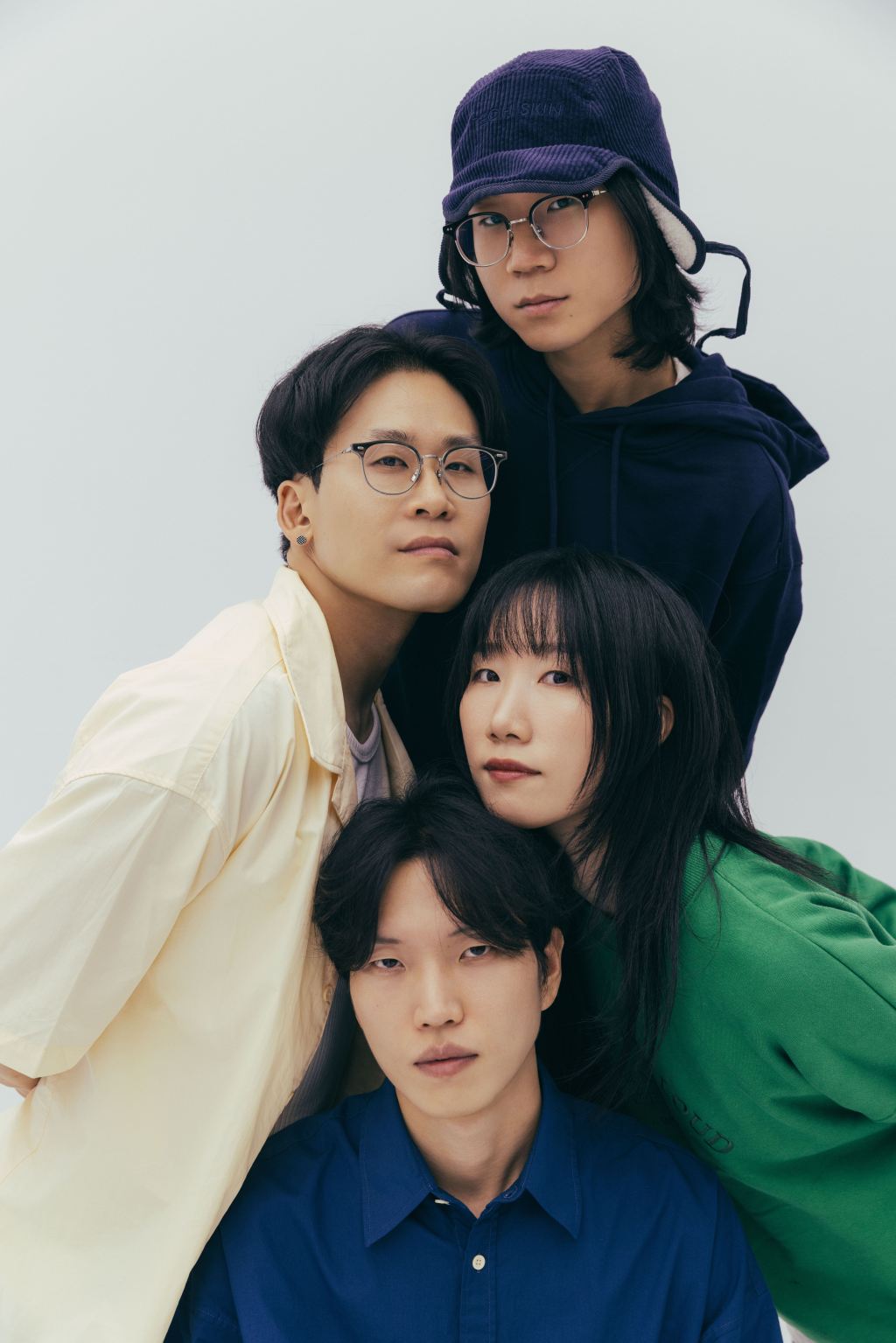
Photo Courtesy of Dabda
In the ever-evolving landscape of South Korea’s indie music scene, few bands carve out a space as distinct and mesmerizing as Dabda. Since their formation in 2013, the Seoul-based quartet has defied easy categorization, weaving intricate math rock rhythms, post-rock expansiveness, and poetic lyricism into what they’ve dubbed a “pastel psychedelic” universe. Named after the five stages of grief (Denial, Anger, Bargaining, Depression, Acceptance), Dabda transforms emotional complexity into sonic beauty, inviting listeners into a dreamlike dialogue between chaos and calm.
We chatted down with the vocalist/guitarist Kim Jiae, guitarist Jungwoong Park, drummer Lee Seunghyeon, and bassist Noh Keohyeon to discuss their creative process, the philosophy behind their genre-defying sound, and how they’ve navigated a decade of change in Seoul’s indie ecosystem.
The band name refers to the ‘5 stages of grief’ (DABDA). How does this theme appear in your music or creative process?
Jiae: The band name itself doesn’t directly carry the meaning of the ‘5 stages of grief.’ But during the songwriting process, I often feel like I’m moving through similar emotional stages. It’s not just about death — I think we also go through these stages when coming to terms with life itself.
Seunghyun: When we first came up with the name, I didn’t actually know what grief meant. I just wrote down different emotions on paper and tried to combine them into something pronounceable. That’s how the name was born. At the moment, it doesn’t hold a deep meaning for me, but maybe one day, it’ll come full circle and take on significance — like a conclusion to the journey.
As an instrumentally driven band, how do you balance technical complexity with emotional resonance in your compositions?
Jiae: When writing vocal parts, I try not to simply follow the volume or power of the instruments. Just because the chorus is loud or the instruments are powerful doesn’t mean I should push my voice higher or louder. I always question whether I’m just belting out of habit.
Keohyun: I don’t deliberately try to balance them. If an interesting idea comes up, I explore it technically, but I also try not to let it lean too far in that direction. Jiae’s voice and lyrics are the emotional core of our music, so I always aim to highlight that.
Jungwoong: I believe technically complex music can still deliver emotion. But when I play, I’m careful not to overshadow Jiae’s voice and lyrics. I try to keep everything in harmony.
Seunghyun: I always try to convey emotion. In the beginning, I didn’t realize it, but I’ve come to understand that expressing emotion actually requires technical skill.
Many of your songs rely heavily on pure instrumentation. Without traditional lyrics, how do you convey narrative or atmosphere?
Keohyun: The dynamics expressed through drums, the sense of space created by guitars, Jiae’s voice and lyrics, and the steady grounding of the bass — together, these build Dabda’s narrative.
Jungwoong: Our playing feels like its own language. The breathing of the rhythm section and the questions embedded in the guitar naturally convey atmosphere and story.
Seunghyun: I don’t think vocals are the only way to communicate emotion or atmosphere. In fact, leaving things more open can spark imagination and empathy in listeners. That’s why I don’t overthink how to deliver the atmosphere.
With members coming from different styles (psychedelic, math rock, etc.), how do you reconcile creative differences into a cohesive sound?
Jiae: We respect each other’s tastes, but we also discuss together which genre, style, or mood will anchor our next project.
Keohyun: Our musical backgrounds are different, but we share common ground by listening to music we all love. Hanging out, eating, and talking together also naturally brings musical conversations.
Jungwoong: When you enjoy being around each other, the results are usually good no matter what you do. That relaxed energy helps the sound come together naturally.
Seunghyun: As long as there’s “emotion” and “resonance,” we can connect with any genre. That said, the bands that have moved us most deeply tend to be post-rock and math rock groups.
Your 2023 EP Yonder feels more experimental. What inspired this shift, and how does it connect to your growth since 2016’s Island of Each?
Jiae: Island of Each was made with the mindset of, “Let’s stop chasing what seems cool and just do what we can right now.” That album helped us discover Dabda’s identity, though we were still clumsy with sound design. Later, wanting to capture the energy of our live shows, we worked on Yonder. It included many good attempts as well as things to improve.
Seunghyun: After the 2016 EP, I immersed myself more deeply in music. Following our 2020 debut album, I wanted to create songs that could really capture live energy.
In a genre that often prioritizes technicality over accessibility, how do you sustain innovation?
Keohyun: We think less about “innovation” and more about “change.” While writing, we try to preserve what’s appealing about past Dabda, but also explore new sounds.
Jungwoong: For us, it’s not about innovation but about capturing the sounds and energies we love. I believe that honesty naturally leads to new directions.
Seunghyun: To be honest, we might be one of the least technical math rock bands. We don’t chase technicality. But because of that, we’re always hungry for new things — and I think that craving drives meaningful change.
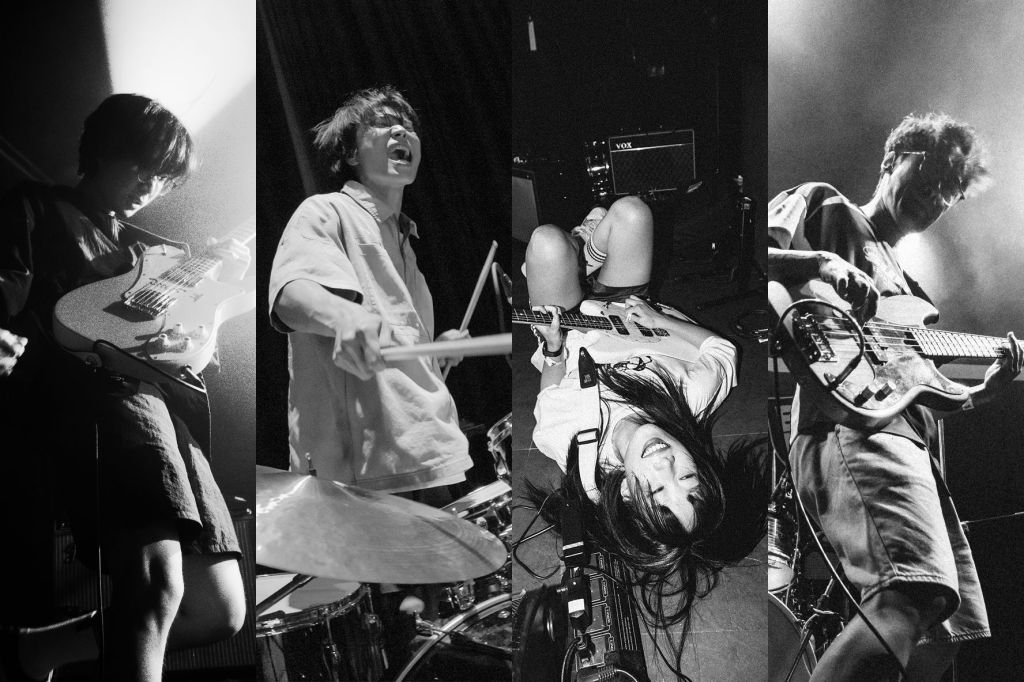
Your live shows are often praised for their energy. How do you translate complex studio arrangements into immersive, dynamic performances?
Jiae: When I can, I try to move even more than I think I should. If I just go through the motions — swaying or performing the same way as always — it leaves me disappointed. I want to truly enjoy myself on stage.
Keohyun: We believe if we’re having fun, the audience will too. When preparing, we think about how to make the performance more playful. Instead of reproducing every complex detail, we focus on dynamics and creating the best possible sound.
Jungwoong: On stage, I often watch the others’ faces and movements, and feed off their energy. But in certain songs, I need to take the lead — so in those moments, I focus solely on my own flow (laughs).
Seunghyun: At first, it was tough. The music was so difficult that it was hard to get immersed live. But with experience and deeper understanding of the songs, it became easier to lose myself. Ultimately, the energy of the space and audience on the day of the show matters most.
Winning the Super Rookie Award at Pentaport Rock Festival — how did that recognition affect the band?
Jiae: It was a turning point where I could finally recognize myself. Even if we had shortcomings, people still loved our sound. That made me feel we could keep going in this direction, and it eased my doubts about whether I was on the wrong path.
Seunghyun: That award was a huge motivation for our first full album. Sadly, when it came out, COVID-19 hit, and we lost some momentum. Still, the recognition helped introduce our name to people in the Korean music industry.
Dream collaboration: If you could work with any artist, living or dead, who would it be and why?
Jiae: Definitely Bombay Bicycle Club. They were the first band that made me think, “I want to make music like this.”
Keohyun: I always wanted to work with Steve Albini, the legendary Chicago producer and engineer. His ability to capture a band’s sound as it is — raw and natural — was unmatched. Sadly, he passed away recently, so that dream won’t come true.
Seunghyun: I’d love to collaborate with Gabba, whom we’re meeting on this Asia tour. Around the time we released our 2016 EP, I discovered Tom’s Story, and Gabba’s sense of emotion and arrangement really struck me. I’d love to do something together one day.
What kind of mark does DABDA hope to leave on the Korean and global alternative music scenes?
Seunghyun: Beyond math rock or post-rock, I want people to experience the energy and imagery unique to Dabda. I hope we’ll be remembered as part of the era we lived through together.
What advice would you give on finding the right creative partners? Is it more important to share similar tastes, or to have complementary differences?
Jungwoong: In Dabda, each of us has different tastes. So I think it’s more important to acknowledge and complement those differences than to have identical preferences.
Seunghyun: People can never be exactly the same, and neither can their tastes. What matters most is understanding each other. If you have that, the music will naturally follow.
When disagreements arise about a song’s direction, how do you resolve them without suppressing individuality?
Jiae: I try to check if I’m just relying on habits. Seunghyun throws out lots of ideas, so sometimes we clash when I have to revise parts I thought worked well. But in the end, I think trying his ideas is usually the right move. His energy is amazing.
Keohyun: My role is often to listen and meditate. My strength isn’t so much creativity as it is balance.
Jungwoong: I think about it from the listener’s perspective. How accessible is the song? Using that as a guide, I try to balance individuality with cohesion.
Seunghyun: When I’m unsure, I usually follow the others. But if I strongly believe in something, I hold my ground. I tend to clash with Jiae the most (laughs).
After keeping the band together for 10 years, what’s the biggest lesson you’ve learned about sustaining creativity and teamwork?
Jiae: I often think, “If it weren’t for these people, I wouldn’t have been able to keep making music.” Despite everything, I’m grateful to have people I can trust and rely on. That gratitude is something I should never forget.
Geohyun: To keep a band going long-term, physical stamina is essential. Whatever it is, exercising regularly really helps.
Seunghyun: A clear goal. Without it, it’s nearly impossible to endure the hardships of being in a band. Even with goals, life as an indie musician is extremely tough, and it gets harder with age. But with shared dreams and hopes, you can endure.
What non-musical activities or interests have unexpectedly shaped the band’s identity?
Jiae: I’d say traveling. When you travel, you notice things around you and reflect on what kind of person you want to be. That creates vivid images inside me and gives me more to say — and having more to say is really important.
Seunghyun: For me, it’s walking, hiking, nature. Trees, the sky, the wind… Sitting aimlessly in a park has deeply influenced my creativity. When I’m too busy to go outside, I even play 4K nature videos on YouTube during practice. That was actually the starting point for the Yonder EP.
What’s one piece of advice you’d give to a band on the verge of giving up, still searching for its identity?
Jiae: Let go of impatience and self-criticism. Focus on what you can do right now.
Keohyun: Don’t doubt yourself or your bandmates. Keep trusting each other until the end.
Seunghyun: If you lack confidence, take a break. That pause may give you new conviction, or spark fresh motivation and inspiration.
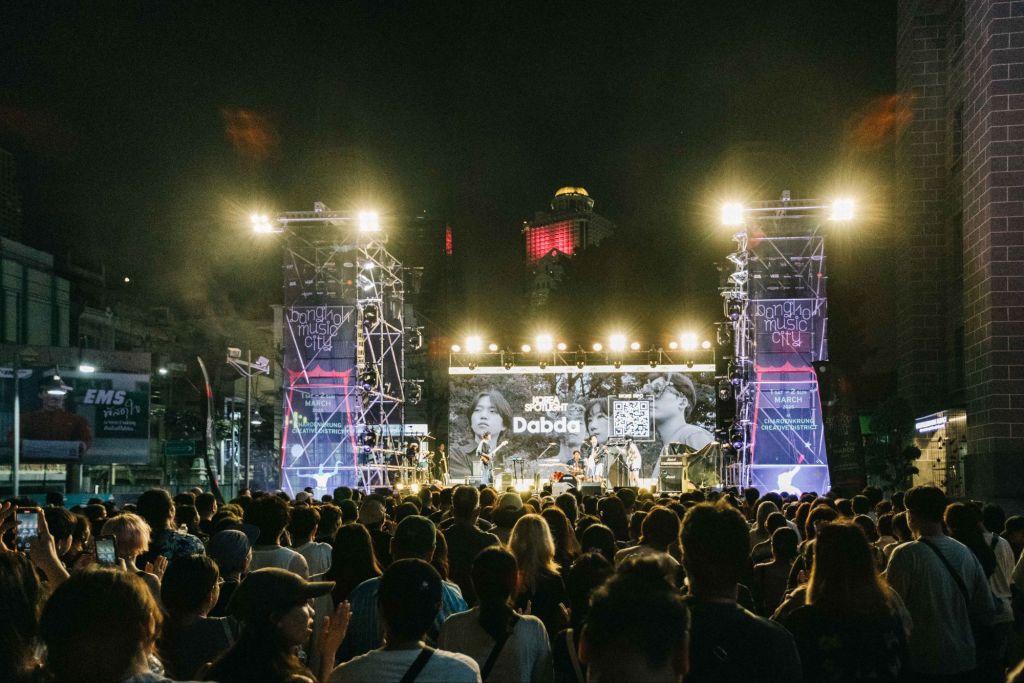
Dabda Asia tour
ticket link here
SEP 3 Blueprint Livehouse, Bangkok, TH
SEP 5 Sari Sari, Manila, PH
SEP 6 September Fever, Cebu, PH
SEP 7 Korea Sound, Cebu, PH
SEP 9 Golden Birds, Ho-chi Minh City, VN
SEP 10 Shelter, Tokyo, JP
 Welcome to City Writer
Leave a comment