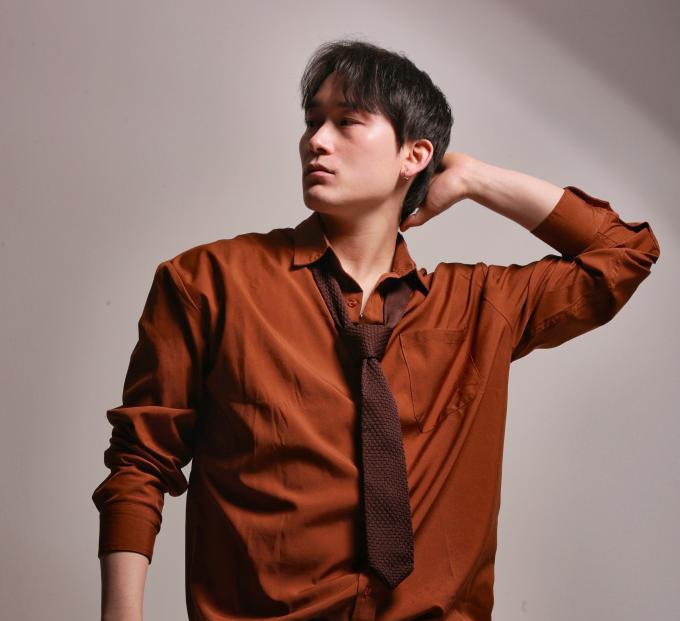
Photo Courtesy of Jong_XX
Today, we have the pleasure of sitting down with Jong, also known to many by his Instagram handle, @jong__xx. Jong is a prominent K-Pop choreographer and dance instructor who has significantly impacted the industry. From working as a backup dancer for some of the biggest names in K-Pop, including BTS, Got7, and AB6IX, to creating innovative choreography, Jong’s journey is one of passion, dedication, and artistry. Join us as we delve into his experiences, creative process, and insights into the world of K-Pop dance and choreography.
What sparked your initial interest in dance, and what were some of your earliest influences or inspirations
When I was in elementary school, my friend danced, and I remember dancing with my friends for a very short time. Since then, I have never danced, and I exercised (boxing) in high school. I was so stressed out while exercising, so I remember dancing when I was young, so I went to a dance academy and started from then on.
Can you describe your journey into becoming a professional dancer and choreographer? Were there any pivotal moments or challenges along the way?
After I started dancing, I never thought, “I have to be a famous dancer and choreographer.” At that time, I liked and enjoyed dancing with my friends every day, but I decided to do a kpop idol dance with them. For your information, I started jazz and hip-hop first, and I started with street dance. There are many good opportunities in life, and when I got a chance, I was able to perform with kpop idols.
Who are some dancers or choreographers who have significantly impacted your style or approach to choreography?
After I started dancing professionally, I went to college as a dance department. And when I returned from the army, I took a leave of absence after completing my second year of college and I went to America.
I wanted to learn more dance styles in America and dance with my favorite choreographers. Then, I started dancing and practicing with my favorite choreographer every day. There is a choreographer named Lando Wilkines, who influenced me a lot and was a choreographer that I like and respect. Now I am a very close friend.
Can you describe your typical choreographic process? Do you usually start with a concept, a musical element, or something else? Walk us through a recent project from initial idea to final product.
In general, when we make choreography, we listen to a song and come up with a concept that fits it. Sometimes when an idol company asks us to make a concept like this, we create a choreography concept accordingly, and when we listen to music, we add a concept to the lyrics to make it fit.
Last year, when we made a choreography for a female idol called “Blingone,” we worked on a project from choreography concept to concept to style that fits it.
Where do you find inspiration for your work? Do you draw from other art forms, personal experiences, current events, or something else?
In general, as other choreographers are similar, they are inspired by other artists, and they are inspired by performances and movies.
How do you handle creative blocks or moments of self-doubt?
I never have a self-doubt on myself, because I have to trust myself and if you don’t trust me, you can’t develop.
How do you stay innovative and creative in your field? Do you actively seek out new influences, experiment with different techniques, or use technology in your work?
I practice choreography with people around me or refer to their styles a lot. I come up with more creative ideas by getting together and sharing my style and their styles. And I keep thinking and keep changing different ways. That’s how I come up with creative ideas.
What are some of the biggest challenges facing choreographers today? How are you addressing these challenges in your own work.
The biggest challenge facing choreographers today is that K-pop choreography has similar movements, similar styles, and similar formations all the same these days, so I think that’s one of the biggest problems.
I think we need to share different ideas with each other and create a more different style of choreography or originality.
What is your core belief about dance education? What are the most important things you want your students to learn and take away from your classes?
One of the most important things when I do dance lessons is if the people who listen to dance lessons can copy my dance style well and take my style well, and if they are learning my movements well
How would you describe your teaching style? Are you more direct, collaborative, or something else?
My teaching style is slowly explaining each movement, seeing if the people who take my class understand exactly and follow it well, and slowly moving on to the next level.
What is your approach to correcting students’ techniques? How do you balance constructive criticism with encouragement and positive reinforcement?
Rather than criticism, they are encouraging and positive and helpful. I actively teach them in much more detail and encourage them slowly if they fail to copy their skills.
What advice would you give to someone who is just starting out in choreography? What are some of the most important things they should focus on in their early years?
There are so many things I want to say to those who are new to choreography, but first of all, it is good for them to thoroughly train the basics and learn various genres of dance styles and then find their own dance styles.
These days, there are many dancers who are new to choreography, and among them, there are many who do not train the basics exactly and are not influenced by other choreographers. Then they feel the limitations very quickly. It is not too late to learn a lot of the dance styles of other choreographers and start with the influence of the basics and other genres first.
What are some essential skills or qualities that you believe are necessary for success in choreography?
Technical proficiency and creativity are all important, but there are many things that come from experience. It is important to try many things, keep changing them differently, and try different things. If you make choreography and make it differently, and go out with creativity differently, your choreography can be recognized by others.
 Welcome to City Writer
Leave a comment