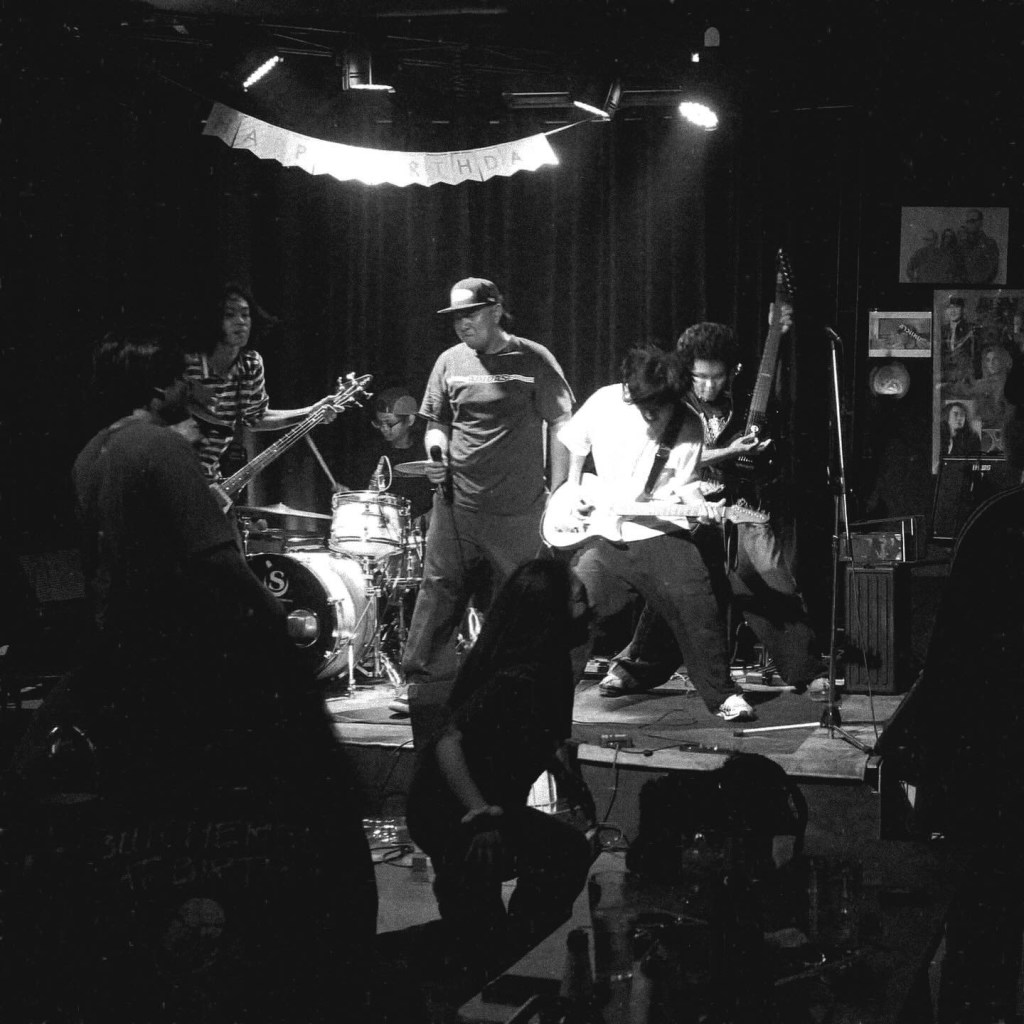
Photo Courtesy of RIODIC
Thailand’s heavy music scene continues to evolve, and emerging bands are proving that the global metal movement has no borders. Among them is RIODIC, a rising force bringing explosive energy and raw emotion into the spotlight. With crushing riffs, intense vocals, and a fearless attitude, RIODIC is carving their own space in the Thai nu metal landscape. In this exclusive written interview with City Writer, the band opens up about their origins, creative process, and their mission to take Thai heavy music to the next level
For readers discovering RIODIC for the first time, how would you describe your sound and identity as a band?
Hello, we’re Riodic from Nonthaburi Hardcore.
We’re a new band and would like to introduce ourselves.
We want to create something different by using nu metal as the foundation—groovy, head-banging rhythms mixed with the heaviness and aggression of hardcore.
That’s the sound you’re hearing from us: heavy, easy to listen to, and made for moshing
What does the name “RIODIC” represent, and how does it reflect your music or philosophy?
RIODIC was formed in early 2022 in Nonthaburi, Thailand, not from a commercial plan, but from shared frustration, lived experiences, and the need to speak honestly through heavy music.
How and when did the band first come together?
The band began when Boss (guitar / primary riff writer) and Ohm (drums / drum line composer)—who had previously played together in a shoegaze band (History Summer) and a hardcore band (Mental Repression)—realized that hardcore music reflected the reality they were living in. For them, hardcore was not just a genre, but a way to confront anger, pressure, and social injustice directly.
Around the same time, Plai (vocals / lyricist) had lost motivation after leaving his former Thai folk band and was close to stepping away from music entirely. In late January 2022, Boss invited Plai to rehearse without expectations. What started as a casual session slowly became a serious commitment, despite Plai having no prior background in hardcore music.
Through repeated rehearsals and raw improvisation, the band wrote their first song, “Level,” which later appeared on their first EP. By mid-February 2022, Tonkla (bass / slap bass contributor) joined the band, bringing a more aggressive and rhythmic low-end that pushed the sound forward.

On March 3, 2022, during a rehearsal session, the band officially chose the name RIODIC, inspired by words found on the rehearsal room wall. The name reflects rebellion, unrest, and resistance—not as chaos for its own sake, but as a response to unfair leadership, political oppression, and social inequality.

As RIODIC evolved, Soan (turntables / scratch) joined the band, adding electronic textures and noise elements that expanded the band’s sound beyond traditional hardcore frameworks.

Later, Rick Ass Hole (guitar / sound design, riff development, recording) became the final member. Rather than changing the band’s identity, Rick helped sharpen it—focusing on sound structure, recording, and overall sonic impact.

Lyrically and conceptually, RIODIC creates music about unjust leaders, political pressure, social inequality, everyday survival, and personal struggles—both external and internal. The band does not claim to have solutions, but uses music as a form of resistance, documentation, and emotional release.

RIODIC is a Nu Metal / Hardcore band from Thailand, built on equal creative roles, shared responsibility, and the belief that heavy music can speak truth—no matter where you come from.
How would you describe your songwriting process as a band? Is it collaborative, or does it start with one main idea?
For RIODIC, most songs start with Boss’s guitar riffs. That’s usually the first spark. Once the riff is there, everyone jumps in and starts jamming, trying things out, letting the song grow naturally.
Your music carries strong intensity and emotion—what usually inspires your lyrics and themes?
When it comes to lyrics, I want to talk about it by separating songs and EPs. For our first EP, there are three songs.
The first song is “Level.” This song talks about lies ,lies that have existed since ancient times and that people all over the world still have to deal with every day. Honestly, lying itself can feel normal sometimes. There are lies told intentionally, and lies told without realizing it.
The second song is “Monkey D. Bangcock.” I’ll keep this one short:
People who know will understand.
People who don’t know will never know.
There’s a small hint hidden in the lyrics,go find it yourself.
The third song is “CockRoach.” A cockroach is seen as something dirty, disgusting, something society looks down on. I wrote this song because some members of RIODIC-Plai, Boss, and Ohm-were working as second-hand clothing sellers at a local market at that time.
As vendors, we had to welcome and serve all kinds of customers. And as you know, people come from different backgrounds and social classes. Some asked for prices and complained, some looked down on us, some were drunk and collapsed in front of the shop, some acted aggressive, and some even stole clothes.
To be honest, this song was mainly for venting. It’s not only about customers, markets, or specific people-it’s about society in general. I believe people should be equal, no matter if you’re rich or poor, fat or thin, dark or light-skinned, or how high your social status is. We should respect each other. We’re all human.
I don’t even know if I explained this correctly, but everything in this song came straight from my heart. Sorry if it doesn’t perfectly match the question.
When working on a new track, what comes first: riffs, rhythm, vocals, or concept?
Lyrically, RIODIC is inspired by political problems, economic struggles, political systems, corruption, leadership problems in Thailand and neighboring countries, social issues, and personal problems-especially mental struggles.
Musically, most tracks still start with guitar riffs. Tonkla often brings in wild slap bass ideas and was actually the one who initiated **“Monkey D. Bangcock.” Plai usually starts by mumbling vocal ideas, but that only happened with **“Claimbodia.” Ricky constantly writes new riffs and ideas—he already has two or three new songs in progress, but we’re not ready to spoil anything yet.
Ricky is also the one who records our music and improves the overall sound quality. Everything you hear—textures, layers, sound design—that’s him. Any idea we have but don’t know how to execute, Ricky makes it possible. Soan focuses on scratches and sound experiments that give the music more dimension.
The main foundation usually comes from Boss’s riffs and Ohm’s drum patterns. In later EPs, Boss and Ricky work more closely together, sharing ideas and responsibilities.
About “Claimbodia,” the tension had been creeping in for a long time. Different sides arguing, confronting each other. I want to be clear—I’m not far-left or far-right. I look at things based on real geography and real events.
Since early 2022, Hun Sen and Hun Manet have repeatedly provoked people by falsely claiming four important places in Thailand: Preah Vihear, Ta Muen Thom, Ta Kwai, and Chong Bok. Fake news was spread worldwide, causing conflict between countries.
There were staged events, propaganda, military movements, landmines, and eventually armed clashes. Civilians, children, and soldiers were affected. No matter which side lost more or less, no one wanted these losses to happen. This situation escalated because of lies, manipulation, and provocation by people in power. That’s where Claimbodia comes from.
“Chains” is about mental pain-chains that trap your emotions until everything feels empty. This song wouldn’t exist if Boss didn’t come up with that riff. I just poured my feelings into it.
Praying didn’t help. Asking for help didn’t help. Even talking to people close to me felt hard. I didn’t write this song because I want to die. I just want to disappear for a while.
The language and grammar might not be perfect, but these are the words that feel right for me.
If it’s not phrased like this, I can’t sing it. Thank you to everyone who listens and accepts what we’re trying to say. Respect from the heart.
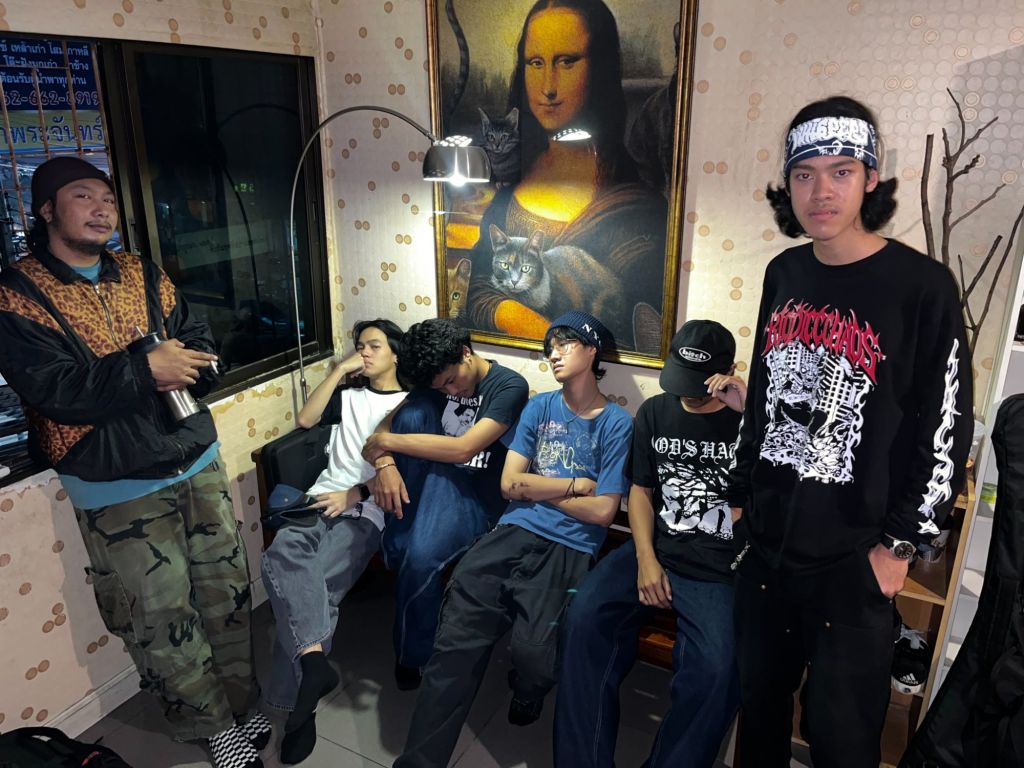
What challenges have you faced as an independent band in Thailand?
I think one of our main challenges is that we all come from different backgrounds, and our experience in hardcore music is still quite limited. Even so, we insist on pushing beyond our own boundaries. We are determined to keep developing-not only as a band, but also in terms of our identity and the clarity of what we want to express.
What motivates you to continue creating heavy music despite industry or scene limitations?
Truth, desire, and the need to break our own limits.
How do you balance staying true to your sound while reaching new listeners?
We’re always trying to find something new. We want our music to be as accessible as possible for listeners, while still being able to mosh to it. That’s why our songs have both heavy and softer parts.
What does performing live mean to RIODIC, and how do you translate your studio energy onto the stage?
For us, every live show is something we step into without really knowing what we should do or what we should say to please anyone. What matters is that we stay true to ourselves in every performance and bring our real energy onto the stage.
What kind of reaction do you hope to see from the audience during your live shows?
A wild, chaotic mosh pit, shouting our truth together.
What can fans expect next from RIODIC—new singles, an EP, album, or live performances?
We don’t want to explain it. Just come experience it for yourself-listen, feel it, and judge it on your own.
What goals do you have for RIODIC in the next few years, locally and internationally?
We’re aiming beyond borders. RIODIC is going global.
What message would you like to share with listeners who have just discovered RIODIC?
Thank you to everyone who has taken the time to listen to our music. We won’t let you down, and we’ll keep developing and improving our songs.
 Welcome to City Writer
Leave a comment