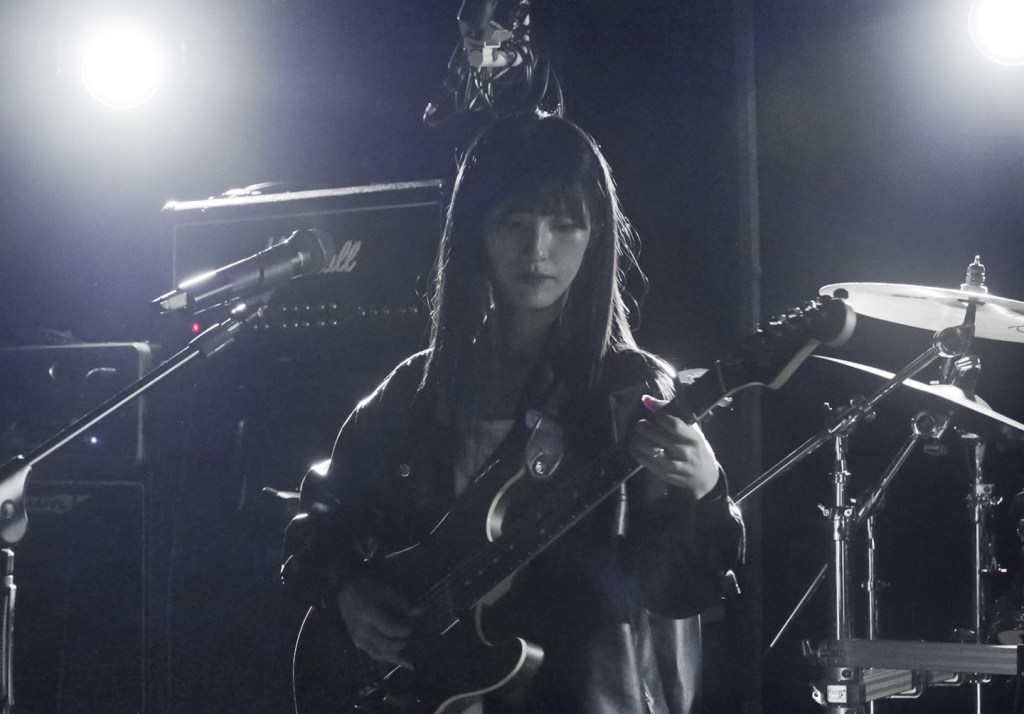
Photo Courtesy of :Damdam
Meet :DamDam, a Korean singer-songwriter whose music captures the beauty of stillness, vulnerability, and honest storytelling.
With her soft yet expressive vocals and a sound that blends indie pop, folk, and subtle electronic textures, DamDam invites listeners into her world—one filled with personal reflections, fleeting emotions, and moments that often go unspoken. From her early beginnings to her reintroduction under a new artistic identity, she has continued to carve out a space that feels both intimate and authentic.
In this interview, we explore the inspirations behind her music, her creative process, and the stories she hopes to share with listeners across the world.
Can you introduce yourself to our readers and share how you started your journey as a singer-songwriter?
Hello, City Writer subscribers! This is :DamDam, an artist based in Korea.
I didn’t have a specific reason or turning point—I just knew from the age of eight that I wanted to pursue music. As I continued singing, people began to compliment me, and that’s when my dream of becoming a singer started to take shape.
During high school, I was surrounded by singer-songwriters, which naturally sparked my interest in composing and playing the guitar. Over time, I realized I wanted to express my own stories through music, and that’s how I became a singer-songwriter.
What inspired you to choose music as your main form of expression?
Music, to me, is like breathing, eating, and sleeping. It’s not something extraordinary, but it’s something I simply cannot live without.
That’s why expressing my stories and emotions through music has always felt natural—I never needed a special reason to do it. If music were taken away from my life, I think I would feel like an empty shell.
How would you describe your musical style in your own words?
Because I focus on lyrics when creating music, I tend to shape the sound to match the story each song tells—so a variety of genres naturally emerge. It’s hard to define my work within a single genre, but if I were to describe it in my own words, it would simply be “calm” or “restrained”—damdam.
It’s a kind of maturity where swirling emotions are translated into sound, while the lyrics distill and compress those feelings into something quietly contained.
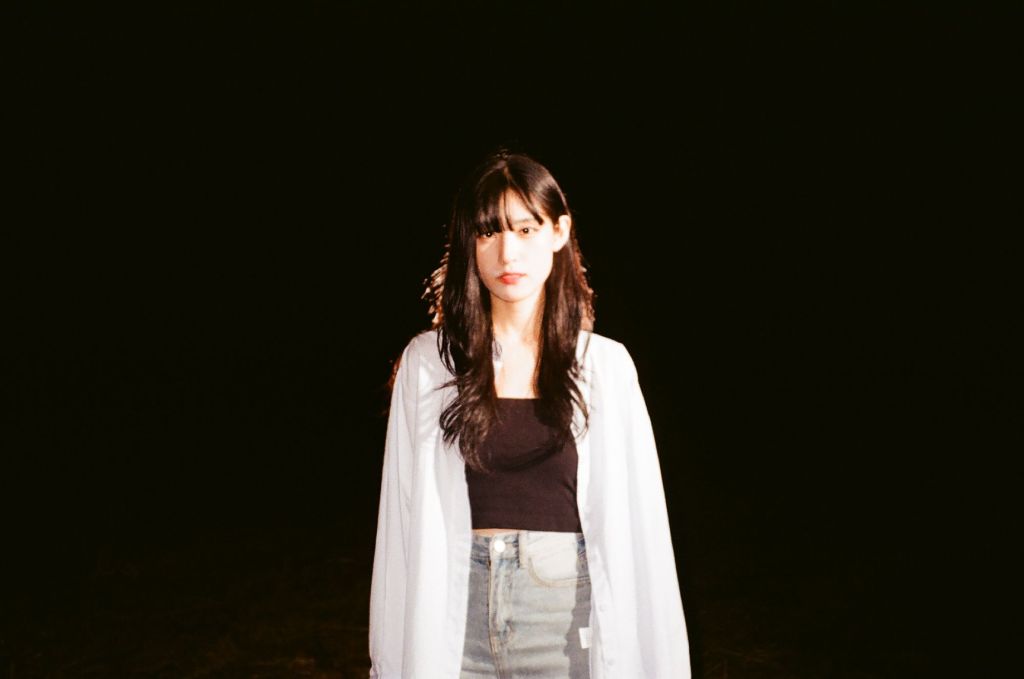
Your songs often carry strong emotions and softness at the same time—how do you usually approach songwriting?
I always base my compositions on things I’ve experienced, realizations I’ve had, or stories I’ve heard from others. I usually start with the lyrics, then build the melody and chords around them, shaping the song to fit the words.
I believe my songs carry a lot of emotion. However, I don’t try to express those feelings openly—I compress them and keep them hidden. Even so, listeners who share a similar perspective seem to uncover those emotions, almost as if they hold the key to unlocking them.
Perhaps that’s why my music can feel both deeply intense and gently soft at the same time.
What does the name “DamDam” mean to you, and how did you come up with it?
There’s an older Korean folk singer named Kim Kwang-seok. I once listened to his remake of the song “The Day She First Cried” and found myself crying for quite a while. The melody and sound are very light and upbeat, and his voice is incredibly calm—but when you look at the lyrics, it’s actually a very sad song.
After hearing it, I had a thought: “I want to be able to speak about the things I’ve been through as if they no longer affect me—as if I can express them calmly.” That idea became the inspiration for my stage name.
So in all of my songs, the sound may be gentle, upbeat, or even turbulent—but my vocals always remain calm and restrained.
Can you walk us through your creative process from idea to finished song?
Whenever inspiration strikes, I immediately write it down as lyrics in my notes. If I have an instrument nearby, I try to add a melody right away; if not, I leave it as it is and come back to it later to build the melody.
Once the melody and chords are in place, I explore a wide range of reference tracks to decide on the direction of the arrangement. I think not only about instrumentation, but also about what kinds of sounds and elements will best match the lyrics—how to create a sound that perfectly aligns with the story.
After that, I create a guide arrangement based on the mood I want, then work with a professional arranger to complete it. I also collaborate with session musicians for the recording. From there, the process continues through mixing and mastering until the track is fully finished.
While music production is important, I also personally plan and oversee the overall visual expression. From album cover images and visual design to merchandise, there’s no part I don’t touch—because all of these elements serve as extensions of my music.
Who are your biggest musical influences, both in Korea and internationally?
I have many artists I admire, but the one who has had the greatest influence on my music is the Korean singer-songwriter Sunwoo Jung-a.
She is incredibly experimental, yet still manages to remain accessible to the public. She’s a true veteran—someone who can express emotion with remarkable technical skill. In Korea, she’s often called “an artist’s artist.”
Her sensibility, musicianship, and creativity have all had a profound impact on me..
What was the most challenging moment in your music career so far, and how did you overcome it?
I think the most difficult moment in my music career might be right now. In the past, I never thought about making money from music or becoming famous—I was simply creating the kind of music I wanted, quietly in my room.
But at some point, after I started performing, I began to want recognition. I’ve done many shows and participated in competitions, and while there have been rewarding moments, there have also been many setbacks. I find myself pushing harder, sometimes even blaming the world.
Still, I understand that these moments are necessary for growth, so I choose to accept them. Lately, I feel like I’ve been going through a cycle of slumps and overcoming them.
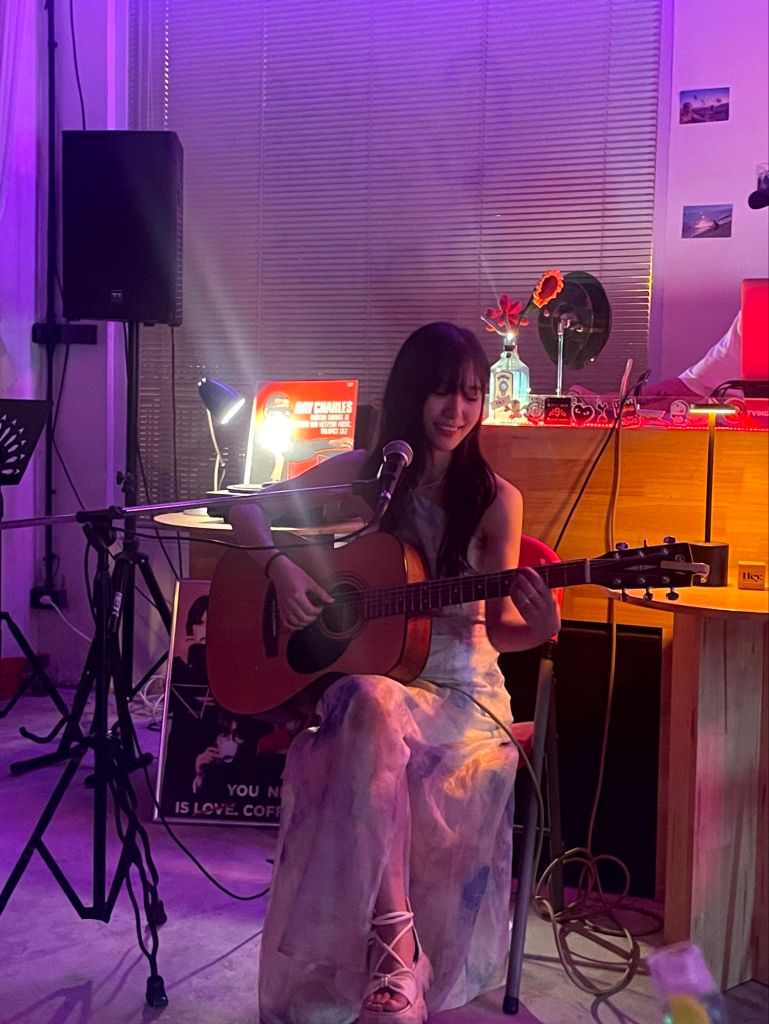
Your debut marked an important milestone—how did it feel when you officially released your first track?
Although I debuted under the name :DamDam in 2022, I actually made my first debut in 2016 under my real name, Oh Soyeon. At the time, I was signed to a company, but my musical direction didn’t align with what I truly wanted.
That’s when I realized something important: it wasn’t just that I wanted to do music—I wanted to make the music I truly believed in. I didn’t care about the money or fame that could come with it.
So I changed my name and started over. This time, I was determined to create only the music I genuinely wanted to make. My first song in this new chapter was “You Left Me Behind,” and it resonated with more people than I expected. It made me feel like I had finally found my path.
What themes or messages do you find yourself returning to in your music?
I always tend to explore my inner world and emotions—melancholy, growing pains, life itself. Maybe it’s because I’m naturally a melancholic person. Whenever I feel down, that’s when the best songs seem to come to life.
There’s no neat, happy ending like “I felt this way, but now I’m okay, I’ll be strong.” When I’m sad, I stay true to that sadness—honestly, without pretending otherwise, capturing my emotions exactly as they are until the very end. And somehow, I think that honesty is what allows listeners to truly connect and relate.
How do you connect with your listeners, and what kind of response from fans means the most to you?
I connect with my fans in many different ways. In particular, there’s a group chat feature on the Korean messaging app KakaoTalk called “Open Chat,” where we talk quite a lot. The conversations are really just about small, everyday things, but even those little exchanges are so fun and uplifting for me.
Sometimes, fans also send long messages about my songs through Instagram DMs or YouTube comments. Whenever I read those, it feels like all the difficult days have been rewarded.
Do you have a favorite song you’ve written so far? What makes it special to you?
I love and cherish all of my songs, but if I had to choose just one, it would be “True Colors.” It’s a track that moves away from a soft, mellow sound and instead carries a sense of suppressed, swirling emotions.
This song marked the beginning of a shift in my style, and even now, I really like the way my voice expresses itself when I perform it. It also holds a philosophical message: people are often hurt by others’ lies and pretenses—but what would happen if those lies and pretenses disappeared from the world altogether? The song was written from that imagination.
I believe these thoughts and messages of mine can inspire those who listen.
How has your sound evolved since you first started making music?
At first, I was quite ambitious and tried to do everything on my own. But when it comes to areas outside my expertise, the details inevitably fall short and the overall quality suffers.
Now, I’ve learned to trust the people who support me. Instead of trying to handle everything myself, I focus on writing more songs and developing new ideas. Because of that, I believe my music has improved in quality compared to before.
For example, with my debut track, I handled everything on my own—from arrangement and programming to mixing. Looking back on it now, it’s a little embarrassing, haha.
Are there any upcoming projects or releases you can share with us?
I’m currently working on an EP and sketching out four tracks. The central theme that runs through all of them is “death,” and the sound I’m using to express it is ambient.
Since I’m still in the sketching stage, I sometimes wonder if I can fully bring it all together—but even so, I feel confident that each track is strong. I can’t share the release date or full details just yet, but please follow me on Instagram and stay tuned for updates!
Outside of music, what inspires you creatively in your daily life?
Everything can be a source of inspiration. I tend to think and imagine a lot, so no matter what I see, hear, or experience, all kinds of things unfold in my mind.
It could turn into a film, a person, or even nature—sometimes even something as small as a passing stone. I never really know what will spark inspiration.
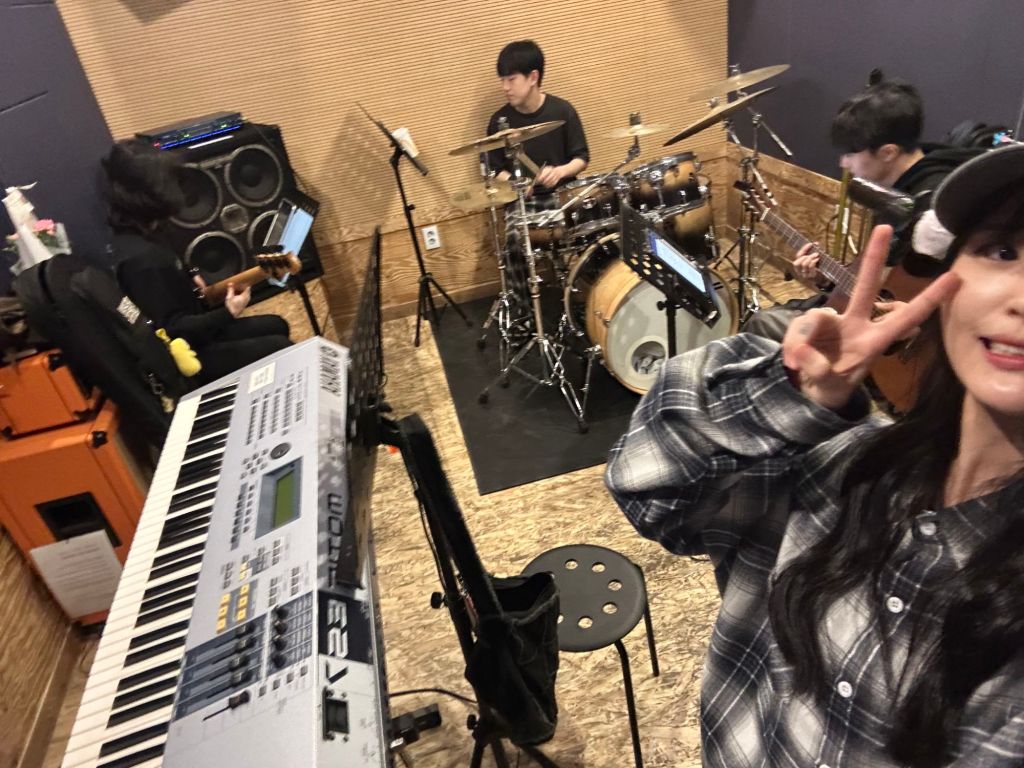
If you could collaborate with any artist in the world, who would it be and why?
The artist I’d most like to collaborate with is Official髭男dism. I’m a huge fan of theirs. Their music has brought me a lot of comfort and strength.
I’ve seen them live a few times, and each concert left a deep impression on me. Of course, I know our styles might not perfectly align, but as a fan, I’d love the chance to sing even just one line with them someday, haha.
What do you hope listeners feel or take away after hearing your music?
I hope my music sparks thoughts like, “How can such simple lines move someone so deeply?” or “It’s amazing how these lyrics came from such an idea.” Those kinds of questions and moments of inspiration would mean a lot to me.
Empathy and comfort are wonderful, of course—but more than anything, I hope listeners really dive into my songs. I hope they become curious about my thoughts and what’s behind them. That said, I’m already incredibly grateful if someone simply enjoys my music.
After all, I don’t write songs with expectations of others. I write them simply because I want to.
 Welcome to City Writer
Leave a comment