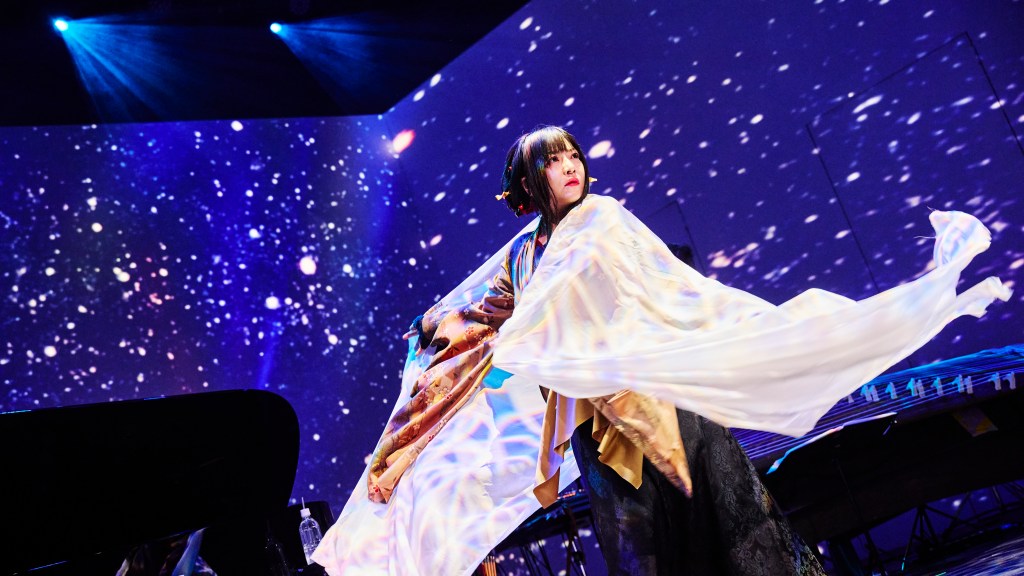
Photo Courtesy of Yuko Suzuhana
From the haunting beauty of traditional shigin poetry to the electrifying fusion of Wagakki Band’s rock-meets-wagakki sound, Yuko Suzuhana has spent her career defying boundaries. As a classically trained pianist, kenshibu swordsmanship performer, and visionary leader of Japan’s most genre-bending musical collective, Suzuhana embodies the soul of both ancient and modern artistry.
In this interview let’s dive into her perspective from the band formation, music, early stages of her career and so much more.
You began studying piano at the remarkably young age of three. What sparked your early interest in music, and how did your family support your musical development?
My home was always filled with music. My mother ran a piano classroom, and my father, who loved jazz, often invited friends over to jam in a band at home as a hobby. Since my father was an architect, our house itself was specially designed with music in mind.
In addition to piano, you trained in Shigin (poetic recitation) and Kenshibu (sword dancing). How did these seemingly disparate disciplines influence your musicality and artistic expression? Did you find any unexpected connections between them?
Learning piano cultivated my musical ear, and practicing shigin (poetic recitation) sharpened my ability to grasp pitch swiftly and accurately. Kenshibu (sword dance poetry performance), which combines movement with music, taught me full-body expressiveness. Additionally, the experience of performing on stage in various forms since childhood has become an invaluable asset.
Shigin requires standing center stage, singing with a steady gaze forward; kenshibu demands using the entire stage to draw audiences into my world; and piano lets me convey emotion through the instrument. These distinct modes of expression—each honed through years of practice—from the foundation of my artistry today.
You graduated from the Tokyo College of Music with a major in classical piano. How did your classical training shape your approach to composing and performing Wagakki music? What aspects of your classical background do you still utilize today?
My classical training has been an invaluable asset, not only in building foundational skills like music theory but also in shaping my musical identity. At music university, I explored diverse instruments—including traditional Japanese ones—and immersed myself in music history, broadening my knowledge.
While studying composers across eras, I found particular inspiration in the harmonies of Debussy, Rachmaninoff, and Liszt. Their influence permeates my compositions, evident in my approach to chord voicing, tension chords, and melodic leaps.
My music is born primarily through singing while playing the piano, which may lend even my rock-inspired tracks a melancholic undercurrent or a touch of wabi-sabi (the beauty in imperfection and transience). This blend of intimacy and introspection defines my sound.
What inspired you to form Wagakki Band in 2014, and what drove you to blend traditional Japanese instruments with modern music styles?
At the time, Japan’s Nico Nico Douga (a video-sharing platform) was booming, with content like dance covers, song covers, and instrumentals gaining massive popularity. It was a precursor to modern SNS culture, where even unknown talents could rise to fame overnight.
I started live-streaming there, improvising to fulfill listener requests across genres, which naturally led me to showcase my shigin (poetic recitation) skills. My activities culminated in winning a festival hosted by the platform, earning the title ‘Miss Nico Live’, which skyrocketed my visibility.
When I landed a major stage opportunity, I vowed, ‘I will seize this chance,’ and resolved to form a band that leveraged all my strengths. Knowing original songs might not immediately captivate audiences, I decided to cover Vocaloid tracks—particularly the trending ‘Japanese-style Vocaloid’ songs, which were emerging as a cultural wave.
I sought musicians who could blend rock with traditional Japanese instruments and perform DAW-crafted complex phrases live. My search began for charismatic members who combined skill and visual flair. I scouted talent at live houses, approaching only those whose performances made me feel like a fan.
I told the band, ‘Let’s aim to be like the Avengers—not just a frontperson show, but a group where everyone shines with their coolest, most authentic artistry.’ We started by creating our own performance videos. And so, the wagakki band (traditional Japanese instrument band) was born.
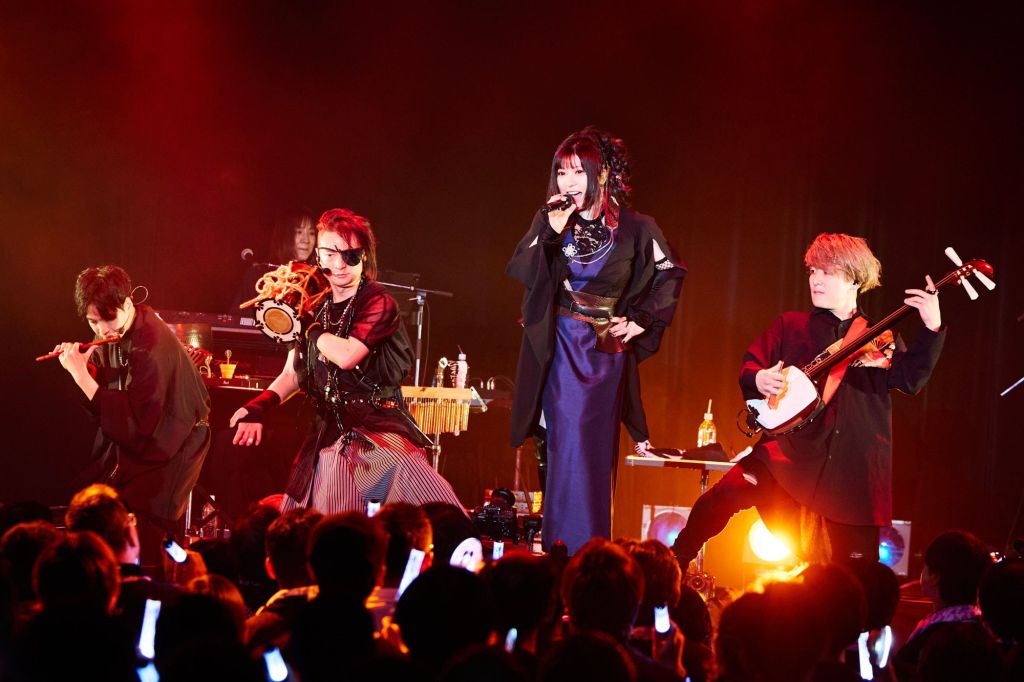
How do you select the instruments and musical styles that are featured in Wagakki Band’s compositions? What criteria do you use to ensure a cohesive and engaging sound?
Among the many traditional Japanese instruments, the ones chosen for this band were selected with deliberate intent. First, the koto (zither) and shakuhachi (bamboo flute)—instruments used in shigin (poetic recitation) accompaniment—were essential to me. Their tones, familiar since childhood, naturally complemented my shigin performances, which are central to my artistry.
The tsugaru shamisen (three-stringed lute) has always stirred something primal in me, a sound that electrifies my Japanese heritage. Its raw energy aligns perfectly with rock, making it a non-negotiable addition.
Though wadaiko (Japanese drums) weren’t initially on my radar, their visual spectacle—movements akin to kenshibu (sword dance poetry)—enhanced the band’s entertainment value. The decisive moment came when I witnessed Kuroryu’s drum-and-taiko battle performance. Its intensity made me think, ‘I need to work with this person.’
These four instruments—koto, shakuhachi, tsugaru shamisen, and wadaiko—became pillars of our sound. For example, in songs where the koto takes center stage, we adjust its positioning and frequency range during arrangement and mixing to highlight its elegance.
Wagakki Band’s activities have expanded significantly beyond Japan. What motivated you to pursue international opportunities? What were some of the challenges you encountered in entering new markets and reaching international audiences? How did you adapt your performances or music for different cultural contexts?
Today, music knows no borders, but back then, social media was still in its infancy. The catalyst for our global reach was undoubtedly YouTube. The overwhelming response flooding the comment section led to increased overseas offers, paving the way for our international expansion.
However, overseas performances come with challenges. The exorbitant shipping costs, the vulnerability of traditional instrument skins to foreign climates (with no local craftsmen available for repairs), and the need for permits to export instruments containing animal-derived materials—these hurdles remain ever-present.
In our performances, we’ve always prioritized blending unapologetic ‘Japanese-ness’ with rock. Rather than bending to foreign expectations, we believe delivering ‘pure Japan’ resonates more authentically—and, ironically, delights global audiences far more.
The collaboration with Amy Lee of Evanescence is a notable achievement. How did this collaboration come about? What did you learn from working with such a renowned artist? How did her style influence or complement your own?
Amy and I share similar musical roots—piano-based singing, orchestral collaborations, duets with male vocalists—and our connection began when she discovered my videos online. She expressed a desire to meet, which led to our first encounter during my invited performance in Los Angeles. There, we promised, ‘We must collaborate,’ and later fulfilled that vow.
Witnessing her life, where music is woven seamlessly into her daily joy, shifted my perspective. She showed me the freedom of embracing music without constraints. Her example inspired me to pursue longevity in music by staying true to my authentic self, both on and offstage.
Her unwavering commitment to her artistic identity deeply influenced me. Rather than chasing trends, she embodies the courage to stay rooted in her style. Even amid doubt, she taught me that persistence in one’s vision ensures the world will align with it in time. Now, I carry that belief forward: stay true, and the moment will come.
“Bring Me To Life with Amy Lee of EVANESCENCE”
You’ve released many songs as a solo artist. Can you describe your approach to solo work, and how it differs from your work with Wagakki Band? What are some of your key musical influences as a solo artist?
I believe the beauty of a band lies in its fixed lineup. Precisely because the members can’t be altered, the group cultivates a unique presentation and sound that’s theirs alone.
On the other hand, solo work’s appeal is its boundless freedom—no constraints on genre or sound. The challenge, though, is shifting focus from the collective to crafting how you, as a solo artist, want to be perceived. It’s thrilling yet demanding.
During the band’s active years, I released albums that deliberately muted wa (traditional Japanese elements) to reach new audiences. Now, during this hiatus, I’m embracing my roots in wa while weaving in my loves—jazz and classical—to create albums driven by unrestrained creativity. This freedom lets me explore music as both a personal sanctuary and a limitless frontier.
You’ve worked on numerous tie-ups, including video games and anime. Can you share some insights into the process of creating theme songs for these projects? How do you adapt your musical style to fit the specific themes and moods of each project? Did you have a favorite tie-up project, and why?
When creating tie-up songs (collaborations for media projects), I immerse myself in the work to grasp its purpose and envisioned aesthetic. My focus is crafting a track that merges the project’s world with my style, amplifying both.
My latest tie-up is for a children’s anime—originally a popular game—with a ninja theme. It felt like a perfect match. I centered the lyrics on kunoichi (female ninjas), infusing my personal touch.
The song was slated for my next album, which revolves around ‘fusion of genres and Japanese tradition.’ To align with this theme, I reworked it into a danceable, EDM-driven track, layered with traditional instruments like tsugaru shamisen (lute), koto (zither), and tsuzumi (drums). The result, I believe, is a piece that embodies the freedom and distinctiveness of my solo artistry.
Your work on “SD Gundam: Generation Genesis,” “Mobile Suit Gundam: Iron-Blooded Orphans,” and “Peach Boy Riverside” showcases a range of genres and styles. How do you approach composing music for different media, such as video games versus anime?
While this echoes my earlier response, my process remains consistent: I immerse myself in the work, absorb its worldview, craft lyrics that honor its essence, then infuse it with my distinctive touch.
I don’t limit creation to solo efforts—sometimes I entrust composition to others or embrace collaboration. My style thrives on pursuing what excites me as ‘potentially brilliant,’ so hesitation never enters the equation.
Collaborating with exceptional composers, in particular, sparks inspiration. They reveal creative angles and expressions I’d never have discovered alone—a vital source of growth and reinvention.
For aspiring musicians who dream of a career similar to yours, what advice would you offer regarding musical training and education? What are the most crucial skills or knowledge to develop early on?
My childhood was a different era, so I’m unsure how relevant this is today, but looking back, I’m grateful for starting classical piano early. It gave me a strong musical ear and theoretical foundation that became indispensable to my career. Performing on stage from a young age also shaped me profoundly—choosing piano as my primary instrument was pivotal.
Dabbling in multiple disciplines simultaneously and sticking with them long-term also paid off. Honestly, I’m a little envious of today’s endless learning opportunities via social media.
That said, I’d advise against chasing fleeting interests. If something resonates with you, commit to it deeply rather than skimming the surface of many. Sustained focus unlocks nuances you’d otherwise miss—and that’s where true growth happens.
Balancing a solo career with band work and voice acting requires significant dedication and time management. What strategies have you employed to manage your time effectively and avoid burnout? What advice would you give to young artists struggling with work-life balance?
Self-producing is an absolute joy for me. More than the music itself, I relish the process of envisioning the future I want to create, drafting annual plans, and bringing them to life step by step.
It’s a constant cycle of trial and error, but the satisfaction of success is irreplaceable—a reward unlike any other. Every day, I make countless decisions, embracing full accountability for each. No one else shapes my future self but me. The choices I make in this very moment are what redefine tomorrow.
My enthusiasm inevitably radiates to those around me, uplifting the entire environment. What I always crave is more time and a second self to share the load. Yet, even amid challenges, living with the conviction that ‘there’s nothing better than this’—that’s the fuel that keeps me moving forward.
You’ve achieved remarkable success in both traditional and contemporary music. What advice would you give to young artists who want to blend traditional and modern elements in their music?
Honestly, there are many hurdles in this journey. Costs are often substantial, which is precisely why I believe it’s vital not to strive alone but to cherish collaborations and work alongside peers to energize traditional music.
Musically, it’s key not to hastily abandon classical foundations. Build that groundwork firmly first, then evolve your personal style.
And never underestimate basics like music theory—grasp them thoroughly. They’ll always serve you.
The band received numerous awards. Which award are you most proud of, and why? How did receiving these awards impact the band’s trajectory?
Honestly, I’m not particularly fixated on awards themselves. Personally, the achievement that stands out is winning the national shigin (poetic recitation) championship. For someone like me, whose fusion-driven, unconventional music might be unfamiliar to listeners, I think this accolade added value by validating my technical credibility.
As a band, receiving the Japan Record Awards’ Album of the Year was deeply meaningful. Having grown up aware of this prestigious award, actually winning it felt profoundly moving—a full-circle moment.
What are your goals for your solo career in the coming years? Are there any specific projects or genres you’re hoping to explore? What are you most excited about in terms of your future musical endeavors?
As a solo artist, I’m actively seeking more opportunities to sing anime tie-up songs. Domestically, I want to continue performing solo at major venues like Nippon Budokan, and I also aim to deepen my overseas presence.
The flexibility of solo work allows me to stay agile—if invited, I’ll go anywhere to deliver my live vocals.
Beyond performances, I believe it’s crucial to dedicate time to mentoring emerging artists and building a legacy that endures beyond my own career.
Yuko Suzuka LIVE TOUR2025
『𝐒𝐀𝐌𝐔𝐑𝐀𝐈 𝐃𝐈𝐕𝐀』


 Welcome to City Writer
Leave a reply to City Writer Cancel reply