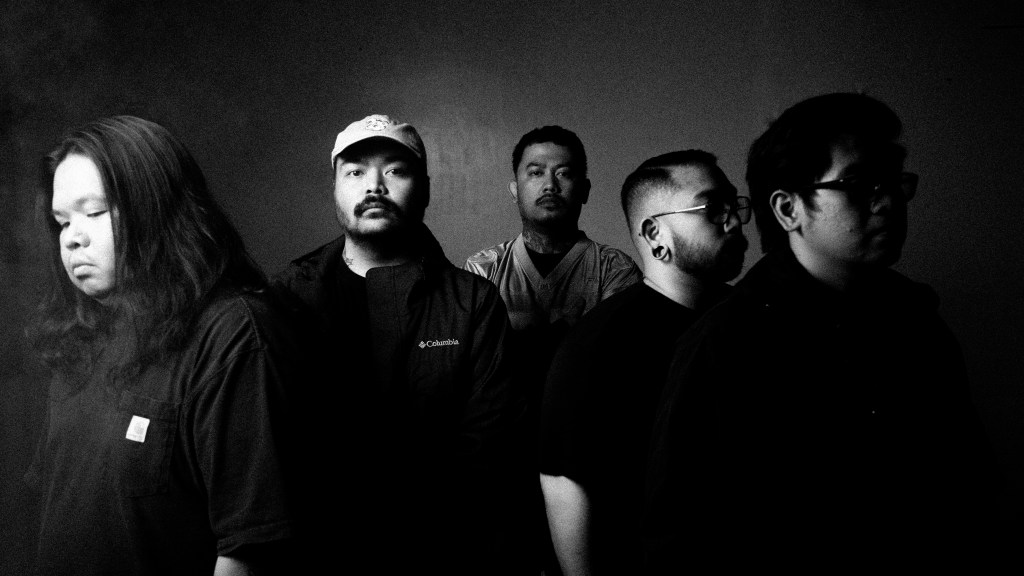
Photo Courtesy of Murder Club
Emerging from the vibrant and ever-evolving Philippine music scene, Murder Club is a band that thrives on intensity, attitude, and unapologetic self-expression.
Known for their gritty sound and electrifying presence, the group has steadily carved out a space of their own—blending raw emotion with hard-hitting instrumentals that resonate deeply with a new generation of listeners.
With each release and live performance, Murder Club continues to push boundaries, proving that they are more than just a band—they are a movement fueled by passion, chaos, and authenticity. In this interview, we get to know the minds behind the music, their journey so far, and what lies ahead for one of the country’s most compelling rising acts.
Can you take us back to how Murder Club first started? What inspired the formation of the band?
Murder Club started back in 2009 as a deathcore band, and our original name was Murder Club Massacre. The band was already formed before I joined. I actually came in as the last member, so they already had their own thing going. Back then, we were heavily influenced by US deathcore bands like Whitechapel, Suicide Silence, Job for a Cowboy, and As Blood Runs Black. That sound really pushed us to create our own sound and just go all in with that style.
You originally began as Murder Club Massacre—what led to the name change, and what did it represent for your evolution?
Yeah, we originally started as Murder Club Massacre, but around 2010 we decided to shift our sound and move into the hardcore scene. It felt like the right direction for us at the time. We dropped “Massacre” as part of the rebrand and honestly, we also realized it was kind of redundant, haha! It just made more sense to keep it simple and cleaner.
How would you describe the core identity of Murder Club today?
Heavy and angry. That’s always been the core of who we are.
Your sound has evolved from deathcore roots into hardcore—what influenced that shift?
Around that time, our influences started to change too. We got into bands like Your Demise, The Ghost Inside, Madball, and Terror, along with a lot of other hardcore bands.
Another big factor was that we started going to local hardcore shows around 2010. Being part of that environment, meeting people in the scene, and seeing how intense and real everything felt, it really inspired us to fully transition into hardcore.
Who are some of your biggest musical influences, both local and international?
Up to now, we’re still influenced by international bands like The Ghost Inside, Kublai Khan, Counterparts, Terror, and Knocked Loose.
Also from the local scene like Arcadia, Bought by Blood, Piledriver, and many more. We kind of just take bits and pieces from all these influences and make it our own.
How would you describe the “Murder Club sound” to someone hearing you for the first time? –
CATCHY AND ANGRY AT THE SAME TIME. THAT BALANCE IS SOMETHING WE ALWAYS AIM FOR.
What’s your usual songwriting process like as a band?
Our usual songwriting process right now is pretty straightforward and works well for us. We normally start with the music first, then build everything else around it, and the lyrics come after.
Most of our recent tracks are composed by Atom, our bassist. He sends demos to the group, then we all give feedback, suggest changes, and help develop the track further. Pierre handles the drums and adds his own style to it.
Once we’re all happy with how the music sounds, Enrique steps in to write the lyrics. Nat records everything at home since we’re a DIY band, so everything is really hands-on, raw, and collaborative.
Is there a particular track (like “Braveheart” or “Luminance”) that feels especially meaningful to you? Why?
Right now, our latest track “In Dying Arms” is probably the most special one for us. We’re really proud of it because it feels like we’ve finally found a sound and identity that really represent who we are as a band.
What themes or messages do you aim to express through your music?
PAIN HAS A SOUND.
After your hiatus, what made you decide to come back and release new music?
We stopped playing gigs and making music around 2016, mainly because of constant lineup changes. It just became difficult to keep things going consistently.
After the pandemic, I decided to rebuild the band and look for new members so we could start making music again. At the same time, we all really missed the live scene, so that pushed us even more to come back.
What did “Braveheart” represent for the band at that moment?
Braveheart is a very positive track for us. It’s about getting back up and not losing hope no matter what happens. It was actually written way back in 2013, but we only got to properly record it in 2022, so it took a while before it was finally released.
Can you tell us more about your latest releases and what fans can expect next?
“In Dying Arms” is something I’d describe as both heavy and catchy in terms of sound and meaning. It talks about going through painful situations in life but eventually overcoming them. As of now, we’re still undecided if the next EP will have a specific theme like what we did with Phantom Pain, but listeners can definitely expect more heavy music from us.
The Philippine hardcore scene is known for its energy—what has your experience been like performing locally?
We’re really happy with the local scene right now. There are a lot of new bands coming in, and the energy from the crowd has been so awesome. The kids are moshing hard at every show, and it just makes every gig more fun for us. We’re really thankful to have this kind of platform where we can express ourselves through music..
What’s the most unforgettable show you’ve played so far?
One of our most unforgettable moments so far was in 2025 when we released our new EP, Phantom Pain, at Mow’s Q.C. Seeing both new and familiar faces in the crowd made it feel like a mini reunion with old friends from the scene.
How do you see the current state of the local hardcore/metal scene?
Like I said, I’m really happy with where the hardcore scene is right now. With all the new bands and younger supporters coming in, I can confidently say that the scene will keep going strong, and the future looks solid.
How has your relationship as bandmates evolved over the years?
As the last remaining original member of the band, I can honestly say I’m really happy with the dynamic of our current lineup. Everyone brings their own style and ideas, and there’s a good level of respect and understanding between us. It feels more solid now, not just musically but also as a group.
What keeps the band grounded and connected despite challenges?
Communication—that’s really the key to keeping everything working smoothly.
What are your goals for Murder Club moving forward?
Our goal right now is to keep making more music that people can enjoy and connect with. We also want to play more shows outside our hometown and, hopefully, even outside the country someday.
Are there any dream collaborations or festivals you hope to be part of?
There’s no specific festival yet, but we’re definitely hoping to get the chance to play on bigger stages in the future.
What message would you like to share with your fans who have supported you throughout the years?
I just want to thank everyone who stuck with us through all the lineup changes and all the years. Thank you for listening to our new releases, for supporting our merch, and for showing up at our gigs. It means more than words can say.
We see you, we hear you, and we carry that energy with us every time we play.
We promise to keep writing, keep playing, and keep pouring everything we’ve got into our music. Expect heavier and angrier music from us. We will play for you all for as long as we can.


Leave a comment