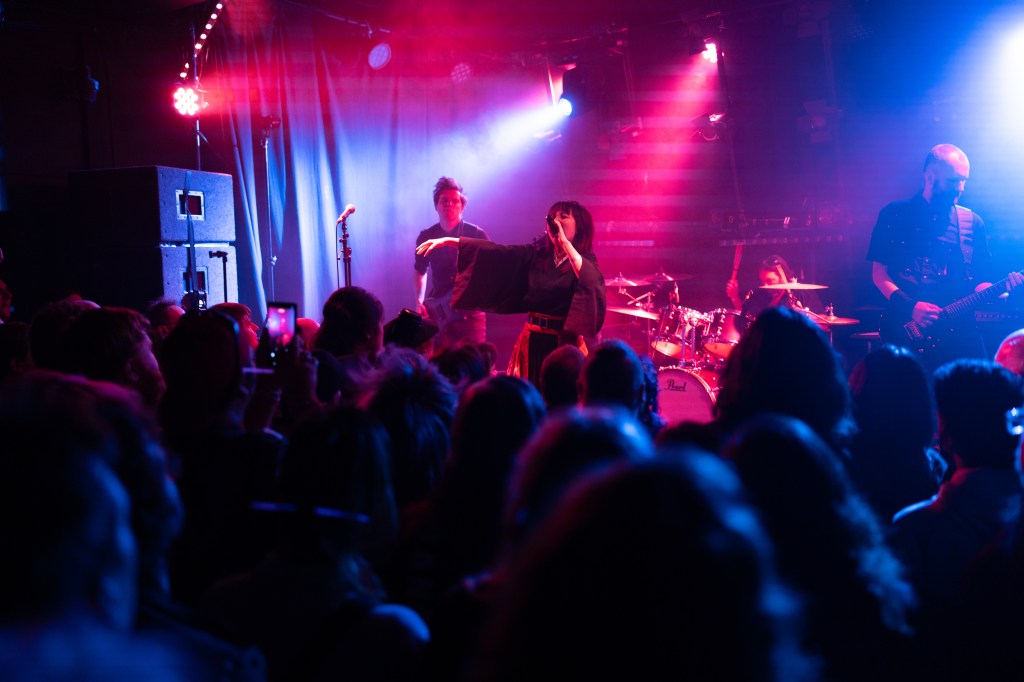
Photo Credit: Agnieszka RzeŚniowiecka (agaphoto_london)
What began as a solo project in Japan has grown into a dynamic Japanese/British band creating a distinctive blend of alternative rock, dark pop, metal, and electronic influences. Re:O brings together Japanese-born vocalist and producer Rio with James on bass and lyrics, Jay on drums, and Alex on guitar.
Led by Rio’s songwriting and production, Re:O continues to explore the space between atmospheric melodies and heavier, more intense sounds. Their music reflects a journey that crosses cultures and genres, shaped by Rio’s beginnings in Japan and the band’s experiences within the UK music scene.
In this edition of City Stories, Re:O takes us behind the music—from the evolution of the project and the creative process behind their songs to their influences, experiences as an international band, and the vision they have for the future. Discover the stories, sounds, and people behind Re:O.
For readers discovering Re:O for the first time, could you introduce yourselves and share the story behind how the band began?
Rio: I’m the lead singer and composer for Re:O. I started this as a solo project in Japan. After I moved to the UK, I wanted to explore heavier, so I decided to turn the project into a band. I met James (Bass) at the studio when I recorded with my old members, and we talked about music generally and the potential to make a cyberpunk project. After I tried to decide to take a break from the project and parted ways with the old members, I was thinking about making another project with James. However, I figured out that it would be too much. Then, we decided to bring it back to life. We are trying to find a guitar player and drummer. Finally, we found James and Alex.
Jay: I play the drums and have been with Re:O now for over 2 years. We crossed paths online when I was looking for a new band after my last one went on a break. It was great to find likeminded people that had a fresh sound and were local to my area.
Alex: Hi! I’m Alex, I’m Re:O’s guitarist, and I’ve been part of the band for a little more than a year. I’m based in London, and I moved to the UK from Italy 14 years ago. Music is my full-time job, and I do many other things such as teaching, instrumental music composition, occasional sessions, and so on.
James: Hi, I’m James. I play bass and write some lyrics for Re:O. Rio kind of covered how we met already.
Question: The name “Re:O” is unique and memorable. What does it mean, and how does it reflect your identity as a band?
Rio: It actually came from my name. It used to be RIØ, but my brother suggested that the name should be easier to remember and search. So he suggested the name Re:O, and I liked it. It seems cyberpunky, doesn’t it?
Your music blends alternative metal, J-rock, industrial, and pop influences. How would you describe Re:O’s sound in your own words?
James: It’s honestly very hard to describe and something we still struggle to contextualize ourselves, as it sits between so many different genres. Rio recently coined “Anime-styled Evanescence” in an interview we did with Paris from Kerrang Radio, which actually describes it quite well!
As a Japanese-British band, how have your cultural backgrounds influenced your songwriting, performances, and artistic vision?
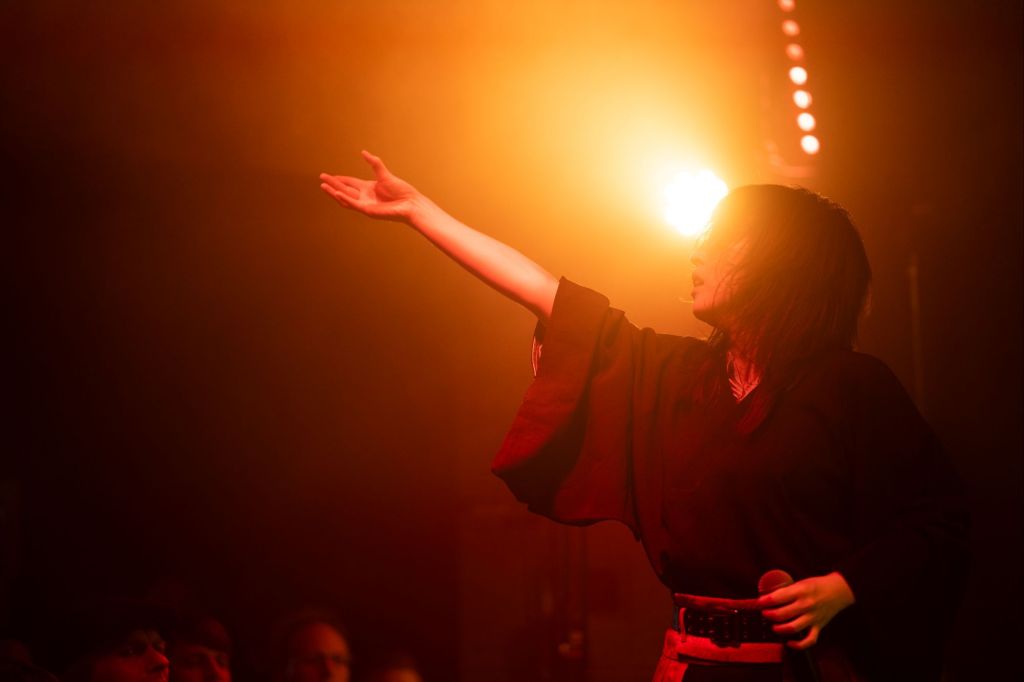
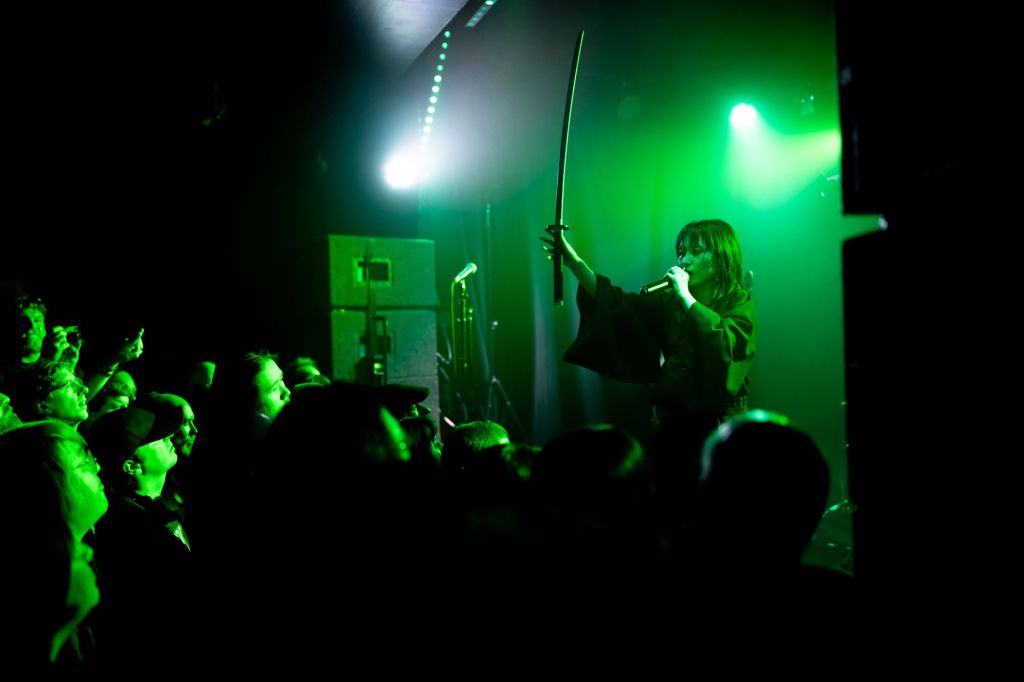
James: Japanese culture has a massive influence in the direction of our music and visuals, which Rio takes the lead on. We wanted both our music and our visual appearance on stage to reflect this. After all, our music is a blend of both the Japanese alternative and pop scene and the Western Rock and Metal scene.
We wanted to have a nod to traditional Japanese culture, which is where Rio’s striking dresses come in, whilst at the same time trying to keep a contemporary edge. It’s a hard balance to strike. Luckily, Rio is quite the fashionista.
For the rest of us, it was about finding something that looked uniform but had our own little flair to it without standing out too much compared to Rio, which led to our current outfits.
Rio: I’m glad he thinks I’m a fashionista. When it comes to songwriting, ideas that pop up in my head make me want to write songs, so I do not think about cultures. But I grew up and got lots of influence from Japanese music and Western music. This might be the reason why our music sounds like Japanese and British mixed cultures.
We also appreciate both cultures and include them in our performance and style. It’s not totally Japanese, nor British. It’s Japanese traditional styles mixed with Goth styles. This is why all the members look like Goth and Emo bands, which is contrasting to my Japanese style.
Who are some of your biggest musical inspirations, and how have they shaped the music you create today?
Rio: Although I have been listening to any kind of music, including Alternative Metal, Indie Rock, Nu-Metal, Rock, and so on, I especially like dark and sludgy music. My biggest musical inspirations are Nine Inch Nails and REZZ.
The world NIN creates is amazing and heavily dark. I like how chaotic their music is. REZZ’s music is cyberpunky. I love how she creates the dark world. I think how I arrange music comes from their music.
James: We’re lucky in Re:O to have such a wide range of influences between all of us, which all get slammed together. For me, my biggest influences that really influenced my playing and writing are Mark Klepaski, Breaking Benjamin’s former bassist, especially his work on the Phobia album; David Farrell “Phoenix” from Linkin Park; and Justin Chancellor from Tool.
Mark has such an extraordinary way of blending melodies seamlessly into the bass lines whilst driving songs forward and managing to stand out in a mix where there are often four or more guitars playing.
David’s inspiration for me is a strong reminder that you don’t need to play complex riffs to serve a song, but instead lock in with a groove that stands out and brings the entire band together.
On the other hand, Justin Chancellor’s inspiration is around experimentation—not being afraid to try out weird and new tones and riffs you may not think would work, but actually do in the final mix.
Jay: I was brought up in the ’80s, so I have been lucky enough to have had parents that exposed me to so many bands in my early years. As I got older, I started to get into the grunge scene and then into heavier music as I got into my later teens.
But I love lots of different styles of music. I never really had drum lessons when I was growing up. My first instrument was guitar back at school when I was 11.
Anyway, my biggest inspirations would be people like Dave Grohl, Travis Barker, Chad Smith, Mike Fleetwood, and many others, just to name a few.
Alex: Personally, I come from modern metal, hardcore, and punk. The guitarists who mainly influenced me are Dimebag Darrell, Dino Cazares, Tom Morello, and my absolute hero, Eddie Van Halen.
But during my career, I’ve been part of so many bands and projects, playing a wide range of diverse genres—reggae, dub, rock, pop, D&B, hip hop, blues, funk, acoustic folk, EDM, musical theatre, and more.
Luckily enough, I love challenges and I’m good at being very flexible and adapting to different situations. So I guess my taste in music is also constantly evolving!
Your songs often balance powerful instrumentals with emotional melodies. What is your typical songwriting process like?
Rio: Normally, I just don’t think about anything at all when it comes to songwriting. It might sound cheesy, but it’s just a feeling.
Some music melodies come up in my mind out of the blue. Also, sometimes I mess around with Ableton without reason. It’s like scrolling through posts on social media to me. Somehow, some good melodies come up.
After I finish making demos, I show them to the others and ask what they think about them. Then, they tweak the guitar, bass, and drum ideas.
Sometimes I make impossible drum patterns, so I understand how I am a pain for others. I appreciate how patient they are.
Many listeners describe your music as cinematic and emotionally intense. Is creating that atmosphere something you consciously aim for?
James: Not always. Honestly, our process is about, “Does it sound cool? Would I add that to my own playlist?” If the answer is yes, then we’re pretty much happy.
When it comes to the final mixes, however, we are very detail-oriented and push every synth layer, guitar riff, bass riff, drum line, and vocal melody as far as we can to bring out everything we can from that song!
Often, it results in extremely soundscapey sections and intense moments throughout the song, which I love. Our songs feel like a genuine emotional journey, a lot like classic compositions are, which I think is sometimes lost in modern songwriting where it’s more about a catchy hook as opposed to telling a story through not only lyrics but the composition itself.
Rio: It just happens. We always create what sounds cool and what we would like to make. I think the reason our music sounds cinematic and emotionally intense is that we try to convey our experiences through stories we write for each song. These are based on true experiences and emotions we went through.
Your latest releases have continued to showcase your evolving sound. What message or emotions did you hope listeners would take away from these songs?
James: The messages and emotions are all very different between each song. For example, “Reverie” is about friends drifting apart, and you find yourself reminiscing about the times you had together and hoping they are well and your paths meet again.
Whereas “Marionette” is about stress and how, if left unchecked, it can control you, negatively influence decision-making, your emotions, and your life. It can control you, and you become puppeteered.
Although we do have deep meaning and messaging in our songs, when Rio and I are writing the lyrics, we do consciously try to make them open to interpretation by the listener. What Rio and I wrote “Marionette” about may not be what you or someone else interprets it as, which is the magical thing about art.
I hope people enjoy what we’re writing and connect to it in a way that is meaningful to them.
Rio: Each song has a different theme and emotions, but we always write meaningful lyrics. We could write fun lyrics to songs, maybe like ramen, but it’s not our thing, haha.
For us, connection with the audience is important. Also, I believe not all people take the same messages from a song. Like James said, “Reverie” is about friends drifting apart, and you find yourself reminiscing about the times you had together. However, some people might get broken-heart memories from the song.
So, I want to leave it up to the listeners.
Could you tell us about the creative process behind your latest single, “Marionette”? What inspired the song, and what does it represent to you?
Rio: When I messed around in Ableton, this cool intro happened. I didn’t remember how it happened, but I remember that I wanted to make EDM-meets-Rock songs. I showed the others what they thought about the initial idea. They said it was cool, so we decided to work on it.
This song is about stress, so I tried to make chaotic and crazy synth melody lines, especially in the middle section.
No specific song inspired us to write “Marionette,” but I wanted to put EDM elements inspired by artists like Calvin Harris, Deadmau5, Alan Walker, and Zedd into heavier and darker Rock.
Looking back at your earlier releases, how do you think Re:O has grown both musically and personally?
Rio: Honestly, when I started this project, I didn’t expect to achieve what we have achieved so far. It’s been crazy that a lot of people enjoy listening to our music, which is surreal.
I used to make Dark Pop through this project when I started it. When you listen to “GUILD” and “Sorrow’s Silhouette,” they’re poppier and more dancey. I wanted to make more Indie Pop songs like Grimes, The 1975, and Pale Waves.
After I turned it into a band, the music became heavier and much darker. I gained more confidence to experiment with different sounds and tones the more I wrote and the better my writing and production skills became.
James: It’s kind of unrecognizable from even 12 months ago. Our songs are far more intricate than they used to be, and I don’t mean “harder” riffs to play or adding an insane amount of layering like there is in “GUILD.” I mean we’re a lot more focused on the small details—the microtones, a slightly different singular note here or there, which affects the entire feeling of a verse or chorus, for example.
Personally, I’ve seen my own playing drastically improve for no other reason than a desire to give everyone who comes to our show an arena-like experience in their local venue and to make those shows feel special.
Jay: Like James said, we spend a lot of time before we go into the studio to record. But I guess, like most bands, the more you play the same set of songs over and over again, over time you start to add little touches into the live sets.
That’s the great thing with Re:O—we are always thinking about how we can make each show slightly different from the last.
Your visual aesthetic is just as striking as your music. How important is visual storytelling in expressing the band’s identity?
Rio: Everything such as music, performance, band outfits, music videos, and artworks is important to us. I believe if it lacks, it ruins our music. If music speaks to the audience’s ears, then visuals speak to their ears.
James: Extremely. Without the high energy and visuals we bring to our shows, a lot of the emotion and feeling of our songs would be missed live. The visual element, the crowd’s interaction, and the music are all partners in our live shows.
Live performances bring a different energy compared to studio recordings.
What can audiences expect when they experience a Re:O show?
Rio: For us, live performance is as important as the recordings. Thankfully, lots of people bought tickets to see us and spent a lot of time coming to see us. In exchange for that, we want the people who come to our shows to enjoy the experience and feel the energy.
We always want to make real connections with the audience. You can expect our shows to be filled with high-energy and chaotic power.
James: They can expect us to give them everything we’ve got. Chaotic, high-energy shows where you can just escape reality for a little while!
Jay: I said before, we always want to give that little bit more than what you get from streaming our music when we play live.
Alex: In one simple word, they can expect emotions. I think it’s more important than ever to give audiences a good reason to attend a concert. We want our fans to feel involved and welcome in our world, get lost in the music, have fun, and feel free to interact with us as much as they want!
What has been one of the most memorable moments in your journey as a band so far?
Rio– The time when I supported Broken By The Scream and saw a big audience downstairs at the dome. I think it was the largest crow we have ever had. I saw lots of people wearing our band t-shirts but also lots of people talked to us and they said they came to our show or they liked our show. When I started this project, not so many people listened to our music at all so we are truly thankful that people enjoy our music and come to see us.
James – Honestly, the realisation we have genuine fans. To me we’re just 4 friends writing music and having fun playing shows but the longer Re:O has gone on the more people are turning up that are fans of our music that we’ve never met prior to that show, or event. To me it’s surreal and incredible to see so many people connecting to what we’re creating and I don’t think for me personally that will ever be topped no matter how high we manage to climb in our music careers.
Alex – There are many great moments I cherish, but there was this one guy who came to us after we played in London a few weeks ago. He told us he flew from Germany just to see us after finding out about Re:O somewhere online, and he was super stoked to have the chance to be there, meet us in person and have a chat! Honestly, it was surreal.
I’ll never be thankful enough to those fans who show so much love and appreciation for what we do.
Every artist faces challenges. What has been the biggest obstacle you’ve encountered, and what helped you overcome it?
Rio: Sometimes it’s hard to promote this band in the UK because I sometimes sing in Japanese. Normally, lots of people prefer English-speaking music because they want to understand what a song is about, which is understandable. We struggled to get shows early this year. We weren’t able to book any shows, but we’re doing what we’re doing now and haven’t given up. We tried so hard to get shows and spread the word on social media. Things have changed a lot now! We almost gave up, but we’re glad that we still stuck around!
James: A bit of a boring answer from me, but marketing. With where our music sits between genres, it’s not easy to market our music and cut through the thousands of other incredible bands that have an easier time marketing their music. Because of how different each of our releases are, it’s not easy to say something as simple as, “For fans of X, Y, Z,” etc. We’re lucky that we’ve found who our audience are, and Rio’s been working extremely hard on our social media profiles to get our music out there. But it is difficult to market us. I like that, though. I like that we’re not confined to one genre or easily put into a box. In the long run, that will work in our favour.
The international audience for Japanese rock and metal continues to grow. What are your thoughts on the genre’s global expansion?
Rio– As a Japanese person, I’m glad lots of people recognise and appreciate Japanese music which is surreal. English is a common language but Japanese is a minor language and not so many people speak it. Hopefully, we can get more recognition too.
How do you stay creatively inspired while continuing to evolve without losing the core identity of Re:O?
Rio– I try to listen to many genres of music so I can get inspired. I would like to write interesting music with catchy riffs and melodies. So it’s always important to get musical influence from other genres of music, not only Dark Techno, Metalcore and Nu-Metal. Sometimes I get inspiration from classical music like The Nutclacker and Swan Lake as I used to do ballet. It’s better to be open to any kind of music, not only narrowed music preferences. Not only music, but also watching films, doing some new experiences and going on a journey can inspire you to explore songwriting. I believe a song is a part of a story in films and novels. It’s something you want to show others what you went through and your emotions.
Alex – I think the key thing is: remember who you are, but be open minded and don’t be afraid of experimenting. Every single one of us has their strong identity and personality, and that’s a very important aspect of being a creative. But at the same time inspiration has to be constantly nurtured, and thinking outside the box is a challenge. It’s a constant work in progress, and it will always be. I don’t think true artists can ever feel truly satisfied and accomplished.
Is there a song in your discography that feels especially personal or meaningful to you? What makes it stand out?
Rio: I try to listen to many genres of music so I can get inspired. I would like to write interesting music with catchy riffs and melodies. So, it’s always important to get musical influence from other genres of music, not only Dark Techno, Metalcore, and Nu-Metal. Sometimes, I get inspiration from classical music like The Nutcracker and Swan Lake, as I used to do ballet. It’s better to be open to any kind of music, rather than having narrow musical preferences. Not only music, but also watching films, having new experiences, and going on a journey can inspire you to explore songwriting. I believe a song is a part of a story in films and novels. It’s something you want to show others about what you went through and your emotions.
Alex: I think the key thing is: remember who you are, but be open-minded and don’t be afraid of experimenting. Every single one of us has their own strong identity and personality, and that’s a very important aspect of being a creative. But at the same time, inspiration has to be constantly nurtured, and thinking outside the box is a challenge. It’s a constant work in progress, and it will always be. I don’t think true artists can ever feel truly satisfied and accomplished.
Is there a song in your discography that feels especially personal or meaningful to you? What makes it stand out?
James: For me personally, it’s “Violets.” I wrote this alongside Rio during a time when I was going through extreme grief due to the loss of my grandmother, who I was extremely close with. Instead of writing a slower, very emotional song, I wanted something that really described both musically and lyrically what I was feeling: overwhelming pain, fear, denial, and extreme anxiety. All of these emotions were expertly captured by Rio in the initial demos, from the hard-hitting main riff to the extremely emotional and stripped-out verse, to the climactic, hard-hitting, and extremely sad choruses. It was honestly the song I wanted to create that perfectly captured the raw emotions I struggled to contain. And with Rio’s help, we managed it.
https://open.spotify.com/track/6HtJjK5EZnpLTk1h8yvBYo?si=R3lFHoAsRwKVstLuB2MOag&utm_source=copy-link&sci=spotify%3Acard-config%3A6gqLiJJ03gtbMouPxV1c8Z
It’s not like our other songs. It’s atypical of them, but it was one of the first songs where I realised how emotional Rio’s voice is and how her melodies were both extremely catchy while maintaining the emotional clarity and power of the story I wanted to convey.
Rio: For me, “Ronin” means a lot to me because it’s the first single after I turned this project into a band. Also, I was feeling lost when I wrote the song at the time because people I trusted betrayed me, and I felt I was surrounded by lots of enemies. I thought I wouldn’t be able to continue on this music journey. But this song has changed our entire lives, I believe!
If you could collaborate with any artist or band from anywhere in the world, who would it be and why?
James – Mick Gordon, I love his work especially the Doom 2016 OST.
No other reason than I just think it would be cool to work with him and create something distinctively Re:O but as heavy as the Doom OST.
Rio- Like James said, Mick Gordon. His music is amazing. And I see he collaborates with lots of bands. Every time he works on it, every song sounds amazing because of his magic. Also, I like industrial rock so we could make much darker and havier songs with him.
How do you stay creatively inspired while continuing to evolve without losing the core identity of Re:O?
Rio: I try to listen to many genres of music so I can get inspired. I would like to write interesting music with catchy riffs and melodies. So, it’s always important to get musical influence from other genres of music, not only Dark Techno, Metalcore, and Nu-Metal. Sometimes, I get inspiration from classical music like The Nutcracker and Swan Lake, as I used to do ballet. It’s better to be open to any kind of music, not only having narrow musical preferences. Not only music, but also watching films, having new experiences, and going on a journey can inspire you to explore songwriting. I believe a song is a part of a story in films and novels. It’s something you want to show others about what you went through and your emotions.
Alex: I think the key thing is: remember who you are, but be open-minded and don’t be afraid of experimenting. Every single one of us has their own strong identity and personality, and that’s a very important aspect of being a creative. But at the same time, inspiration has to be constantly nurtured, and thinking outside the box is a challenge. It’s a constant work in progress, and it will always be. I don’t think true artists can ever feel truly satisfied and accomplished.
Are there any upcoming projects, releases, tours, or collaborations that fans can look forward to in the coming months?
Alex: Well, there is one thing I’ve been working on for a while… I can’t say anything yet. I don’t even know if I’ll be able to complete it. But if I do, you’ll hear from us for sure! Let’s just say it would be a big achievement for an independent UK band like us!
Rio: A big secret is going on now! But hopefully, we can release more songs and play more shows around the UK. Keep your fingers crossed!
Finally, what message would you like to share with your fans around the world and with everyone reading City Stories?
Rio: Thank you so much for supporting us so far. It truly means a lot to us. This project started from nowhere. Sometimes, we almost gave up because we thought we shouldn’t pursue our dreams, but because of you guys, we can be what we are now. I didn’t expect this. I thought no one would listen to our music, but lots of people come to see our shows and chat with us. It’s amazing. Hopefully, we can bring more news to you guys!
James: I want to say thank you. Thank you to everyone who is joining us on this already surreal and crazy journey and for listening to what we create. Never in any reality did I think our music would connect and resonate with so many people, and what’s even crazier is that number is growing every day! I hope to see as many of you as I can at every show we play! We love meeting as many people as possible!
Jay: Like James said, this is not just four people on stage playing music. It’s about every single one of our fans who come from miles around, taking time out of their day or weekends to spend a short time with us. For that, we are truly grateful. Without you, we would not be where we are now. Sure, we would still be pushing along, believing in what we do and how our music makes us happy, but to know that you feel the same—words cannot say how much we appreciate you all.
Loved their story, music, and journey? Make sure to follow Re:O and stay updated on their latest releases, upcoming shows, and everything they have in store.
🌐 Linktree: https://linktr.ee/reo_o
Instagram: @reotheband
TikTok: @reotheband
Spotify: Re:O
Facebook: reothebandofficial
Twitter/X: @re_oofficial
▶️ YouTube: https://www.youtube.com/channel/UCsicWava4-eRqVvrHOEOeMg
Follow, listen, and join Re:O on their journey!


Leave a comment