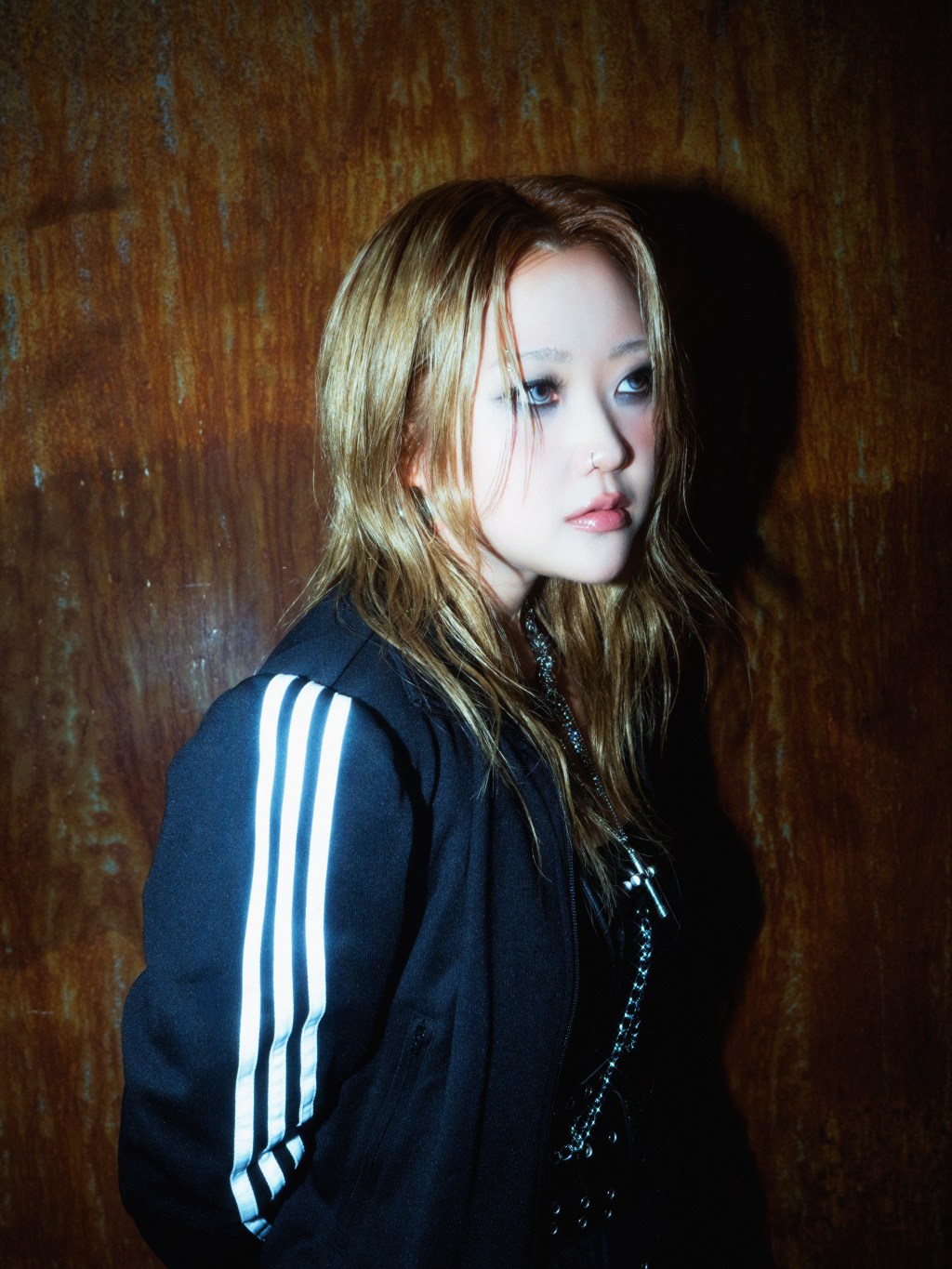
For Kitty Moon, music is a way of understanding herself, connecting with others, and exploring the possibilities of her own creativity. Since her debut, she has continued to develop a more personal and grounded sound while staying true to her desire to create freely.
As an independent artist, Kitty Moon embraces the challenges of building her own path, choosing to create what she wants first rather than simply following the currents of the music industry. In this City Stories interview, she talks about her musical journey, the meaning behind “Never Landing,” her creative process, the Korean indie and rock scene, and her hopes for connecting more deeply with listeners through music.
Thank you for joining us on City Stories! First, please introduce yourself to our readers around the world and tell us how you came to use the stage name “Kitty Moon.”
Hello, City Stories readers. I’m Kitty Moon, an artist who creates alternative rock-based music that blends guitar-driven sounds with synthesizers. I’m drawn to layered sounds that can feel intense at times and delicate at others. Above all, I hope my music leaves listeners with a sense of curiosity.
The name Kitty Moon comes from Paul Auster’s novel Moon Palace. I took the name from the character Kitty. She felt to me like an Asian woman who existed near the center of the story, yet, as is often the case, her own story was never given much space in the narrative. Still, I found myself imagining who she might have been as a person. That became the starting point for thinking about the many “hers” scattered throughout literature—women whose stories often remain untold, even when they are present within the narrative.
When did you first discover your passion for music, and what led you to become a singer-songwriter?
Looking back, everything began with something very small. When I was around twelve, my older sister would fill my MP3 player with songs she had carefully picked out for me. The Korean indie music that found its way into my life through those songs gradually became the soundtrack to my everyday world.
At the time, I never imagined that I would one day write my own music. I simply wanted to be the person singing in a band.
But when I was around eighteen, the band I had been part of for years disbanded, and for the first time, I found myself asking, “What can I do on my own?” As I slowly searched for an answer, I began writing songs.
Kitty Moon’s music is rooted in rock but also reflects her own philosophy on life. How would you like to describe your musical identity?
I believe my musical identity lies in exploring the different sides of myself through sound. My music can be intense and raw at times, but it can also be delicate and vulnerable.
I don’t want to be confined to a single form or sound. Instead, I want to continue revealing the many different sides of who I am through my music.
Which artist or band has had the greatest influence on your music and songwriting?
I’ve listened to music from countless artists, but Linda Perry and Janis Joplin, in particular, embody the kind of energy I’ve always wanted to express through my own music.
Your debut single, “Never Landing,” was the song that first introduced Kitty Moon to many people. What inspired this song, and what message did you want to convey?
After starting college, I began thinking deeply about what kind of artist I wanted to become. That led me to ask myself what my own “beginning” really was—and at its core, I found a kind of love that embraces and cares for both myself and others. To me, it felt like a form of maternal love.
I wanted to give myself more of that kind of love, and I hoped everyone could experience it, too. I wanted people to trust themselves and continue living their lives in their own way. And the resolve behind “Never Landing”—the decision to never land—was a promise I made to my own footsteps.
Your recently released EP, “Koreander Smash,” showcased a different musical style. Please tell us about the concept and production process behind this project.
Working with producer Yohrn (a.k.a. yohrn), I tried many things for the first time. It became a process of thinking more deeply about the new energy and message I wanted to express. I wanted to bring my personal voice and a social message together, and, believing that society is shaped by countless individuals coming together to create change, I began thinking about how I could become part of that wave. It was also an honor to bring to life, together with Yohrn, the alternative rock I grew up listening to and the power that once made my younger heart race.
The title itself is a combination of “Korean” and “-der Smash.” It actually started with the name of a cocktail I liked at a bar—the “Coriander Smash.” I kept playing with it as a pun until I came up with something that sounded close to “Korean,” and that’s how the name came together. The word “Smash” also felt fitting for the message I wanted the album to express, so that’s how I settled on the title.
I’m curious about your usual songwriting process. Do you tend to come up with the melody first, or do you start by writing the lyrics?
I usually come up with the chords or the overall vibe of the music first, and then write the lyrics. Most of the time, though, I write the lyrics and melody at the same time.
Kitty Moon’s music is notable for its candid expression of emotions. How important is it to express personal experiences through music?
Expressing my personal experiences through music is important to me. I don’t always know what form they will take at first, but once I’ve turned them into music, listening to those songs again after some time has passed often gives me a new perspective.
Hearing music I made in the past after my own perspective has changed feels like one of the greatest gifts I can give myself.
And the most rewarding moments are when I hear what people felt and thought when they listened to that music.
What was the biggest difficulty or challenge you faced while working as an independent artist in Korea?
The biggest challenge is probably having to do so many things on my own. As an independent artist, I’m not only responsible for making music but also for everything that comes afterward planning, promotion, visual content, performances, and so on. At every stage, I find myself needing help from professionals, but it’s not always easy to find the right people or access the resources I need.
There’s also a structural challenge. The Korean indie music market itself is relatively small, so it can be difficult to make a stable living from music alone. That means I’ve had to think beyond simply making music and start learning how to sustain myself as an artist. In a way, I’ve been approaching this with the mindset of someone who is new to running a business. I’m still learning how to balance the creative side with the practical side of being an independent artist.
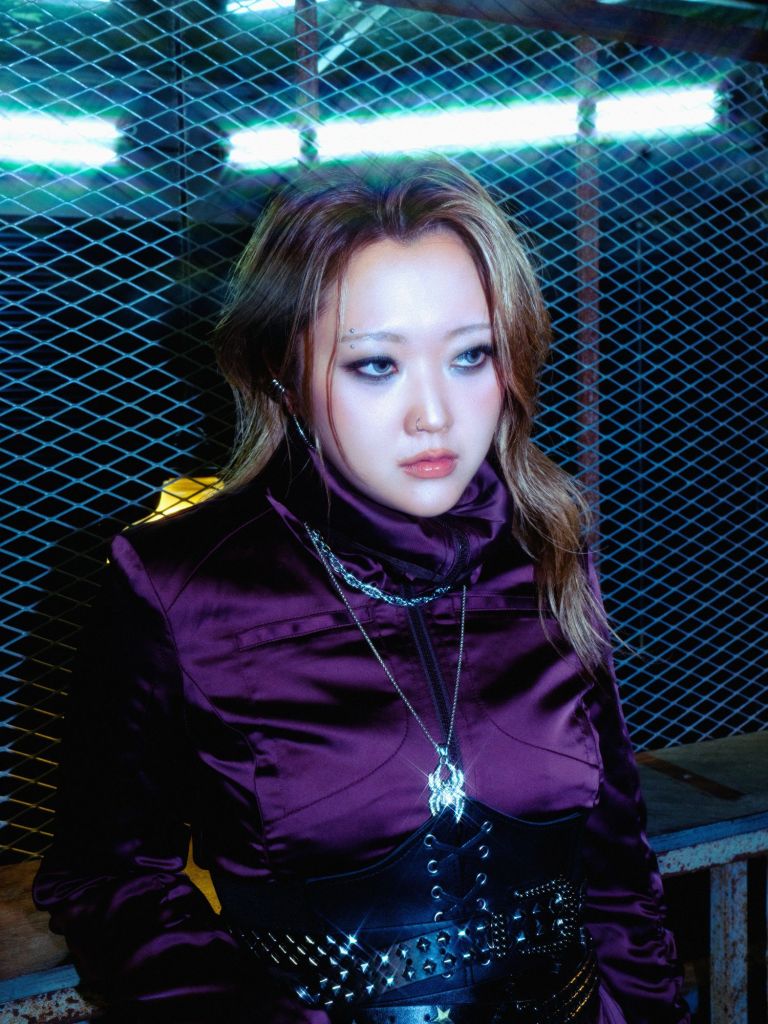
Since your debut in 2023, how do you think your musical style has changed and evolved?
As I’ve grown since my debut, I think I’ve also evolved into a more colorful and grounded version of myself. Musically, I’ve learned to express myself in more diverse ways than I did in the beginning, and as a result, my sound has also become more solid. I feel that I now have a clearer sense of who I am and what I want to say through my music.
So going forward, I want to connect more directly with the people who listen to my music. I want to honestly show the different sides of myself and the energy within me through my music, and create music that allows me to connect more deeply with my listeners.
Of all the songs you’ve released so far, which one is the most special to you, and why?
Personally, “Angelic Train” is the song that feels closest to my heart. When I sing it, I feel like I become the most delicate yet unguarded version of myself. It feels like getting on a train without knowing where it’s headed. But by the time the song ends, I feel as though I’m returning to reality. That feeling seems to bring me back to the present, giving me a clearer sense of where I am in this moment.
How can you maintain your own musical freedom while staying in step with the trends of the music industry?
Ultimately, I think it’s about being as honest as possible about what I truly want to do. Within the currents of the music industry, there is the public, and within that are people living their own individual lives. So I feel more drawn to a way of working where I first create what I want to express, and then connect with the people who need that music.
I don’t know yet who my music will reach or how far it will go. But as I continue to grow and develop my own music along the way, I want to stay connected to the world while also protecting my musical freedom. I think that is my own way of continuing to make music.
What does performing live mean to Kitty Moon? What emotions do you hope the audience will feel through your performances?
When I make music, I do so without knowing how people will actually hear it and I think that uncertainty itself is what makes it interesting. A live show is the moment when music made that way actually meets real people, and I can see their reactions directly. The experience of communicating with the audience gives me a stronger sense of motivation, and on stage, I feel a strong sense that I’m truly alive.
I hope that after watching the show, once they’re alone with themselves, they’ll think back on the live performance. I’d love it if they could take the energy they felt during the show and have time to turn it into their own story.
In the Korean music market, where not only K-pop but also a variety of genres coexist, how do you view the indie and rock scenes today?
I don’t think of Korea’s indie and rock scenes as completely separate worlds from K-pop. The genres are different, but I sometimes feel that there’s a certain sensibility shared by music made in Korea a sense of how to communicate music more effectively and what people respond to.
That may be why, when I look at K-pop, it feels like there’s a constant effort to take things that are already familiar, understand why they resonate with people, and then recombine and reinterpret them in unfamiliar ways. In the process, it seems to be gradually creating a language of its own. I think that is a tremendous strength of Korean music.
At the same time, I have mixed feelings about that strength. When the sense of what works well becomes too strong, it can become harder to push something all the way through when you can’t yet explain why it’s good, or when it might not work at all. In that sense, the current indie and rock scenes feel like spaces where a different kind of possibility still exists for me. They are places where people can create what they want first, rather than conforming to an established current, and in the process, discover something new that hasn’t been given a name yet.
I’ve also chosen to make what I want to create first, rather than adapting myself to the flow of the industry. And I believe that when more of those individuals emerge and encounter one another, new currents can eventually take shape. Going forward, I hope that worlds that currently feel somewhat separate such as K-pop, indie, and rock can meet and collaborate more, expanding each other’s languages and possibilities. I think that could naturally lead to music that hasn’t existed before, or to another kind of movement that we don’t even have a name for yet.
Are there any artists or producers you’d definitely like to collaborate with in the future, either in Korea or abroad?
Lady Gaga. I love you! ❤
If you have any hobbies or interests that you enjoy as a source of inspiration outside of your music work, please tell us about them.
I love sci-fi movies. When the things they imagine sometimes become reality, it gives me a fun sense of wonder. Lately, I’ve also been wanting to take sewing classes. I’ve always wanted to have a crafting hobby where I can make things that I can keep.
What has been your most memorable moment in your music career so far?
It’s when I connect with the audience through their eyes.
The people who come up to me after I finish singing and are the first to greet me even though I may not have known them for long have something in their eyes that I can feel.
What are your goals or dreams for the next few years?
I’d like to learn more about electronic music. Being able to play around with it like a toy that sense of immersion feels really enjoyable to me.
If you have any advice for aspiring singer-songwriters who are creating their own music, please share it.
I hope you keep following what makes you curious and find something you can truly immerse yourself in. I hope you don’t feel like you have to figure everything out on your own.
I was the same way, but I’ve come to realize that sharing your work and thoughts with others and going through the process together is also an important part of making music.
Above all, I hope you keep making music while discovering more and more moments when you can truly immerse yourself in what you do.
Finally, please share a message for the fans who support Kitty Moon and for City Stories readers around the world.
What I’ve come to realize through making music is that, in the end, music doesn’t stop at being something we create on our own it brings people together.
The fact that we can meet one another through music and return to it whenever we want, meeting again and again, is something I find truly joyful. I hope that City Stories, Kitty Moon, and everyone reading this can continue to meet one another through music and share even more love. Thank you.


Leave a comment