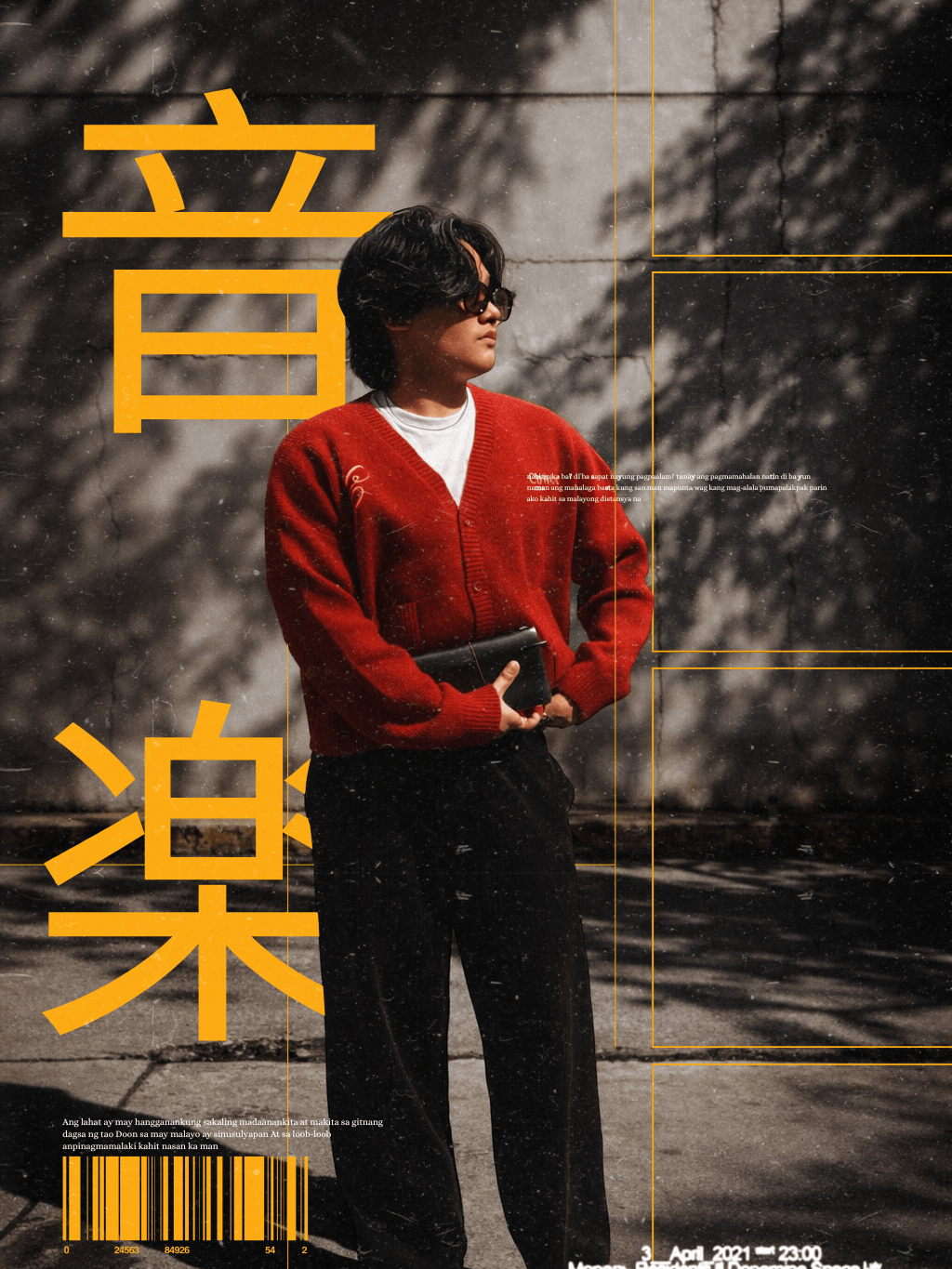
For Filipino artist Anton Stefan, music is more than just a creative outlet. It is a way to understand himself, tell stories, and connect with people through experiences and emotions that words alone cannot always express.
Having started making music at a young age, Anton has evolved from being an instrumentalist to exploring singing, rapping, and songwriting. His creative process is shaped by personal experiences, self-reflection, and the desire to create something meaningful. Through songs like “Ulap” and “Ako Lang,” he opens up about pursuing his dreams, navigating personal struggles, and finding comfort in vulnerability.
For Anton, success goes beyond streams, accolades, or the number of people who listen to his music. What matters most is the impact his art leaves behind and the possibility of making someone feel understood, inspired, or a little less alone. Guided by the question “Ano ang ambag ko sa mundo?” (What is my contribution to the world?), he continues to create with honesty, purpose, and passion.
With hundreds of songs still waiting to be completed, Anton Stefan believes he is only getting started. In this edition of City Stories, we explore his musical journey, the stories behind his songs, and the deeper meaning of creating art that connects with others.
For those discovering Anton Stefan for the first time, how would you introduce yourself—not just as an artist, but as a person?
Anton Stefan is a local Filipino artist who loves making music and has so much love for the arts in general.
As a person, I’m really just another Filipino whose goal is to create and craft things, hoping that somehow they make people feel something, become better, or maybe even make someone’s life a little better.
I want to be known as a creative who has somehow inspired others, even in small ways.
What first inspired you to pursue music, and when did you realize that this was something you wanted to take seriously?
Honestly, I’ve always been making music from a very young age, just in different forms. At first, it was simply for the fun of it, but eventually I realized that music gave me a voice and a platform for people to listen to. That made me want to pursue it even further and take it more seriously.
Your music carries a very personal and emotional quality. How much of your real-life experiences find their way into your songs?
I think it naturally goes in that direction because everything I write is basically a reflection of what’s inside my mind, so it just naturally flows into the work. With everything I make, there’s usually some sort of real-life experience mixed into it, whether it comes from personal experiences, studying, or practicing my craft.
Maybe I just function that way when it comes to creating. Because of that, my work becomes more personal, and I think that also allows me to have more passion for it.
What does songwriting mean to you? Is it more about telling a story, expressing an emotion, or simply capturing a moment?
Songwriting means so, so much to me. It’s a way for me to release and express myself in ways that I can’t always do in everyday life. I think it captures everything—telling a story, expressing an emotion, and capturing a moment.
It’s also a way of reaching out to people who might be going through similar things. I love that I’m able to communicate and connect with different people on a deeper level through what I do. It can be my way of spreading comfort, positivity, or simply helping someone feel a little less alone.
Looking at your releases such as “Ako Lang,” “Prologo,” “Ganun Lang Talaga,” “Edi Wag Na,” and “Eksena,” what do you think connects these songs together?
I think they tell a natural story from start to finish. It’s a very personal process—from grief, to realization, to acceptance. They really show what was going through my mind during those different periods of my life. There’s a certain aspect of growth, healing, and self-realization that connects them all.
Is there a particular song in your catalog that feels the most personal to you? What makes it special?
There’s this song called “Ulap.” It’s not really a song that has as many streams as my other songs, and it’s also on the EP, but I don’t mind because it’s a very personal song for me.
It’s about pursuing my passion and dreams in the creative field while having doubts about the practicality of it all. But in the end, I still choose to pursue it because of how much I love it. It’s raw and genuine, and it talks about something I don’t really open up about with people, which is why it’s very close to me.
What was the story or emotion behind “Ako Lang”, and what did you hope listeners would feel when they heard it?
Honestly, I didn’t really want to release “Ako Lang” at first because I thought it was too personal and too sad. But when I finally released it, it felt like I was finally letting it out.
I was hoping people would relate to it and find some sort of comfort in it. It’s a song that I wanted to be helpful to others. It really is a sad song, but it’s also a true, raw, and real song about struggle in its different forms.
Comfort was always the goal, while also expressing what I genuinely felt during that moment in my life.
Every artist goes through moments of doubt. Have you ever questioned your path in music, and what helped you keep going?
Of course, there’s always doubt in my mind. But honestly, it eventually came down to asking myself, “What is the goal of me making music?” When I was younger, it was really about trying to impress other people and look cool. But as I matured as an artist, I started to understand that it really isn’t about that. It became more about asking, “What can I contribute to the universe or to my country through my art? What can I make people feel through my lyrics? Ano ba ang ambag nito sa mundo?”
Once I switched to that mindset, it became more about simply creating, creating, and trusting in my skills. And if even one person connects with my work, then I already feel successful.
How has your sound or approach to songwriting changed since you first started creating music?
It has drastically evolved, to be honest, especially because I started when I was very young. Everyone in my family listened to different genres of music, which is probably why I have so many influences.
I also started playing instruments at a very young age. Actually, I was more of an instrumentalist first. Singing and rapping came later, when I finally gained more confidence and started enjoying those parts of making music.
Who are some artists or musicians who have influenced the way you write, perform, or understand music?
I think there are way too many to mention because I listen to music every day, so my influences are always changing. But off the top of my head, without overthinking it, I’d probably say Kendrick Lamar, IV of Spades, Daniel Caesar, Rex Orange County, Eminem, John Mayer, Eraserheads, Ariana Grande, and Fall Out Boy.
When you create a song, what usually comes first—the lyrics, melody, concept, or a particular emotion?
Honestly, there’s no real structure. Sometimes it starts with a beat, sometimes a word, sometimes a concept, and sometimes just a feeling. It really changes depending on what I feel or what the goal of the song is.
Sometimes I’ll be commuting and a melody will suddenly come to me out of nowhere. Other times, I’ll intentionally sit down with the goal of writing a song and start with an instrument. Sometimes there’s a specific message or word I want to communicate, and I build around that. It’s always growing and changing, which is actually what makes it really fun.
How important is vulnerability to you as an artist, especially when sharing songs inspired by personal experiences?
Vulnerability was a struggle for me at first because what you hear in my songs isn’t always what you see from me in real life. I also had this thing in the past where I didn’t want people to see me as weak or sad.
But I realized that being vulnerable and allowing yourself to be seen is one of the sacrifices we artists sometimes have to make, because vulnerability is something that so many people struggle with. In order to connect deeply with others, you also have to be willing to connect deeply with yourself.
Music can sometimes become a way of processing things we cannot easily say in real life. Has creating music ever helped you understand yourself better?
Yes. It has saved me and elevated my life so, so much. Because of music, I’ve understood myself on a much deeper level. When I write songs and make art, I get to really think deeply and spend time with myself.
Funnily enough, it has also led me to meet so many different people and taught me how to present myself outside of my own little world. It really is my life.
What has been one of the biggest challenges you’ve faced while building your career as an independent or emerging artist?
Most of the challenges I’ve faced have honestly been personal. Self-doubt, not being able to release my own music for such a long time, perfectionism, and not being satisfied with my work.
Sometimes I would overthink what other people would think of me, and that would affect what I created or whether I would release it at all.
But eventually, you grow into a person who starts asking why you’re doing this in the first place. Once I realized that my true goal was simply to create for the sake of self-expression and contributing something to the world, everything became much smoother.
Now, my real challenge is time because I’m so busy with my other creative ventures. I really need to give more time back to songwriting. 😆
What is one lesson you’ve learned from your journey so far that you wish you had known when you were just starting out?
“Gawin mo na, mamamatay ka rin naman.” Hahaha. I was always an overthinker, and in the past, I cared too much about what people thought of me. Eventually, that became a factor in what I was doing with my life and even in releasing my music.
Now that I’ve matured more, I’ve realized that mamamatay rin naman tayo. So might as well do what you want. Keep exploring, keep creating, and keep doing the things you love.
Beyond streaming numbers and recognition, what would make you feel that you’ve truly succeeded as an artist?
If people are able to relate to or be moved by some of my music, I already consider myself successful. Yes, I know streams are an indicator of how many people are listening, but at the end of the day, my goal isn’t really about the accolades or the number of followers I can gain. It’s about the contribution I leave behind through my art.
When I’m no longer here, what did I leave in the world? Have I helped someone somehow? Ano ang ambag ko sa mundo? Those are the questions that matter much more to me.
If you could collaborate with any artist—Filipino or international—who would it be, and what kind of song would you want to create together?
Hahaha, I’ve never really thought about it that much. Maybe Rex Orange County? It’s kind of impossible, of course, but hey, why not? 😆 I’d probably want to make a slow, laid-back song with some electric guitar and orchestral elements.
What do you want listeners to remember about Anton Stefan after hearing your music or seeing you perform?
I want people to remember me as a creative and an artist who is genuinely passionate about his craft. I want to inspire people to pursue what they love, and I want my work to spread hope and maybe leave them with a deeper message or something to think about.
As you enter the next chapter of your career, what can fans look forward to from you—new music, collaborations, performances, or something completely unexpected?
A LOT! I’m honestly only starting. I’ve got hundreds of songs, hahaha. I just need to find the time to finish them. I want people to know that I’m just getting started, and there’s still so much more to come.
Finally, if you could speak directly to someone who is currently going through the same emotions or struggles that inspired your music, what would you want to tell them?
DON’T STOP! There are already so many bad and difficult things in this world, and I think we need more joy, kindness, positivity, and love.
If you’re struggling right now, just remember: this too shall pass. Feel everything you need to feel in the moment, but make sure you also learn all the lessons you’re supposed to learn from it. Don’t forget to grow, grow, grow


Leave a Reply