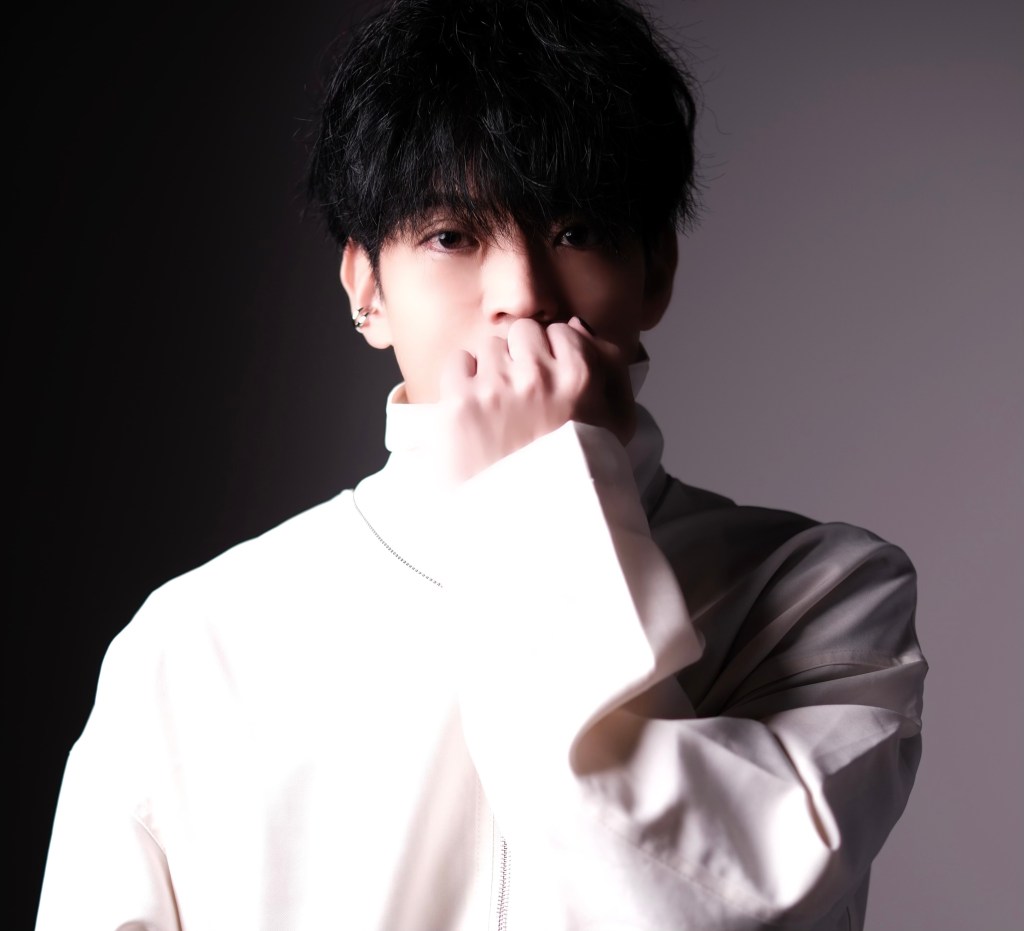
From Osaka, Japan, independent solo vocalist YouKey continues to win over listeners with his heartfelt music and genuine artistry. In this exclusive City Stories interview, he shares his musical journey, creative inspirations, memorable live performances, and his hopes for the future.
Join us as we get to know the artist behind the music.
For readers who are discovering YouKey for the first time, could you introduce yourself and tell us about your musical journey so far?
Hello everyone! It’s a pleasure to meet you. I’m YouKey (Yu-ki), a solo vocalist based in Japan, originally from Osaka Prefecture.
My favorite food is baumkuchen, and my favorite sport is basketball. The artists I admire most are Lilas Ikuta and Tsuyoshi Domoto.
I made my debut in 2017 with my first single, “Kimi ni Todoke” (“Reach You”), and since then, I’ve released six digital singles. In Japan, I’ve had the opportunity to perform at outdoor music festivals and live shows at Zepp venues.
More recently, I was featured on the Korean YouTube channel ALLTHINGS, often referred to as Korea’s version of The First Take, where I performed my song “Affirmation.” Through opportunities like this, I’m working to introduce my music to even more listeners around the world.
Before pursuing music professionally, you were deeply involved in basketball. How has your experience as an athlete influenced you as both a person and an artist?
Basketball taught me one of the most valuable skills I have today—it gave me the confidence to perform without feeling nervous, no matter how large the audience is.
To me, there’s no real difference between playing basketball in front of a crowd and performing on a live stage. In both situations, people are watching your performance, so I’ve learned to embrace that pressure.
Music also comes with difficult moments, and not every experience is a happy one. Basketball taught me the mental strength and resilience to overcome those challenges, and that has become an essential part of who I am as an artist.
What inspired you to leave the world of sports and pursue music instead? Was there a particular moment that convinced you to make that decision?
I started playing basketball when I was 10 years old and continued all the way through university. I even dreamed of becoming a professional player.
To be honest, though, I struggled to fit in with my team. At the same time, singing had always been something I loved. I spent a long time wondering which path I should choose.
Then one day, I came across an audition magazine that was recruiting students for the training program of a well-known entertainment agency. That became the turning point in my life.
Although my decision led to arguments with my parents, I chose to leave basketball behind and pursue music because I didn’t want to spend my life regretting the things I never tried.
It still took years before my parents truly understood and supported my decision. Some people around me even laughed at my dream. But today, both my parents and those same people have become some of my biggest supporters.
Since making your debut in 2017, what has been the most valuable lesson you’ve learned throughout your career?
My journey hasn’t been smooth or straightforward.
There were many times when I wanted to release new music, but my agency wouldn’t give the approval. We often disagreed and clashed over those decisions.
Even during those difficult periods, I kept reminding myself that my mission never changed—to keep improving, stay prepared, and never stop working toward my goals. Looking back now, I realize that those years helped shape the artist I am today.
I’m also incredibly grateful that there are people who continue to listen to my music. Their support is the reason I’m still here.
Another lesson I’ve learned is to stay true to myself. I don’t believe there’s a single “correct” way to be an artist, but if you’re honest with yourself instead of trying to fit in with everyone else, your music will eventually reach the people who need to hear it.
How would you describe your music and your identity as an artist?
If I had to describe myself in one sentence, I’d say:
“A vocalist who tells stories through a one-of-a-kind voice.”
Many vocal coaches have told me over the years that both my speaking voice and singing voice are very distinctive. Ironically, though, I’m not actually that fond of my own voice! (laughs)
Depending on the song, it can sound bright and refreshing, or rough and powerful. Some people have even told me that my voice is too refreshing to suit heartbreak songs—and honestly, I sometimes think they’re right. It naturally fits songs with a more positive message.
Rather than aiming for technical perfection, I care more about preserving the emotions and atmosphere of the moment while I’m singing.
I believe that’s what allows my music to connect with listeners on a deeper, more personal level.
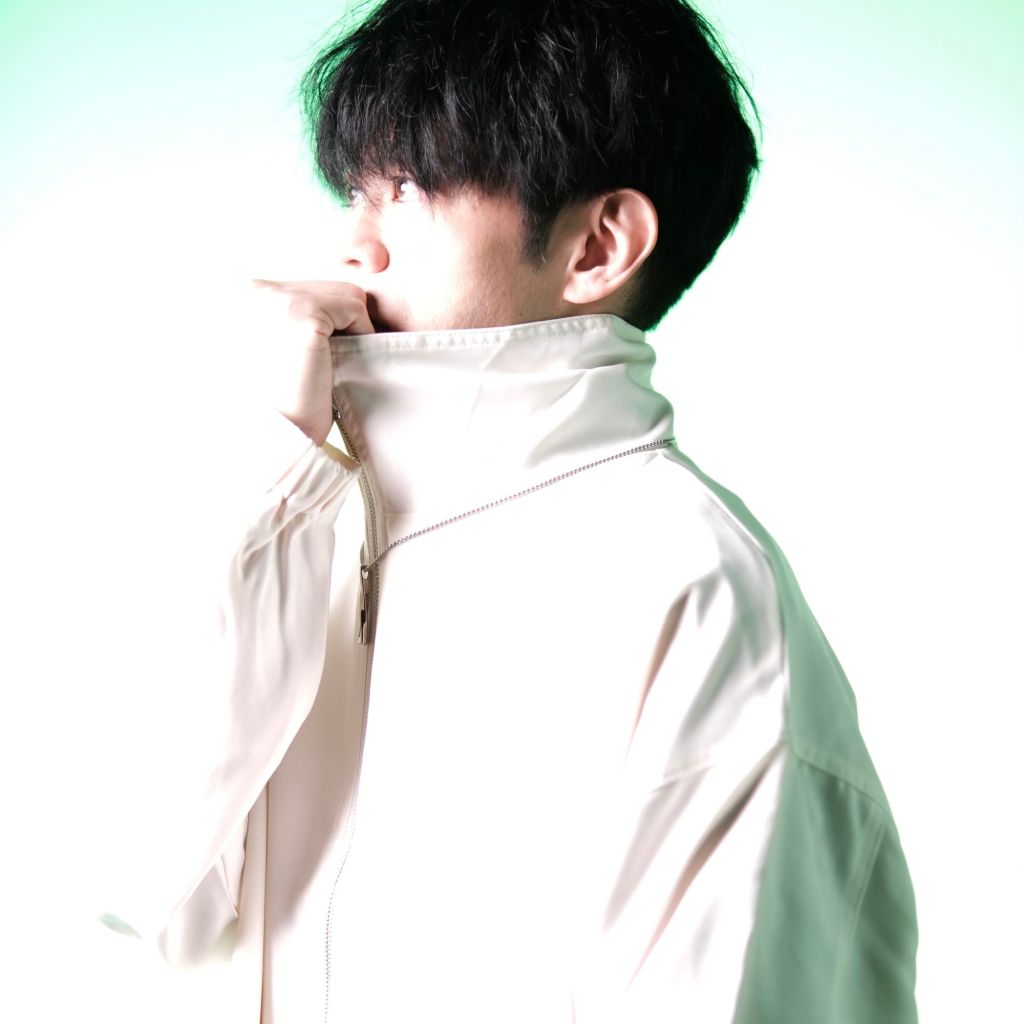
Which artists, genres, or life experiences have influenced your music the most?
The artist who has influenced me the most is Tsuyoshi Domoto.
Beyond his work with KinKi Kids, I’ve always been captivated by his solo career, especially the unique world he creates through his lyrics. His songwriting is unlike anyone else’s, and it inspired me to create music with that same kind of originality.
His solo debut song, “Machi” (“The City”), left an especially profound impression on me. The lyrics feel incredibly relevant even today, and it’s amazing to think that he wrote them more than 20 years ago. So many of the lines still resonate with modern society, making it one of the most impactful songs I’ve ever heard.
More recently, artists like Lilas Ikuta and Ayase have also become great sources of inspiration for me.
At the core of my musical identity is J-pop. I enjoy listening to R&B and many other genres, but if I had to choose the one that defines me the most, it would definitely be J-pop.
Your songs often carry emotional yet uplifting messages. Where do you find inspiration when writing lyrics?
That’s a difficult question. (laughs)
I actually try not to force the creative process. Instead, I wait until inspiration comes naturally.
I don’t sit down thinking, “I’m going to write this kind of song next,” or “Alright, it’s time to write.” More often, a single phrase suddenly pops into my head. Once that happens, I can usually write the entire song from beginning to end in one sitting.
Of course, I go back and adjust any awkward lines afterward. But if I ever get stuck, I simply stop writing and do something completely different until inspiration returns.
Some lyrics also come from everyday life, my thoughts, or the things I enjoy.
I think I’ve been able to stay true to myself throughout my songwriting. Rather than writing songs that are simply about me, I prefer to write the stories that I want to tell through my music.
What does your songwriting process look like from the first idea to the finished song?
In the past, I usually received completed instrumentals first and then wrote the lyrics afterward.
Now, however, my process has completely changed. Everything begins with the lyrics.
Once I’ve finished writing them, I start humming melodies to see what naturally fits the words. After the melody begins to take shape, I continue building the song by humming each musical phrase one by one.
Since I can’t play any instruments yet—though I’m currently studying songwriting—I even imitate instrument sounds with my voice. (laughs)
For me, creating a song through humming feels much more natural than starting with an instrument. It allows me to build something that truly matches the music I hear in my head.
The only downside is that it takes a very long time to complete.
Among all the songs you’ve released, is there one that holds a particularly special place in your heart? Why?
Without a doubt, that song is “Affirmation.”
After leaving my previous production company, I unexpectedly received a direct message from a music production company called Shine Blue, inviting me to meet with them.
That opportunity introduced me to renowned music producer Atsushi Kimura, who has worked with artists such as Mika Nakashima, JUJU, and Momoiro Clover Z.
I never imagined I would have the chance to meet someone like him, so I immediately asked him to work with me.
The results exceeded my expectations. Affirmation ranked on the Japanese iTunes charts, reached more international listeners, and eventually led to my appearance on the Korean YouTube music channel ALLTHINGS this past May.
I’m truly grateful that Affirmation received such positive recognition, because through that song, more people also came to know me as an artist.
You experienced a hiatus during the COVID-19 pandemic. What was that period like, and what inspired you to return to music?
Just before my hiatus, I released a song called “Sakura Kimi Omou.” Soon afterward, the COVID-19 pandemic spread across the world.
At the time, I honestly believed it would take at least three years before live performances could return to normal.
While platforms like YouTube and TikTok were growing rapidly, my production company wanted to shift its focus toward radio. However, my goal has always been to share my music directly with listeners, and I felt that radio wasn’t the right platform for what I wanted to achieve.
Because of that difference in direction, I decided to step away from my music career.
During my hiatus, I also took a break from singing itself and spent time reflecting on what I truly needed as an artist. Even so, I never lost my passion for music. I continued preparing myself so that I would be ready whenever the right time came.
What ultimately convinced me to return was the encouragement I received from people on social media, along with the feeling that the timing was finally right. I had also completed the groundwork I needed to leave my label and continue my career as an independent artist.
Even so, I’m sincerely grateful to the production company that supported me throughout that chapter of my journey.
In 2024, you became an independent artist and launched ENI MUSIC. What led you to make that decision?
During my hiatus, I realized that my vision had grown very different from that of my previous production company.
Personally, I simply wanted to focus on singing, while the company was shifting its main direction toward acting. At that point, I felt our paths were no longer aligned. (laughs)
When I decided to become independent, I also wanted to create something that truly represented who YouKey is as an artist. That’s how ENI MUSIC was born.
The name “ENI” carries several meanings:
– Entertainment
– Natural
– Identity
In Japanese, “ENI” is inspired by the word “en” (縁), which refers to meaningful connections or bonds between people. In English, the closest ideas would be “connection” or “affinity.”
As I began this new chapter, I wanted to stay true to myself while placing even greater importance on the connections I build with others. That’s the philosophy behind the name ENI MUSIC.
As an independent artist, what has been the biggest challenge and the most rewarding part of your journey?
The greatest advantage is having the freedom to challenge myself however I want—that’s the most important thing.
Because of that freedom, I’ve been able to perform at music festivals that would have been difficult for me to join before, and I’ve had opportunities to work with new producers. Those experiences have been incredibly rewarding.
Being able to work at my own pace while staying true to my own artistic instincts is also very fulfilling.
Of course, managing my entire schedule by myself can be difficult. (laughs)
My biggest challenge so far has been competing in OTONOVA 2026.
It’s one of Japan’s largest competitions for independent artists, with around 2,700 participants, where the winner is decided through audience voting. Simply taking on that challenge was a major milestone in my career.
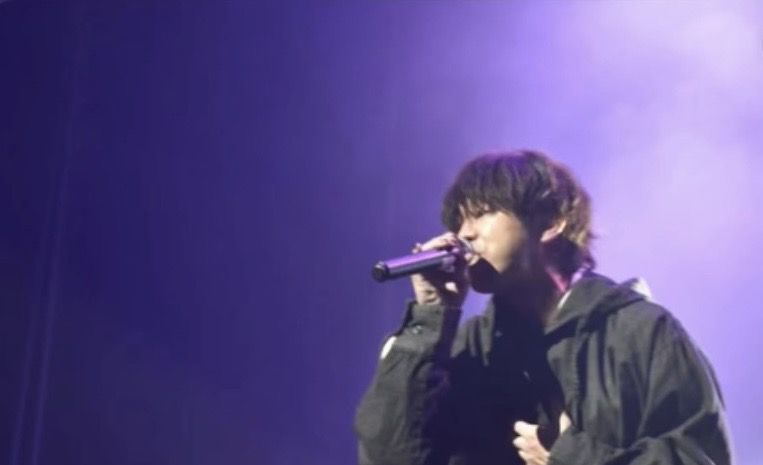
Your recent songs, such as Affirmation and Yukidoke no Kioku (Memories of the Snow Thaw), each tell unique stories. What inspired these songs, and what messages do they carry?
“Affirmation” was my very first attempt at creating a J-rock song. I wanted it to be an edgy, energetic rock track with a strong sense of momentum and an addictive quality.
The repeated chorus—”Round and round and round, into the loop…”—is simple, yet intentionally designed to stay in your mind long after you’ve heard it.
The word “affirmation” usually refers to self-acceptance or making positive declarations to attract the person you want to become. However, beneath that title lies a sharp critique of modern society.
The lyrics question the pressures of conformity and the loss of individuality. Lines such as “Stepping on someone else’s shadow” and “Imitating someone else, dancing, dancing, dancing” reflect today’s social media culture, where people constantly compare themselves to others and feel pressured to imitate them.
Rather than simply encouraging people to “stay positive,” the song asks what true self-acceptance really means. It challenges the endless cycle of repeating empty positive words while gradually losing your own identity. Ultimately, the message is about breaking free from that cycle and finding the courage to move forward as your authentic self.
As for “Yukidoke no Kioku” (Memories of the Snow Thaw), I originally wrote it because I realized I didn’t have a winter song in my catalog.
I wanted to capture the magical atmosphere of winter, so I incorporated piano and string arrangements and even included the word “magic” in the lyrics.
Although it’s a song about heartbreak, it’s not really about loss—it’s about healing and moving forward.
I deliberately chose the word “yukidoke” (snow thaw) instead of “yukitoke” (snow melting). To me, “melting” suggests that everything simply disappears, while “thawing” represents accepting your past, embracing your emotions, and continuing forward with them.
There’s actually a funny story behind the release—I accidentally uploaded the demo version instead of the final recording! (laughs)
What do you hope listeners feel after hearing your music?
I hope my music can become someone’s turning point.
Whether they’re preparing to take on a new challenge, struggling through difficult times, or beginning a new relationship, I’d love my songs to give them that extra push—to make them think, “Alright, I can do this!”
Even my name, YouKey, combines the words “You” and “Key.” The idea is that I hope to become the key that opens a new door for someone or inspires them to take the next step in their life.
You were selected as a finalist in OTONOVA 2026. What did that experience mean to you?
It was the biggest challenge I’ve ever taken on in my career.
First and foremost, I was only able to stand on that stage as a finalist because of everyone who supported me. For that, I’m deeply grateful.
The event was also livestreamed on YouTube, and I had the opportunity to perform on the incredible stage at Zepp.
Although all of us finalists were meeting for the first time, there was a tremendous sense of mutual respect. We competed seriously, but once the performances were over, it felt like there were no winners or losers—we could relax, laugh together, and celebrate each other’s efforts.
I made friendships that I’ll always treasure, and the experience helped me grow not only as a singer but also as a person.
It was also the first time many people had ever seen me perform, and the positive response on social media made me truly feel that entering the competition was worthwhile.
In fact, opportunities like this interview are one of the reasons I’m so glad I took on that challenge.
What is your favorite part of performing live, and how does it differ from recording in the studio?
If we’re talking about live performances, my favorite songs to perform are “Affirmation” and “Kimi ni Todoke.”
During the choruses of both songs, I encourage the audience to raise their hands, wave them, and move together with the music. Creating that sense of unity with the crowd is something I truly love. The view from the stage at festivals, seeing everyone enjoying the music together, is simply unforgettable.
Recording in the studio is a completely different experience. When I’m recording, I focus on staying faithful to the song itself and delivering a vocal performance that listeners can enjoy no matter how many times they hear it.
On stage, however, it’s all about emotion and energy. I sing with the excitement of the moment, so both my performance and the way I sing naturally become more expressive and spontaneous.
Is there a memorable moment you’ve shared with your fans that has stayed with you?
One moment that will always stay with me happened after my performance at the OTONOVA 2026 Finals.
After leaving the stage, I went to greet my friends and fans, and I met someone who had seen me perform for the very first time that day. They told me they had become a fan and that they would soon be performing in front of an audience for the first time themselves. Hearing them say that my performance had given them the courage to take that step meant so much to me.
I also had the chance to take photos, sign autographs, and talk with many people.
Another memorable experience was meeting fans of other artists who came over to support me as well. We chatted together, and I could genuinely feel the mutual respect everyone shared.
It was a different kind of interaction from my usual live shows, and because of that atmosphere of encouragement and respect, it remains one of the most unforgettable experiences of my career.
Outside of music, what do you enjoy doing to relax or find inspiration?
I enjoy spending quiet time in nature.
Whether it’s taking a walk in the park or going for a run, I like stepping away from the noise of everyday life and disconnecting from the digital world for a while. Those moments help me recharge both mentally and physically.
I also enjoy reading manga. Sometimes the words and messages in those stories can be surprisingly meaningful, and I’ve found that they often give me new perspectives and inspiration.
As an artist, what goals are you currently working toward, and what dreams do you hope to achieve in the future?
Right now, I’m expanding my focus beyond Japan and working toward reaching audiences overseas.
Of course, I’d still love to perform at some of Japan’s biggest music festivals, but I also hope to receive invitations to perform at festivals and live events throughout Asia.
That’s the dream I’m working toward every day.
20. Finally, do you have a message for your fans around the world and for the readers of City Writer?
To all of my fans around the world—I lovingly call you “Your’s.”
To all of Your’s, and to the wonderful readers of City Writer, thank you so much for taking the time to read this interview.
I’d also like to give a special thank you to Henry for inviting me and for giving me the opportunity to introduce myself to all of you.
I sincerely hope that one day I’ll be able to cross the ocean and perform in front of you in person.
Through my music, I hope I can encourage you, bring you joy, stand beside you during difficult moments, or simply become the spark that inspires you to take your next step.
That has always been my wish, and it always will be.
I’ll continue sharing my music—and myself—with all of you.
Until we meet again.


Leave a Reply