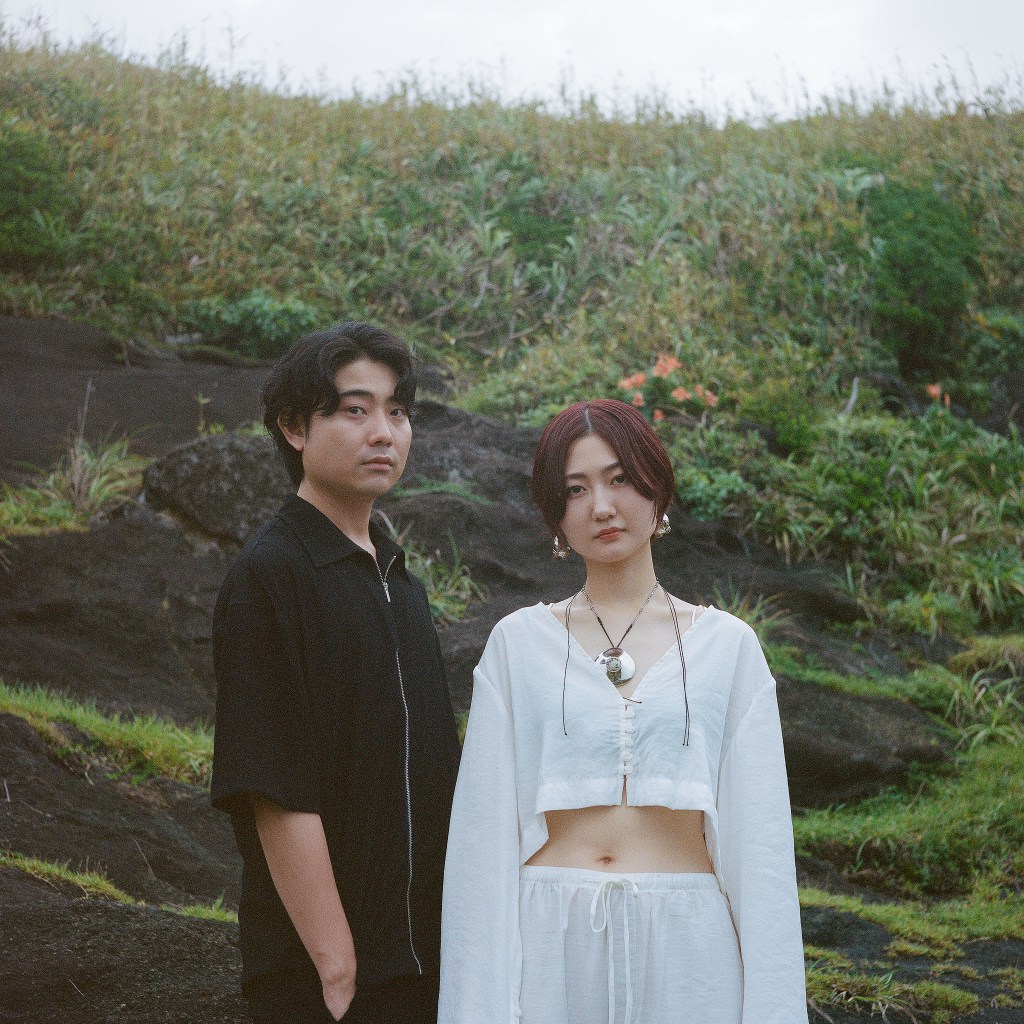
From quiet introspection to expansive cinematic soundscapes, Nibi has carved out a distinctive place in Japan’s independent music scene. Formed in Tokyo in 2020 by vocalist Norie Takahashi and composer/producer Tomoya Omura, the electronic duo seamlessly blends ambient textures, alternative pop, and experimental electronic music into deeply emotional works that invite listeners into immersive sonic worlds.
Rooted in themes of memory, sorrow, and self-reflection, Nibi’s music extends beyond genre, drawing inspiration from film, literature, visual art, and everyday life. Their thoughtful approach to songwriting and sound design has earned them recognition for creating music that feels both intimate and cinematic, while remaining unmistakably their own.
In this exclusive City Stories interview, Nibi reflects on the meaning behind their name, the evolution of their creative partnership, the challenges and rewards of working as independent artists, and the philosophies that shape their music. They also share insights into their live performances, creative inspirations, future projects, and their aspirations to bring their music to audiences around the world.
To begin, for readers who are discovering Nibi for the first time, could you introduce yourselves and tell us how the duo came together?
We are Nibi, an electronic music duo based in Tokyo. The project was formed in 2020 by vocalist Norie Takahashi and composer/arranger Tomoya Omura after we began collaborating creatively during the COVID-19 pandemic.
What is the meaning behind the name “Nibi,” and what does it represent for you?
Norie: I was the one who suggested the name. Since we both had established our own individual musical careers before forming the duo, the first image that came to mind was Nibi (二尾), meaning “two fish,” symbolizing two individuals swimming together.
I liked how it was a simple two-character word that felt natural as a band name. However, I also felt that the image of two fish was a little too literal, so I started looking for another meaning with the same pronunciation. That’s when I came across the word nibi written with the character 鈍, as in nibi-iro (鈍色), a traditional Japanese gray color.
During the Heian period, nibi-iro was used for garments and ceremonial robes to express mourning and sorrow. Since sadness is one of the central themes in our music, we were deeply drawn to this uniquely Japanese way of expressing grief.
One of the beautiful aspects of the Japanese language is that words sharing the same pronunciation can carry completely different meanings depending on the kanji and context. We wanted our name to embrace both meanings—”two fish” and “nibi-iro” (the color associated with sorrow). To make it more accessible to audiences around the world, we chose to write it in the Roman alphabet as Nibi rather than using Japanese characters.
Before forming Nibi, each of you pursued different musical paths. How have those experiences shaped the sound and identity of Nibi today?
Tomoya: Originally, Norie was a singer-songwriter, while I worked in film and visual media composition and also performed as a DJ. Our musical backgrounds were completely different.
The biggest contrast between us was our approach to expression: Norie communicates primarily through words and lyrics, while I express myself through sound and production.
When we were creating our first EP, Membrane, ambient music was the one musical language we both shared. It became the foundation that helped us align our artistic vision and develop a common understanding of what we wanted Nibi to become.
I’ve always enjoyed listening across genres, so I naturally began combining Norie’s distinctly Japanese melodies and lyrical sensibilities with electronic and dance music influences from the 1990s onward. Over time, those two worlds gradually blended together, becoming the foundation of Nibi’s sound today.
As independent artists, what has been your greatest challenge, and what makes it all worthwhile?
Norie: Producing the music video for “From Snow” was one of the biggest challenges we’ve ever taken on. It was our largest-scale visual production to date, and filming in the snowy mountains of Nagano made everything—from pre-production to the shoot itself—far from easy.
Tomoya first developed the concept and storyboard, which we then shared with Seiya Ito, the filmmaker who has worked on Nibi’s visual projects. He’s a valued creative partner who truly understands and respects Nibi’s artistic vision. He embraced our idea of creating a cinematic music video and took charge of organizing the cast, cinematographer, and many of the essential preparations.
Because our production team was relatively small, we also worked as part of the crew during filming, with everyone contributing wherever they could. The finished music video exceeded our expectations and expanded the emotional world of the song in ways we hadn’t imagined.
After its release, many people told us that “From Snow” was how they first discovered Nibi. Realizing that an independent project could achieve something on that scale gave us an incredible sense of fulfillment and motivation.
How do you divide the responsibilities of songwriting, composition, arrangement, production, and the overall creative process?
Norie: I primarily write the lyrics, while Tomoya is mainly responsible for composition, arrangement, and production.
That said, we don’t work within strict roles. Because we come from different musical backgrounds, we constantly exchange ideas and build our music through conversation and collaboration.
Rather than following a fixed workflow, we first discuss the themes of the lyrics and the musical direction we want to pursue. From there, each of us refines the areas we specialize in, allowing the songs to evolve naturally through our shared creative process.
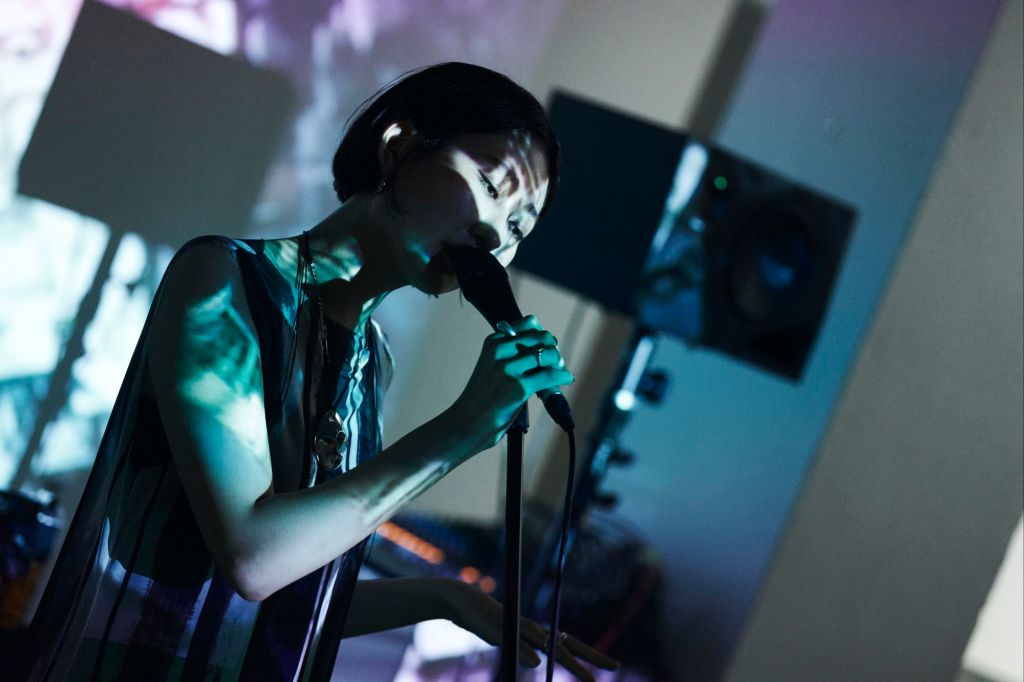
Nibi’s music blends electronic, ambient, and alternative pop with many other influences. How would you describe what makes a song sound distinctly “Nibi”?
Tomoya: Honestly, I’m not entirely sure myself. (laughs) We never sit down thinking, “Let’s make a Nibi song.” The process usually begins naturally with whatever ideas or interests we’re excited about at that moment.
What comes afterward, though, involves a great deal of discussion. If there’s such a thing as a “Nibi sound,” I think it has less to do with genre and more to do with how thoroughly we align our vision for each piece. We spend a lot of time talking about questions like, “What is this song’s central motif?” and “What are we really trying to express?”
Once we’ve established that shared vision, we bring in whatever musical elements the song truly needs. Perhaps that’s why our music often feels like a blend of many different genres.
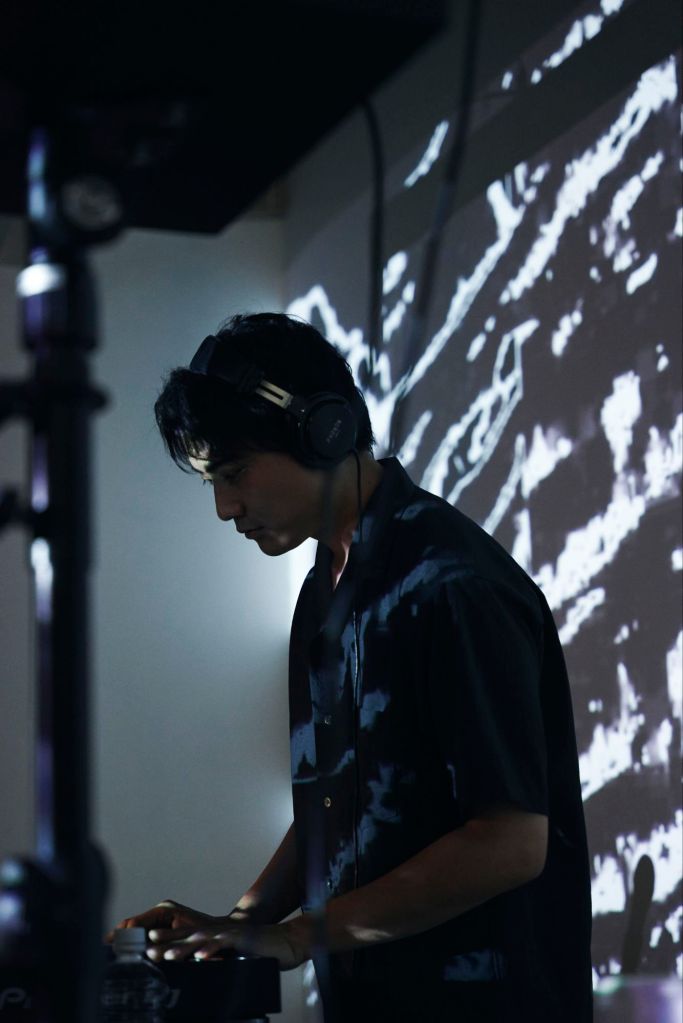
Where do you usually find inspiration when creating music?
Tomoya: During the making of our first EP, Membrane, we spent a lot of time improvising. I would prepare short phrases, melodies, or loops, and Norie would sing freely over them while we searched for the shape of the song together.
Unexpected ideas often emerged from those sessions, and they sometimes became the key inspiration that determined the direction of an entire piece. Songs like “Floss Silk” and “SILENT” were created by editing nearly an hour of improvised vocal recordings into complete melodies.
Recently, though, I’ve started feeling a little tired of the sounds I naturally create. I used to enjoy combining different genres, but now I’m much more interested in exploring how far I can develop a single musical idea.
I’ve come to realize that removing elements is much more difficult than adding them. That challenge—finding beauty through restraint—is what inspires me the most today.
Among all the songs you’ve released so far, is there one that holds a particularly special place in your heart? Why?
Norie: That would be “Floss Silk.” After completing the songs we had created together during the pandemic, we entered a period of searching for what truly defined Nibi’s identity. Floss Silk was the first song that made us feel we had found the right direction.
While listening to a demo Tomoya had written several years earlier, he encouraged me to simply sing freely. As I stood in front of the microphone, I gradually discovered fragments of melodies and lyrics that eventually became the song.
Writing the lyrics required me to dig deeply into my own emotions and confront past trauma. It wasn’t an easy process, but when the song was finally complete, I felt as though I had been reborn and given a fresh start.
It was also the first Nibi song to receive a music video, so I hope everyone will take the time to watch it.
Tomoya: For me, it’s “Living Ghost.” It’s the only song we’ve released in which I wrote the entire vocal melody myself, while Norie wrote the lyrics.
Originally, the arrangement was inspired by classic 1990s UK Garage and 2-Step Garage. However, after reading Norie’s lyrics—with themes of ghosts and forgetting—I felt the music no longer matched the emotional world of the song, so I decided to rebuild the arrangement from scratch.
It was an incredibly demanding process. Before I knew it, I had worked straight through the end of 2025 and continued refining the track well into 2026.
That experience completely changed the way I think about arrangement, making “Living Ghost” one of the most meaningful and memorable songs we’ve created.
Nibi’s music often feels cinematic, almost like the soundtrack to a film. Do you draw inspiration from cinema, visual art, or literature?
Tomoya: Absolutely. Film and literature, in particular, have had a profound influence on the way I think about storytelling.
People often describe Nibi’s music as “cinematic,” but to be honest, I’ve always felt a slight disconnect with that label. It’s not that we’re trying to recreate the atmosphere of a film. Rather, I’m more interested in applying the structure and creative philosophy of filmmaking to the way we make music.
Japanese pop music often follows a familiar structure—verse, pre-chorus, chorus—but instead of fitting our songs into a predetermined formula, I prefer to discover the structure that allows each song to express itself most naturally.
A film isn’t created from a screenplay alone. Acting, cinematography, sound design, editing, and even the format in which it’s presented all interact to shape the final work. I believe music can be approached in much the same way, with multiple creative elements influencing one another to form a cohesive artistic experience.
Beyond that, films, visual art, and literature often give me emotional excitement and inspiration that music alone can’t provide. Lately, I’ve been especially inspired by the photography of Yuriko Takagi.
When do you know a song is truly finished?
Tomoya: Honestly, it’s the moment I’ve finished mastering the track and exported the final file. That’s when I finally breathe a sigh of relief and think, “It’s done.” (laughs)
After that, I rarely listen back to our finished recordings, so in a way, that’s when I feel the greatest sense of completion.
That said, our songs continue to evolve when we perform them live. We often rearrange them for the stage, and since we plan to continue performing with a full band, I don’t think our songs are ever truly finished. They keep changing and growing with every performance.
Looking back on your journey as Nibi, is there a particular moment or experience that has stayed with you the most?
Norie: One of the most unforgettable moments was performing at Ringo Music Festival 2025 in Nagano after making it through the festival’s live audition.
Personally, it was a festival I had known and admired for nearly ten years, and many artists I love have performed there. So when we found out we had been selected, I was genuinely overjoyed.
It also became an invaluable opportunity to see how far our music and live performance could resonate with audiences. That experience gave us a great deal of confidence in what we’re creating.
Above all, performing outdoors was an incredible feeling. There was something truly special about sharing our music in that environment.
It was also deeply encouraging to perform for people we wouldn’t normally have the chance to meet through our usual activities. Knowing that our music reached a completely new audience became a huge source of motivation for everything we’ve continued to do since then.
How has your experience performing live influenced your songwriting and studio recording process?
Tomoya: Recently, we’ve been performing songs in their demo stage during our live shows. It’s a great way to experience the audience’s reactions while also allowing us to grow more comfortable with the songs ourselves. After those performances, we often revisit them in the studio—refining the vocal recordings or even reworking the arrangements based on what we’ve learned on stage.
Norie: During my years as a singer-songwriter, I performed street live shows almost every day. More than anything, I became a musician because I wanted to sing in front of people, so being on stage continues to be one of my biggest motivations for creating music.
Seeing the audience’s genuine, immediate reactions also has a huge impact on our studio work. It constantly reminds us to think about how each song will feel in a live setting. Whenever we create a phrase or melody that really resonates with us, my first thought is always, “I can’t wait to perform this live!”
Through Nibi’s music, what emotions or messages do you hope to share with your listeners?
Norie: I think many of Nibi’s songs explore the inner emotional landscape of an individual. That comes naturally from our personalities as well as our different musical backgrounds.
Life often presents us with moments when we have to face painful realities or confront our own emotions. If our music can quietly accompany listeners through those difficult times and offer them a sense of comfort, that would make us incredibly happy.
We also hope our music resonates with people who express themselves through music or art, just as we do. That’s why we approach every release with great care, never compromising, so that each piece becomes something we can genuinely be proud of.
Tomoya: The music I love most is the music that artists create for themselves.
Precisely because it’s personal, you can feel their sensibilities, beliefs, and unique ways of expressing themselves. When I listen to that kind of music, I can become completely immersed in another person’s world. It lets me escape everyday life for a while and sometimes even discover new ways of seeing things. That’s why I never stop searching for new music.
I approach my own work the same way. First and foremost, I make music for myself. I believe that only when I can become completely immersed in what I’ve created does it have the potential to truly connect with someone else.
So when people listen to Nibi, I hope they can lose themselves so deeply in our music that, if only for a moment, they forget everything else and become fully absorbed in the world we’ve created together.
Looking back, is there a creative risk you’ve taken that made you think, “I’m really glad we did that”?
Norie: Without a doubt, it was organizing our very first live performance ourselves.
We held the release party for our debut EP, Membrane, at Kōen, an art gallery in Nakameguro. There are many ways for a new artist to begin performing live—you might be invited to a booking show at a live house or introduced to events organized by friends. But at the time, we simply couldn’t picture ourselves fitting into someone else’s event. (laughs)
So we thought, “Why not start with our own one-man show instead?”
Because Kōen is an art gallery rather than a live music venue, we had to prepare almost all of the sound equipment ourselves. We also worked with friends to arrange everything from the drinks to the food.
From designing the atmosphere of the space to planning the event and managing everything on the day, we built the entire experience together with the people who supported us. Looking back, it remains one of the most creative and rewarding challenges we’ve ever undertaken.
How has Japan’s independent music scene influenced your journey and growth as artists?
Norie: I believe Japan’s independent music scene has been evolving at an incredible pace. The overall quality of the music being created is remarkably high, and it’s inspiring to be surrounded by artists with such distinctive and uncompromising creative identities.
Whether we’re at clubs or live houses, we’re constantly discovering new ideas and finding inspiration. I especially love encountering music that surprises its audience in the best possible way—works that completely defy expectations. Those moments are incredibly exciting, and they encourage us to ask ourselves how we can bring that same spirit of originality into our own music.
Being an independent artist certainly comes with many challenges, but it also offers countless opportunities. The indie scene has taught us the importance of continuing to take creative risks, staying true to our own artistic vision, and expressing ourselves authentically without losing sight of who we are.
If you could collaborate with any artist or producer—past or present—who would it be, and why?
Tomoya: I’d love to collaborate with rappers and musicians who play a wide variety of instruments.
I’ve been influenced by hip-hop and trap music for a long time. Although both rap and singing use the human voice as their instrument, rap has a completely different sense of rhythm and a strong spirit of experimentation. I think incorporating those elements into Nibi’s music would open up exciting new creative possibilities and bring a fresh perspective to our sound.
To be more specific, I also produce beats of my own, so I’d love the opportunity to work with rappers from different musical backgrounds, such as MAKA and It-Works.
I’m also a big fan of minimalist visual art. One creator whose work I admire is Joe Pease, and I often find myself watching his films. It would be a dream to collaborate with him on a music video someday.
Norie: I’d really love to collaborate with artists from outside Japan.
One artist I’ve been especially drawn to recently is C O N T X T, who is based in the UK. Their EP Lone Memory is absolutely incredible. There’s something about their emotional approach to dance music that feels deeply connected to Nibi’s own musical sensibilities.
I’d love to have them create a remix of one of our songs someday. It would be exciting to hear how they would reinterpret our music through their own artistic perspective.
Outside of music, are there any hobbies or interests that influence your creative process?
Tomoya: Lately, I’ve been fascinated by rakugo (traditional Japanese comic storytelling) and modular synthesizers. Both have become great sources of inspiration for me.
I simply can’t get enough of an evening of rakugo or spending hours experimenting with my synths.
Norie: My older sister and I grow vegetables together, and I also take care of houseplants at home. Observing them and looking after them every day is incredibly therapeutic, especially when I feel creatively stuck.
Each plant has its own unique character and beauty, and noticing those small differences often inspires me in my creative work. And, of course, eating vegetables that we’ve grown ourselves in is especially rewarding. It also helps save a little on grocery costs! (laughs)
What advice would you give to independent artists who want to continue creating music that truly reflects who they are?
Norie: I believe that pursuing your own individuality doesn’t just enrich your music—it enriches your life.
Being an independent artist comes with many challenges, but I think it’s incredibly important to cherish the people you trust and build connections with other independent artists as well.
Things move so quickly today. Between creating music, promoting your work, organizing events, and building an audience, it can become overwhelming. There are times when you’re exhausted—emotionally, mentally, and financially.
Even so, I truly believe that if you never compromise your artistic expression and continue pursuing what you genuinely believe in, someone will eventually discover your work. It’s worth continuing to make that effort.
We’ll keep exploring every possible way to share our music with more people, and we have no intention of giving up.
Tomoya: Honestly, I don’t feel like I’m in a position to give advice.
But if we’re talking specifically about creating music that’s true to yourself, I’d say this: don’t let yourself be swept away by trends or by what people say is the “right” answer. Only create what you genuinely believe in.
The music industry can become overly obsessed with going viral or chasing formulas for commercial success, and trends are often consumed and discarded incredibly quickly.
I also think your individuality naturally emerges from your obsessions—your passions, your quirks, even the parts of yourself that others might consider unusual. That’s why it’s important to pursue the things you’re truly fascinated by without holding back, and to share them confidently with others.
For me, my own identity as an artist is probably born during those quiet hours when I’m alone in my room, completely immersed in shaping sounds.
Looking ahead, what can fans look forward to from Nibi?
Norie: Right now, we’re working toward our second EP. We’re creating demos, experimenting with new musical approaches, and exploring fresh creative directions.
We’re also planning to perform with a full band and are developing a Remix EP featuring new interpretations of our previously released songs.
Finally, do you have a message for your fans in Japan, and for readers around the world who may be discovering Nibi for the first time through City Stories?
Thank you so much for reading our interview all the way to the end.
We hope this conversation has sparked your curiosity about Nibi and encouraged you to explore our music and creative work.
Looking ahead, one of our biggest goals is to perform at major festivals such as FUJI ROCK FESTIVAL and to bring our music to audiences around the world through international live performances.
We’ll continue challenging ourselves creatively and expanding the scale of our activities, so we hope you’ll keep following our journey and supporting our work.
We look forward to meeting you somewhere in the world someday.


Leave a Reply