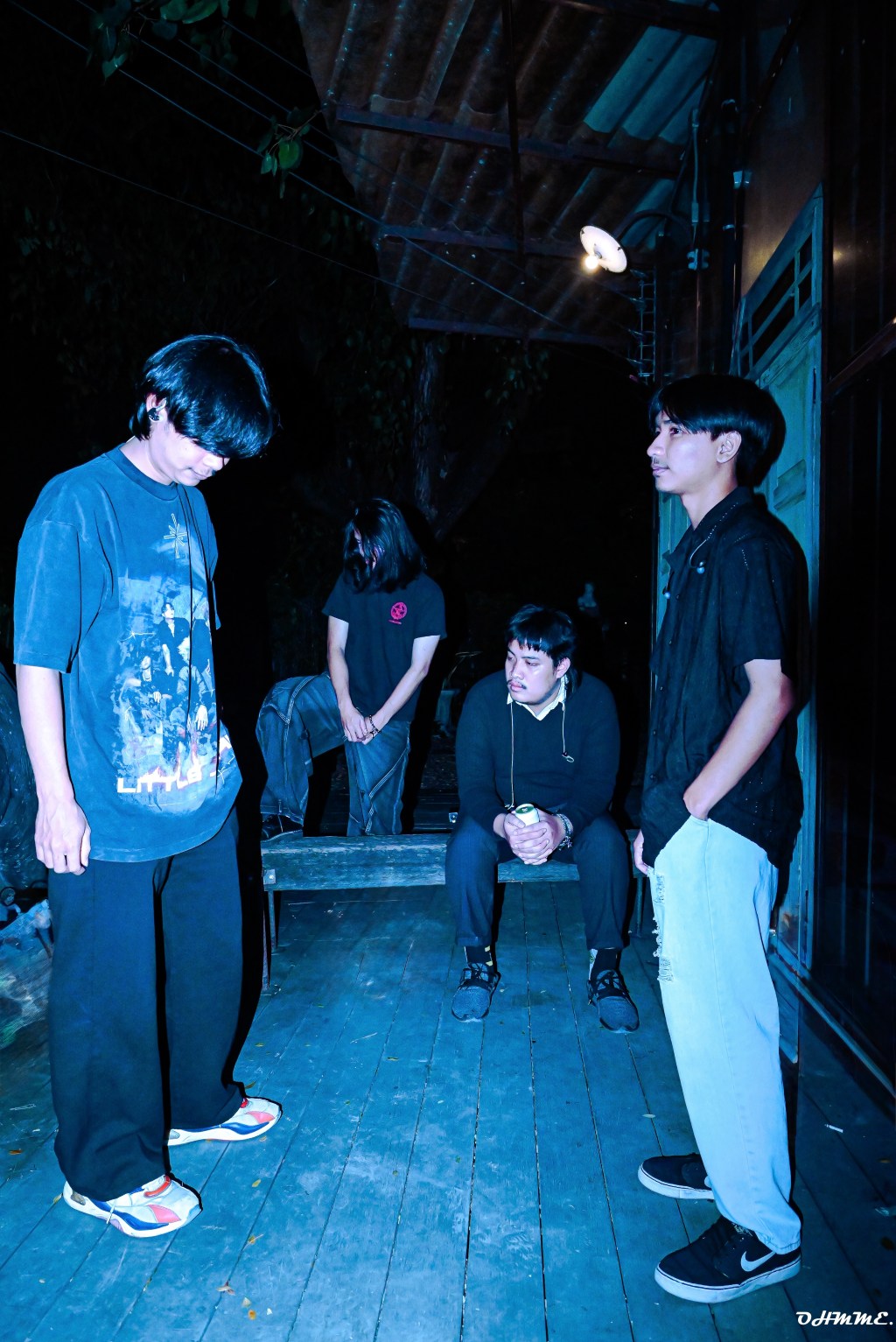
Hailing from Ubon Ratchathani, Thailand, Avoiding Reality is an alternative band exploring the space between the reality we live in and the worlds we create inside our minds.
Their music delves into the darker and more vulnerable sides of being human—loneliness, loss, confusion, disconnection, and the struggle to find our way back to ourselves. Dark, atmospheric, and at times dreamlike, their songs create a space where listeners can step away from reality for a moment while confronting the emotions and thoughts they may normally try to escape.
For this City Stories, Avoiding Reality opens the door to the world behind their music—sharing where their sound comes from, what it means to create from difficult emotions, and how they continue searching for their own way through the darkness.
For those discovering Avoiding Reality for the first time, how would you describe the band and the world you create through your music?
Avoiding Reality is an alternative band from Thailand that explores the space between reality and the world we create inside our minds. Our music is deeply rooted in emotions such as loneliness, loss, confusion, and the feeling of being disconnected from ourselves.
Through our music, we create a world where listeners can step away from reality for a moment and confront the thoughts and emotions they may usually try to escape. It’s dark, atmospheric, and sometimes dreamlike, but at its core, it’s about being human—losing someone, losing yourself, and trying to find your way back.
Where did the name Avoiding Reality come from, and what does it mean to you today?
The name “Avoiding Reality” comes from our desire to escape reality — not only the things around us, but also our own emotions, feelings, and thoughts. Sometimes reality can feel too overwhelming, and music becomes a place where we can step away from it and create our own world.
But for us, “Avoiding Reality” is not simply about running away. It’s also about pushing beyond the limits of reality — imagining something that doesn’t exist yet and turning those ideas, emotions, and experiences into music. That’s what the name means to us today: creating our own reality, beyond what we already know.
How did Avoiding Reality begin, and what inspired you to start making music together?
Avoiding Reality started from a shared passion for music and the desire to create something that truly represents who we are. We came together because we wanted to explore different sounds, emotions, and ideas without being limited by expectations.
Music has always been a way for us to express things that are difficult to put into words. That freedom to create, experiment, and build our own world through music is what brought us together and continues to inspire us today.
Your music creates a strong sense of atmosphere and emotion. What usually comes first when creating a new piece—the feeling, the sound, or an idea?
It usually starts with a feeling. Whatever we’re going through at that moment often becomes the starting point for a song. We’re naturally drawn to melancholic sounds and emotions, so that often becomes the core of our music.
We’re also inspired by the soundtracks of films we love. Sometimes a certain scene or atmosphere stays with us, and we take that feeling and turn it into our own sound. From there, we just let the music take us somewhere beyond reality and shape it into something that feels like Avoiding Reality.
How would you describe the emotions or experiences that often find their way into your music?
I think a lot of our music comes from the darker side of emotions — loneliness, loss, confusion, longing, and those moments when you feel disconnected from yourself or the world around you. We don’t really try to force those feelings into a song; they just naturally become part of what we create.
Sometimes it comes from something we’ve experienced, and sometimes it’s just a feeling, a memory, or even something we imagine. We take those emotions and turn them into sound and atmosphere. I think that’s what makes our music feel like Avoiding Reality — it’s our way of escaping reality for a moment and creating a world of our own.
Your sound moves beyond traditional genre boundaries. What influences have shaped the way Avoiding Reality approaches music?
We’ve never really wanted to limit ourselves to one genre. We take inspiration from many different places — alternative music, films, soundtracks, and even the emotions and experiences we go through in everyday life.
For us, the most important thing is the feeling behind the music. If a certain sound or idea helps us express what we want to say, we’re open to using it. We just take all those influences and reshape them into something that feels natural to us. That’s how Avoiding Reality has developed its own sound.
How important is experimentation to your creative process?
Experimentation is a big part of our creative process. We don’t want to be afraid of trying something new, even if we’re not sure where it will take us. Sometimes a song starts with a simple idea and becomes something completely different once we start experimenting with sounds, textures, and arrangements.
For us, that freedom is important. We want to keep pushing beyond what we already know and discover something we haven’t heard before. That’s a big part of what Avoiding Reality is about.
When you’re working on a new song, how do you know when it is finally complete?
We usually know a song is complete when it gives us the feeling we were looking for from the beginning. We can keep changing things forever, but at some point, you have to know when to stop.
For us, a song is finished when every sound, atmosphere, and emotion feels like it belongs there. It doesn’t have to be perfect — it just has to feel honest and complete to us. Once we can listen to it and feel that nothing else needs to be added, we know it’s ready.
“Endless Rumination” carries a strong sense of reflection and introspection. What was the story or feeling behind that release?
“Endless Rumination” was heavily inspired by JVKE’s “golden hour,” which is one of the songs we really love and always come back to. Every time we listen to it, there’s something about the atmosphere and emotion that stays with us.
With this song, we wanted to create something that could communicate its own emotions without needing to explain everything through words. We wanted the music itself to be able to tell the story. If you simply take a moment, clear your mind, and listen to it without thinking too much, we hope you can feel something from it — even if you can’t quite explain what that feeling is.
That was one of the ideas behind “Endless Rumination.” We wanted to create a song that feels natural and emotional, something you can simply sit with and let the music take you somewhere. In a way, the song is less about telling you exactly what to feel, and more about creating a space where you can discover your own feelings through the music.
Your music can feel open to interpretation. Do you prefer listeners to create their own meaning from your songs, or is there a specific story you hope they discover?
I think we prefer listeners to create their own meaning from our songs. Of course, every song starts with a certain feeling or idea from us, but once we release it, it also becomes something that belongs to the listener.
We don’t want to tell people exactly what they should feel or what the song means. We want the music to speak for itself and give everyone the freedom to connect with it in their own way. Someone might hear a song and think about a person they lost, while someone else might connect it to a completely different memory or feeling. And I think that’s something beautiful about music.
For us, the most important thing is that the listener feels something. They don’t necessarily have to understand the exact story behind the song. If they can close their eyes, clear their mind, listen, and find a feeling or a memory of their own, then the music has already said what we wanted it to say.
Is there a particular song in your catalog that feels especially personal to you? Why?
There are two songs that feel especially personal to us: “Endless Rumination” and “Torn Apart.”
“Endless Rumination” is personal because it reflects the way we sometimes get lost inside our own thoughts and emotions. It’s about those moments when your mind keeps going back to the same feelings, memories, and questions. We wanted the song to capture that experience without having to explain everything directly.
“Torn Apart” is personal in a different way. It’s about losing someone, but also about losing a part of yourself along with that person. Sometimes when someone leaves, you don’t just miss them — you also miss the version of yourself that existed when they were still there. That feeling of loneliness, confusion, and trying to escape from reality is something that made the song very close to us.
Both songs represent different sides of Avoiding Reality, but they share the same idea of turning personal emotions into something that other people can feel and connect with.
How has living and creating in Ubon Ratchathani influenced your sound and artistic identity?
Living and creating music in Ubon Ratchathani has definitely shaped the way we see music and ourselves as artists. Being away from the bigger music scenes gives us a different kind of space — a quieter environment where we can take our time, observe things around us, and turn those feelings into music.
There’s also something about growing up and creating here that makes us appreciate our own identity. We’re influenced by where we come from, but we don’t want to be limited by it. We want to take our experiences from Ubon Ratchathani and combine them with sounds and ideas from everywhere else in the world.
I think that balance has become part of Avoiding Reality. We come from a specific place, but through music, we can create a world that goes far beyond it. In a way, Ubon is where our reality begins, and music is where we allow ourselves to escape from it and create something of our own.
What has your experience been like being part of Thailand’s independent and experimental music scene?
Being part of Thailand’s independent and experimental music scene has been a really inspiring experience for us. There are so many artists who are willing to experiment, break away from traditional ideas, and create music in their own way. Being around that kind of energy has encouraged us to be more open with our own creativity.
Coming from Ubon Ratchathani, we’ve also experienced the scene from a slightly different perspective. It can feel like there’s a lot of distance from the bigger music communities, but at the same time, that distance gives us the freedom to develop our own sound without feeling like we have to follow a certain trend.
What we really appreciate about the independent scene is the sense of community. Everyone has their own identity and their own way of creating, but there’s still a feeling that we’re all pushing each other forward. For Avoiding Reality, being part of this scene has taught us to stay curious, experiment without being afraid, and most importantly, to create music that genuinely feels like us.
Do you think the music scene outside Bangkok offers a different perspective or creative environment for artists?
Definitely. I think being outside Bangkok gives us a different perspective and a different kind of creative environment. There may not be as many opportunities or as large a music community around us, but that distance also gives us more space to explore and develop our own identity.
In Ubon Ratchathani, life feels a little slower and quieter, and I think that naturally affects the way we create. We have more time to observe, think, and experiment without constantly feeling like we have to keep up with what’s happening in the bigger music scene.
At the same time, we’re still connected to everything happening in Bangkok and around the world through the internet. So we can take inspiration from anywhere while still creating from our own environment and experiences. I think that combination gives Avoiding Reality a perspective that is uniquely ours.
What challenges have you faced as an independent artist, and how have those experiences changed the way you create?
One of the biggest challenges of being an independent artist is having to handle almost everything ourselves — from creating the music and recording to promoting the work and finding ways to reach new listeners. It can be difficult sometimes, especially when you’re working with limited resources and trying to build something from outside the bigger music scene.
But those challenges have also changed the way we create. They’ve taught us to be more patient, more involved in every part of the process, and to trust our own ideas. We’ve learned that we don’t always need to have everything figured out before starting something new.
Being independent also gives us the freedom to experiment. We can follow an idea simply because it feels right to us, without having to fit into a particular formula or expectation. In the end, the challenges have made us more determined to create music that feels honest and personal, and to keep developing our own world through Avoiding Reality.
How do you balance making music for yourself with creating something that connects with an audience?
For us, it always starts with making music that feels honest to ourselves. We don’t want to create something just because we think people might like it. If we don’t feel connected to the song ourselves, it would be difficult for us to expect someone else to connect with it.
At the same time, we think about the listener while we’re creating. Not in terms of trying to tell them exactly what to feel, but in creating enough space for them to find their own meaning in the music. We want the emotion to come through naturally, so that someone can listen with an open mind and connect with it through their own experiences.
I think that’s where the balance comes from. We make the music for ourselves first, but we leave the door open for other people to step into it. Once a song is released, everyone can experience it differently, and we really like that.
For us, the connection with the audience happens when our personal emotions become something that someone else can recognize as their own.
Beyond music, what other forms of art, culture, or everyday experiences inspire Avoiding Reality?
Beyond music, films and their soundtracks are a big source of inspiration for us. We’re really drawn to the atmosphere that a film can create — the way a certain scene, image, or moment can make you feel something without having to explain it. Sometimes a feeling from a film stays with us long after we’ve finished watching it, and that feeling can eventually become part of our music.
We’re also inspired by everyday life — the places we live, conversations, memories, loneliness, relationships, and even the quiet moments when nothing seems to be happening. Living in Ubon Ratchathani gives us a lot of those moments. There’s something about ordinary surroundings and slower moments that allows us to notice small details and turn them into ideas.
I think we’re especially interested in things that create a feeling rather than simply telling a story. A photograph, a scene from a movie, a place, a memory, or even a moment of silence can sometimes inspire us more than anything else. We take those experiences and translate them into the world of Avoiding Reality.
If someone is going through a difficult or confusing period in their life and discovers your music, what would you want them to take away from it?
I think the most important thing we want people to take away from our music is that they don’t have to have everything figured out. Sometimes it’s okay to feel lost, confused, lonely, or even to want to escape from reality for a while.
We hope our music can become a small space where people can step away from everything around them, clear their minds, and simply feel. They don’t necessarily need to understand every lyric or know the story behind a song. If the music can make them feel understood, or remind them that someone else has felt something similar, then that already means a lot to us.
And maybe, after spending some time inside our music, they can slowly find their way back to themselves. We don’t want to tell people how to live or what they should feel. We just want our music to remind them that even when things feel confusing or overwhelming, they’re not alone in those feelings.
What is one thing about Avoiding Reality that you feel people still don’t know or understand about the project?
I think one thing people may not fully understand about Avoiding Reality is that it’s not really about simply running away from reality. The name might make it sound like we’re trying to escape everything, but for us, it’s more about creating another space where we can explore emotions, thoughts, and experiences that are sometimes difficult to face directly.
Avoiding Reality is almost like a world that we build through music. We take things from our real lives — memories, emotions, loneliness, confusion, films, sounds, and everyday experiences — and transform them into something that exists beyond reality.
So even though the idea is about “avoiding reality,” in a strange way, the music actually helps us understand reality better. We escape into our own world for a moment, but sometimes that’s where we find ourselves again.
Looking ahead, what story does Avoiding Reality want to tell next? What can listeners expect from you in the coming months?
Right now, we’re focused on finishing our album. We’ve been working on it very carefully and putting a lot of thought into every detail, because we really want this album to represent who Avoiding Reality is and what we want to express through our music. We’re taking our time with it, and hopefully everyone will be able to listen to it very soon.
We’re also preparing for a live show around the end of November, so we’re really looking forward to that as well. Hopefully, we’ll have a chance to meet everyone in person and share these songs with you.
For now, we just want to say thank you for following Avoiding Reality and supporting what we do. Please stay with us, and we hope you’ll join us for the next chapter.


Leave a comment