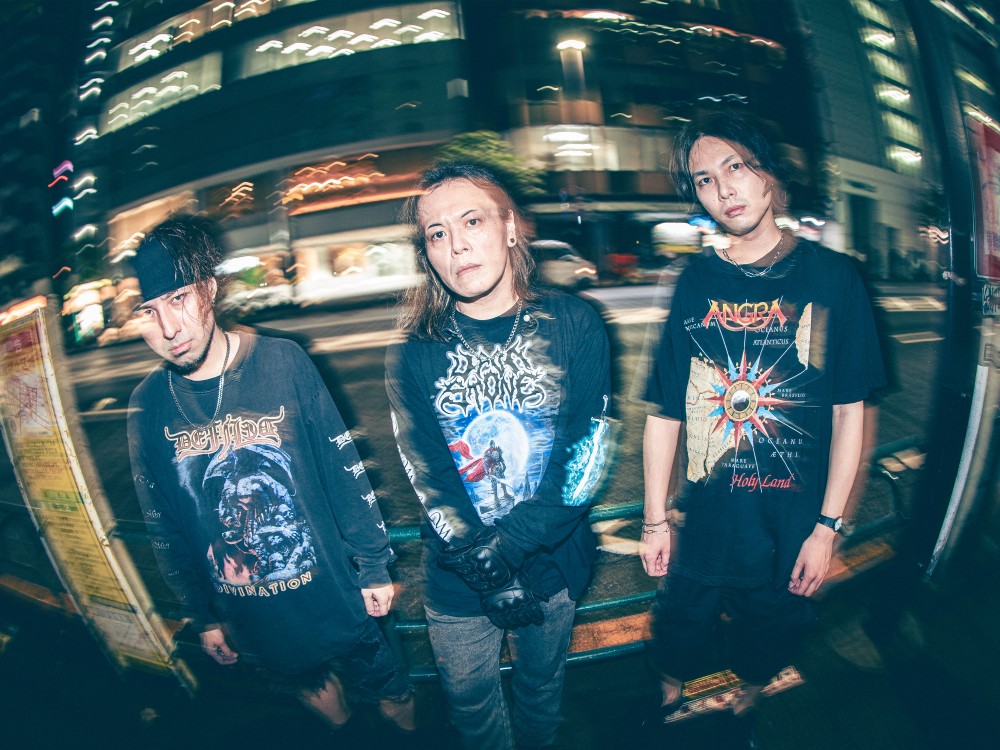
Formed in 2015, Japanese melodic death metal band Alphoenix has spent the past decade building a sound that combines powerful aggression, memorable melodies, and the influence of the Gothenburg metal tradition with their own Japanese identity.
Celebrating their 10th anniversary in 2025 with “Tokyo Lunar,” featuring guest vocals from Xavier of Upon Stone, the band marked an important milestone while looking toward their next chapter.
Alphoenix reflects on their journey, musical influences, international experiences, the stories behind their music, and what lies ahead for the band.
For readers who are discovering Alphoenix for the first time, could you introduce the band and tell us what Alphoenix means to each of you personally?
Alphoenix is a melodic death metal band formed in 2015 and based in Tokyo. Our sound is rooted in guitar harmonies influenced by Scandinavian melodic death metal, while also incorporating modern elements, a combination of clean vocals and screams, and lyrics in both Japanese and English.
We do not consciously try to make our music sound particularly “Japanese,” but listeners outside Japan may still find certain aspects of our sound distinctly Japanese.
For me, Alphoenix is my main musical activity and also an important way of staying connected with the world through music.
Alphoenix has been active since 2015. What inspired you to start the band in the beginning, and how has your original vision evolved over the years?
Alphoenix started after the band I had previously been involved in came to an end. At first, I intended it to be more of a music-making project rather than a full band, but it quickly developed into an actual band.
Looking back now, I am very glad that it became a band. Of course, continuing for this long has not always been easy, but the relationships and connections that have come from making music together are something I would never want to replace.
Alphoenix is rooted in melodic death metal. What first drew you to this genre, and what continues to make it exciting for you today?
I was first drawn strongly to melodic death metal through albums such as In Flames’ Colony and Arch Enemy’s Burning Bridges.
I bought both around the time they were released, and what really appealed to me was the way they combined aggression with strong melodies, especially through prominent guitar harmonies.
At the time, that balance felt very distinctive—like something that should have existed already, but somehow had not.
We still use melodic death metal as the foundation of Alphoenix because it remains the most natural form of musical expression for the band.
Alphoenix’s sound carries strong influences from the Gothenburg-style melodic death metal tradition. How do you blend those influences with Alphoenix’s own identity as a Japanese band?
We do not consciously try to add a specifically Japanese character to our music. I think some of it simply comes through naturally, especially in the melodies, vocal lines, phrasing, flow, and accents.
At the same time, the way we approach our Gothenburg melodic death metal influences depends on the song. Sometimes we deliberately lean into that style in a very purist way, while in other songs we keep it more subtle and treat it simply as one influence among many. It really depends on the concept of each track.
Looking back at your early work, including Final Crusades, and comparing it with your more recent music, what changes or evolution do you feel have taken place in Alphoenix’s sound?
When I listen back to our earlier material now, the production feels quite digital to me. At the same time, I think that sound suited those songs very well. In more recent years, we have also been using more English lyrics, and that has naturally influenced the way the vocal flow develops.
One thing that has remained consistent from the beginning is our emphasis on melody.
As for the changes in our sound, they were not the result of a single conscious decision to change direction. Each time we write a new song, we simply try to reproduce as closely as possible what we are hearing in our heads. In that sense, the evolution has been both intentional and natural.
One of the defining elements of Alphoenix is the combination of intense metal instrumentation and memorable melodies. What do you pay particular attention to when creating that balance?
When we write a new song, it usually starts with a guitar riff. From there, we build the different parts in the DAW and gradually shape the song as a whole. The lyrics usually come later, once the music has already taken form to some extent.
One of the defining elements of Alphoenix is the combination of intense metal instrumentation and memorable melodies. What do you pay particular attention to when creating that balance?
When writing a song, we tend to focus on melody and chords before thinking about heaviness. Chord progressions are just as important to us as the melody itself, so even if we like a melody, we may abandon it if it does not work with the chords.
We do not consciously try to control the balance between melody and aggression too much. That balance tends to emerge naturally from building the song around the melodies and chords.
What kinds of themes, emotions, or personal experiences are often reflected in Alphoenix’s lyrics?
Our lyrics often deal with relationships, internal emotions, and things we experience in everyday life. Sometimes they reflect personal experiences quite directly, while other times those experiences are transformed into something more abstract.
There is also a slight difference between the way we write in Japanese and English. Our English lyrics tend to be more abstract.
Released in 2025, “Tokyo Lunar” was an important song marking Alphoenix’s 10th anniversary. What does this song mean to the band, and what did you want to express through it?
“Tokyo Lunar” was written from the beginning with our 10th anniversary in mind. I think the song structure in particular represents what Alphoenix sounds like at this point in our career.
Rather than being a song that looks back on the past ten years, it feels more like a step toward what comes next. It marks an important milestone for us, but we see it more as a song that opens the next chapter than one that summarizes the previous one.
“Tokyo Lunar” features Xavier from Upon Stone on guest vocals. What was it like working with Xavier, and how did his contribution influence or add something new to the song?
We asked Xavier to take part because Upon Stone, despite being a young American band, captures the sound and spirit of ’90s Scandinavian melodic death metal to an almost unbelievable degree.
Once his vocals were added, certain sections of the song took on a much stronger international melodic death metal character. His performance was excellent and brought a very positive change to the track.
It was also great to find out that he already knew Alphoenix. When we reached out to him, he agreed almost immediately, which made the collaboration feel very natural.
How has Tokyo as a city influenced Alphoenix’s music? Are there particular aspects of its culture, atmosphere, people, or music scene that inspire you?
We do not consciously take inspiration from Tokyo when writing music. In fact, it has often been the other way around: people have described our finished songs as having a “Tokyo” or urban atmosphere, and only then have we thought that they might be right
If that feeling is present in our music, it may come unconsciously from things such as the atmosphere of the city at night, a certain sense of isolation, or the highly designed urban landscape.
That said, I think it has more to do with the accumulation of influences we have absorbed over the years than simply with the fact that we are currently based in Tokyo.
What do you think makes the Japanese metal scene unique? From your experience as Alphoenix, what do you find particularly special about being part of Japan’s metal community?
I think Japan has one of the larger metal scenes in Asia, with a relatively large number of active bands. In Tokyo especially, there is some kind of metal show happening almost every day.
The live performance environment is also very good, including the venues and equipment available to bands. Being able to perform regularly under those conditions is one of the major advantages of being in a band in Japan.
Alphoenix has performed outside Japan, including in other parts of Asia. How have your international experiences influenced the way you approach the band, live performances, and connecting with audiences?
When we play overseas, we sometimes feel a very strong hunger for metal shows from the local audience. A single show can feel less like something that is simply part of everyday life and more like a special occasion.
It may sound like a cliché, but experiences like that remind us that no live show should ever be taken for granted. Whether we are playing in Japan or abroad, we have come to value every opportunity we get to perform.
And of course, we definitely want to continue playing overseas in the future.
When comparing Japanese audiences with audiences overseas, what differences have you noticed in the way people experience and respond to your live performances?
Overseas audiences often express their reactions in a more visible way, by shouting, moving, and physically creating the atmosphere on the floor. In that sense, it can feel like the audience is actively helping shape the show itself.
At the same time, the way people express themselves varies depending on the individual, the environment, and the region, so I do not think you can judge someone’s level of excitement only by what you see. Even people who barely move may still be feeling something very intense internally.
As performers, we try to adapt as much as possible to the audience and the atmosphere of each show.
Throughout Alphoenix’s 10-year journey, what has been one of the most memorable moments or experiences you have had on stage or while touring?
One of the most memorable recent experiences for us was our tour in Taiwan. It was our first time there, and I think there was also a certain sense of welcome simply because we were a band coming from Japan.
A lot happened during that tour, and all of it together made it a particularly memorable experience for us.
What has been one of the biggest challenges you have faced during Alphoenix’s 10 years as a band, and what did you learn from that experience?
One of the biggest challenges over the past ten years has been dealing with relationships between members and lineup changes. There was a period when several original members left in succession, and at that point, even continuing the band itself felt difficult.
Through those experiences, I came to feel that having a shared sense of purpose and understanding why each member is doing the band are among the most important things when it comes to keeping a band going.
Each member brings their own musical background and influences to the band. How do these individual influences shape Alphoenix’s sound and identity as a group?
Each member has a different musical background and different tastes, and I think those differences appear in the finer details of the arrangements and performances.
At the moment, I am still the main songwriter, so my own influences naturally have a relatively large impact on the overall direction of the songs. At the same time, metal is still the common musical foundation shared by all of us.
If someone has never listened to Alphoenix before and you could recommend just one song as their introduction to the band, which song would you choose, and why?
If I had to choose one song, I would recommend “The Great Divide.” It is a short opening track, around a minute and a half long, but I think it clearly shows both the melodic and aggressive sides of Alphoenix.
Because it is so concise, it is also an easy introduction for someone hearing us for the first time. I do not think the period it comes from matters very much. I would simply choose it because it represents those two sides of the band in a very direct way..
As Alphoenix enters its next chapter, are there any new musical directions, collaborations, or ideas that you would like to explore in the future?
One thing I am interested in exploring is the particular atmosphere that comes from using extremely low tunings.
As for collaborations, I think it would be interesting to work with a rapper someday. The first challenge would be figuring out whether we can actually write melodic death metal that allows rap to fit naturally into the song. There were even some rap-like moments on The Haunted’s first album, so I think it could work if approached in the right way.
That said, at the time of this interview, we have just become a three-piece after a member left, so the most immediate issue is figuring out what the next lineup and structure of the band will look like.
Finally, what message would you like to share with Alphoenix fans in Japan and around the world? And what can fans look forward to from Alphoenix as you continue creating new music and taking on new challenges?
We are truly grateful for every form of support we receive. Whether you listen to our music, come to our shows, or simply keep following us from afar, all of it gives us a reason to keep going.
For now, we want to start with what we can do and move forward step by step. Even if the shape of the band changes along the way, we still intend to keep creating new music and continuing our activities, so we hope you will look forward to what comes next.


Leave a comment