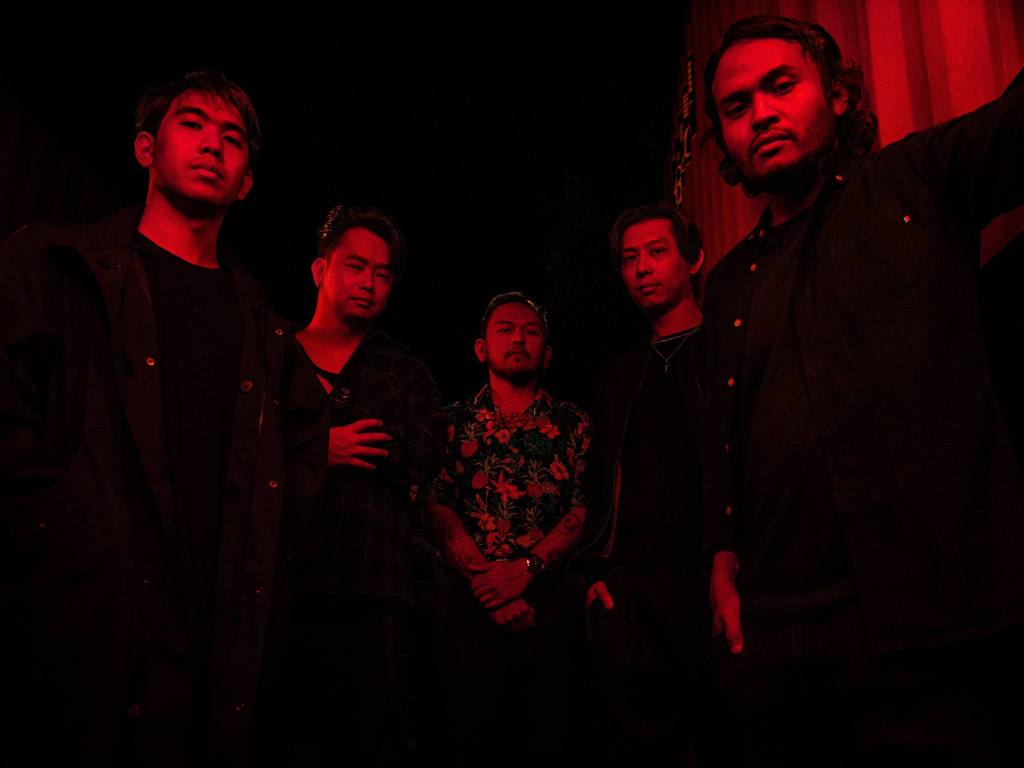
Photo Courtesy of Glassmouth
From the underground heavy music scene of Singapore comes Glassmouth, a band known for their volatile blend of mathcore, chaotic hardcore, and experimental intensity. Built on dissonant riffs, shifting structures, and emotionally charged performances, the group has steadily carved out a sound that feels both unpredictable and deeply intentional.
What began as an exploration of aggressive music has since evolved into something more expansive—drawing influence from sci-fi worlds, emotional introspection, and a wide spectrum of sonic experimentation. Across their releases, Glassmouth continues to blur the line between chaos and control, creating music that is as cathartic as it is confrontational.
In this written interview, Glassmouth opens up about their creative process, the evolution of their sound, and the ideas behind their latest work. From DIY production challenges to conceptual inspirations, the band reflects on how “Monolith” came to life and where their sound is heading next.
Can you introduce Glassmouth to our readers and share how the band first started?
We formed in 2015 after some of us left our previous bands. We wanted to go through a different direction musically, making mind twisting, unsettling riffs and emotionally intensified tunes, and ended up forming Glassmouth, a Mathcore / Chaotic Hardcore band from Singapore.
Your sound blends chaotic hardcore, mathcore, and experimental elements. How would you personally describe the identity of Glassmouth?
Our sound blends music beyond the scope of hardcore/metalcore. Many of our influences came from unlikely places, with Mathcore / Hardcore being the trailblazer that cuts through all the other elements we love, picking them up bit by bit.
The noise is presented through complex confessional arrangements; the outfit plays for their goddamned lives. Contemporaneous trends are shed, aesthetics are eschewed.
Built on dissonant riffs, volatile structures, and emotional intensity, our sound draws from the lineage of The Dillinger Escape Plan, The Chariot, and The Callous Daoboys, while pushing toward something more unstable and self-defined.
What inspired the band name “Glassmouth”?
There was this other band from Singapore, called Two Seas, they had a song called Glassmouth. I really like that song.
Who are some of your biggest musical influences growing up and as a band today?
The Chariot and The Dillinger Escape Plan are the two with the biggest influences that shape the band. Today, we are mused by so many other bands/genres that carved a pathway to future sounds. Envy, for their spoken word emotive numbers, The Callous Daoboys and Every Time I Die for their methodical but also nonsensical composition and song writing. Skramz, emotive hardcore and cinematic post-rock also shaped our upcoming album Monolith (3rd July 2026).
Your music carries intense energy and emotion. What usually comes first during your creative process — the concept, lyrics, or instrumentation?
Monolith started as a concept built around a sci-fi space journey, inspired by years of consuming science fiction media. Our love for cosmic horror and stories that explore the unknown played a huge role in shaping the album’s identity.
Influences came from works such as 2001: A Space Odyssey, Aliens, Love, Death & Robots, and Interstellar. Even Space EP by The Devil Wears Prada helped shape the direction of the record.
From there, the musical foundation came naturally. Mathcore and chaotic hardcore served as the backbone of the album, while everything else was built on top of it. We treated those influences as layers—adding sounds, textures, and ideas that reflected the things that inspire us and make us dream.
In many ways, Monolith became a collision of heavy music and science-fiction storytelling: a record grounded in chaos but driven by curiosity, imagination, and a fascination with the vast unknown.
How do you approach songwriting when creating such unpredictable and aggressive compositions?
It’s not too different from how most people write music. A lot of it comes down to messing around and finding out what works. We play around with riffs, experiment with different ideas, and then build the songs from there.
I’d say the lyrical side of our process is where things get more interesting. We love using figures of speech, symbolism, and obscure references as a way of describing something else entirely. There are often little nods and hidden references tucked into what might otherwise seem like straightforward lyrics.
We enjoy layering meanings into our songs, giving listeners the chance to discover new interpretations or details with each listen.
Here are some examples:
1. Rip off my skin, these teeth they tear through my suit, unrelenting
I need a new tailor swiftly now
2. This suit sticks to me like like disease, it’s slowing eating me
In-N-Out, Animal style, secret menu, kill the beast inside
What message or emotions do you hope listeners take away from your music?
We’ve never really thought too much about that. The music we make is largely an exercise in personal expression, self-reflection, and creative fulfillment.
At its core, our work is about exploring our own ideas and experiences through music. If there’s a message we hope listeners take away, it’s simply to create—to find inspiration in the art they consume and turn that inspiration into something of their own.
We also hope that people discover their own emotional connection to our songs. Music is deeply personal, and every listener brings their own experiences and interpretations to it. If our music can speak to someone in a way that feels meaningful to them, then that’s something we’re incredibly grateful for.
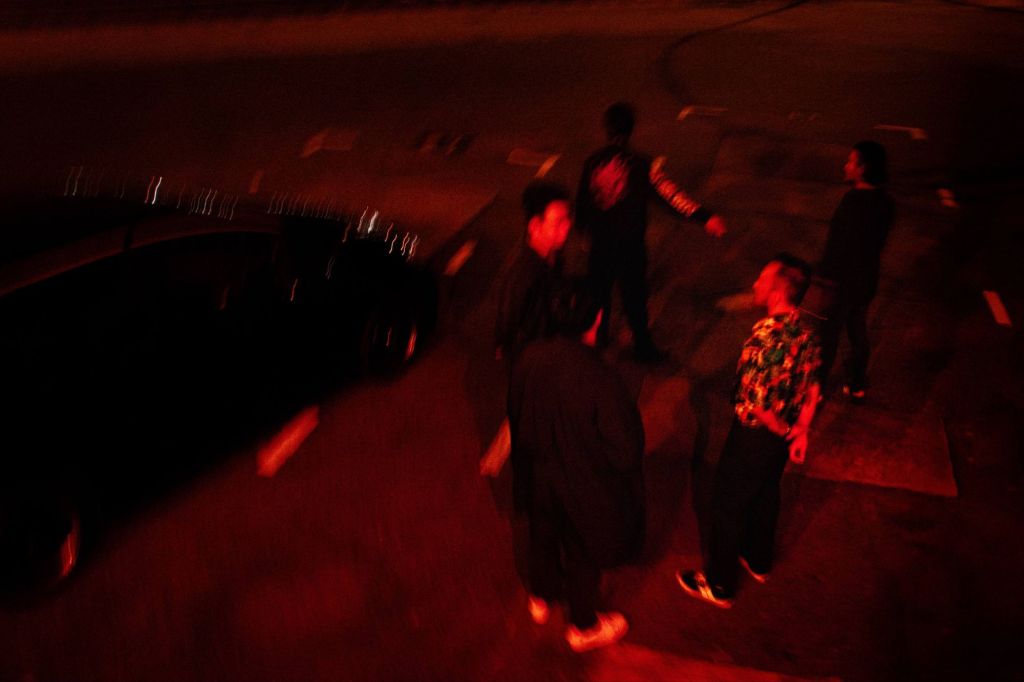
Your live performances are often described as wild and immersive. What is your mindset before stepping onto the stage?
Man, we’re just a regular bunch of office dudes. We don’t really go to hardcore or metal shows as much as we used to. But when we step on stage, we still go absolutely nuts.
Playing music is our catharsis—it’s our escape from the routine and the mundane parts of everyday life. We’ve always been drawn to bands with big, wild, high-energy performances, and that’s something we naturally bring into our own shows.
If our music resonates with the audience, that’s amazing. If not, we hope the energy does. At the end of the day, we want people to feel something when they watch us perform, whether it comes from the songs themselves or the intensity we bring to the stage.
Looking back at releases like Observer and Flatliner, how do you think the band has evolved musically and personally?
Our music production has improved significantly. We learned how to mix our songs more effectively and how to integrate the drums into the music with greater impact and intensity.
We also expanded our sonic palette, adding more nuance, depth, and dynamic range to our sound. Rather than relying on strict genre boundaries, we started asking ourselves a much simpler question: “Do we like it? Does it feel like us?”
That mindset gave us the freedom to explore new ideas while staying true to our identity. This time around, we also collaborated with more guest artists, allowing us to broaden the album’s sonic reach and bring new textures and perspectives into our music. The result is a body of work that reflects both our growth as musicians and our desire to push our creative boundaries further than before.
Were there any major challenges the band faced while creating your recent material?
There were a few challenges. Namely, scheduling issues due to a member’s health complications and figuring out how to improve our mixing process along the way.
We had to learn and relearn a lot about audio production, including EQ, compression, and other technical aspects of recording. Since we handled almost everything ourselves—recording, mixing, and mastering—there was a steep learning curve.
There was so much to learn. More than once, we thought we were finished, only to realize the songs could still be improved. That meant going back, reworking certain parts, or even remixing entire tracks. In some cases, we ended up revisiting the album multiple times before we were truly satisfied with the final result.
The underground hardcore and mathcore scene continues to grow internationally. How do you see Glassmouth’s place within that scene?
We have no idea hahaha. We just wanna make music we like. If people like it that’s great, we hope opportunities come. If not, we make our own opportunities. We started our record label Glass Records this year, to build a community and also raise the awareness and hype for niche genres that even the underground may not necessarily be interested in.
Have there been any memorable fan reactions or concert experiences that stayed with you over the years?
We’ve had a fan who smashed our guitar with us. We popped confetti at a festival. We climbed a staging rig and hung it.
In today’s music industry dominated by short-form content and trends, how does Glassmouth maintain authenticity?
We’ve been doing a lot of social media content, which we don’t normally do. But what we’ve learned is this: provide value to those who watch your content.
Is it a lesson you learned while playing a show? A point you’d like to make about the music you do? A musical eye-candy moment with special effects that teases a new song? Sometimes, it’s even a trend that others have already done.
Is it authentic? Maybe. Only your audience can answer that.
Do something that provides value and be yourself. People will notice.
Are there any themes or topics you still hope to explore in future releases?
Ghosts.
How important is experimentation to Glassmouth’s overall sound and artistic direction?
Not too important. We have our foundation—we just need to layer over it whatever we feel fits the vibe of our next releases.
We like to experiment. Whatever comes to us, we take and explore. If we feel like nothing new is coming, we roll with it.
It’s okay—you can’t force experimentation. The best ideas often happen naturally.
Do each of the members contribute differently when building a song or concept?
Yeah, some ways, some wrote the songs, others provided riffs and lyrics, and some threw ideas around.
What has been the most emotionally challenging song for the band to create so far?
Emotionally challenging album! Kill yourself released back on 2016 (and released in 2019). Songs about our member’s suicide attempts.
Are there any artists or bands you would love to collaborate with in the future?
Wormrot, Fictional Character
What can fans expect from Glassmouth in the coming months?
3rd July – Monolith album release (3rd album)
18th July – Monolith album launch gig
23/24 October – Glass Fest
Lastly, do you have a message for your supporters around the world and potential listeners discovering your music for the first time?
You guys aren’t ready for that yet, but your kids are gonna love it.
Stay connected with Glassmouth as they continue to push the boundaries of chaos and sound.
Follow them and explore their label below.
Glass Records IG Here
Website Link Here
Glassmouth IG Here
Spotify Link Here
 Welcome to City Writer
Leave a comment