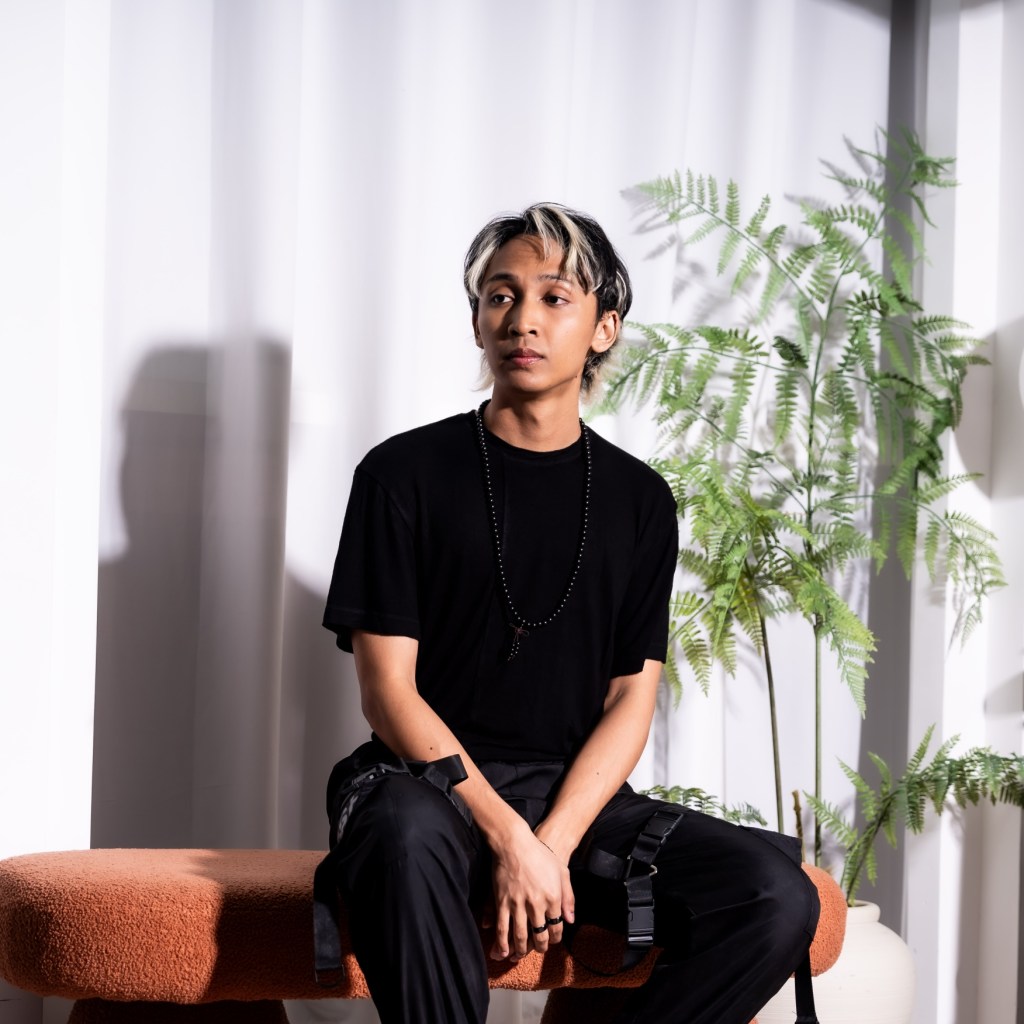
For Singaporean singer-songwriter and performer ARUHI (アルヒ), music is a journey of exploration, self-discovery, and creative freedom.
Rooted in J-rock and J-pop, his musical journey has evolved through different influences, live performances, and experiences as an independent artist. Rather than confining himself to one genre, ARUHI embraces experimentation while staying true to his artistic identity.
In this edition of City Stories, we explore his musical beginnings, creative influences, memorable performances, and aspirations to collaborate with artists beyond Singapore, particularly in Japan.
For readers discovering ARUHI for the first time, how would you introduce yourself and describe the music you create?
I’m ARUHI アルヒ, a singer-songwriter, music producer, performer, and emcee who primarily specialises in J-rock and J-pop. That said, I love taking influences and experimenting with different genres and musical styles, so I wouldn’t necessarily confine myself to just one.
My music is a reflection of the sounds, stories, and emotions that inspire me. And one day, I hope my music will do the same for others.
What inspired you to pursue music as a singer-songwriter, and when did you realize that creating your own songs was something you wanted to do seriously?
I think I’d have to split this question into two parts, because becoming a singer-songwriter wasn’t actually part of my original plan. All I knew from a young age was that I wanted to pursue music and eventually make a living out of it.
The first defining moment happened when I was 12, during my Primary 6 graduation party. I performed “Almost Is Never Enough” by Ariana Grande and Nathan Sykes with a friend, and I remember being completely captivated by the experience of being on stage. I also sang terribly at the time, but the feeling of performing in front of an audience was something that stuck with me. There was something incredibly exhilarating about it, and I think that was when I first realised that performing was something I genuinely wanted to pursue.
My journey towards becoming a singer-songwriter, however, began a little later, when I was around 17 or 18 and studying in Polytechnic. I was going through a particularly difficult period in my life, feeling quite lost and unsure of myself. Then, almost by chance, I came across a song called “Ao to Natsu” by Mrs. Green Apple.
I remember crying when I first heard it, which was surprising because I didn’t even understand the lyrics at the time. Yet somehow, the energy and emotion of the song resonated with me in a way I couldn’t explain. It reignited something in me and gave me a sense of hope and motivation to keep moving forward.
Looking back, I genuinely believe that discovering that song changed the course of my life. Without it, I might never have committed fully to pursuing music or even come across Mrs. Green Apple, who have since become my favourite band and one of my biggest musical influences.
More importantly, that experience made me realise just how powerful music could be. A song I had stumbled upon by chance managed to reach me at a time when I needed it most, even across a language barrier. I wanted to be able to create something that could have that same impact on someone else.
That was when I decided I wanted to become a singer-songwriter, not just to perform music, but to create music that could inspire, comfort, and help others in the same way it had helped me. And honestly, what better way to do that than through music?
Your artistic identity is closely tied to your music. What does the name ARUHI mean to you, and why did you choose it as your artist name?
There’s actually a long and short story behind the name ARUHI アルヒ, so I’ll start with the shorter one.
ARUHI (アルヒ) translates to “one day” or “a certain day” in Japanese. To me, there’s something beautifully ambiguous about that phrase. It doesn’t refer to a particular moment in time, but rather to the endless possibilities of what could happen one day.
I find that meaning particularly inspiring because the future is never certain. We don’t always know where life will take us, what opportunities might come our way, or what challenges we might face. But I believe there’s something empowering about embracing that uncertainty, taking charge of our own paths, and continuing to move forward.
The name also happens to bear a close resemblance to my real name, Aniq Rusyaidi, which makes it feel even more personal to me. It also flows very nicely with the vowels (ARUHI / Aniq Rusyaidi).
As for the long story of how I actually came up with the name ARUHI, well, that’s probably a story for another day because it’s way too long to explain in text. HAHAHA!
Growing as an independent artist comes with its own challenges. How would you describe your journey so far, and what experiences have shaped you the most?
If I had to sum up my journey as an independent artist in one phrase, it would be: “Always be your own number one supporter.”
I’ve come to realise that what truly defines us isn’t necessarily our successes, but how we bounce back after experiencing failures and setbacks. There’s no linear path to success, especially in the music industry, and I’ve learnt to embrace that. After all, if everything came easily, you wouldn’t have any growth. Looking back, I think it’s the unexpected detours, challenges, and moments of uncertainty that have shaped not just the artist I am today, but also the person I’ve become.
Interestingly, some of the experiences that have pushed me the most weren’t necessarily my own achievements, but witnessing the successes of other musicians and artists. Seeing people perform on big stages or receive opportunities that I’ve always dreamed of can be a bittersweet experience. And I’d be lying if I said I never felt a little disheartened or envious, wondering when my own opportunity would come. But rather than letting those feelings discourage me, I’ve learnt to turn them into motivation. If anything, seeing others succeed reminds me of what’s possible and inspires me to work even harder towards my own goals.
Of course, there are moments when I doubt myself, but I always try to remind myself why I started in the first place. I’ve put too much heart into this journey to give up on it now, and if there’s one thing I’ve learnt, it’s that I have to keep believing in myself, even when things don’t go according to plan.
Failure may be part of the journey, but giving up isn’t something I’m willing to accept.
When you write a song, where do your ideas usually come from? Do you draw inspiration from personal experiences, observations, relationships, or imagined stories?
When I write songs, my inspiration usually comes from a mixture of personal experiences and observations of the world around me. I think that’s also one of the reasons why I love going out, being adventurous, and trying new things.
If you’ve been following me for a while, or if you happen to be a close friend of mine, you’d probably know that I’m someone who loves saying yes to new experiences. I make it a point to try as many things as I can because I live by a personal philosophy of having as few regrets as possible.
I genuinely believe that you don’t always need a reason to do something. Sometimes, wanting to try something simply because it seems fun or interesting is reason enough. It’s such an on-brand character trait of mine that my friends would call me Singapore’s no. 1 sidequester. HAHAHA!
Because of this mindset, I’ve had the opportunity to meet different people, explore unfamiliar places, and experience things I might otherwise never have considered. Every new experience offers me a different perspective on life, and I think that’s incredibly valuable, not just for my personal growth, but also for my songwriting.
In a way, I see living life itself as part of my creative process. The more I experience, the more stories, emotions, and perspectives I have to draw from when creating music.
That’s not to say I never write about imagined scenarios or fictional stories. I definitely do. But I’ve found that my songwriting tends to feel more natural and authentic when it comes from something I’ve personally experienced, witnessed, or connected with emotionally.
I suppose that’s why I try to live as fully as I can. You never really know which seemingly ordinary moment might one day become the inspiration for a song.
How would you describe your songwriting process, from the first idea to the finished recording?
I would say my songwriting process is quite melody-driven. More often than not, I start with a melody, followed by the overall concept of the song, its instrumentation, and finally the lyrics.
I have this personal belief that if a melody doesn’t resonate with me musically, even the most beautifully written lyrics might not be enough to make the song work. Otherwise, I might as well just write a poem, you know? Of course, that’s entirely subjective, but it’s an approach that has worked pretty well for me so far.
As for the actual process, because I handle almost every aspect of my music production myself, things usually begin with me recording a rough melodic idea on my phone. Sometimes, I’ll already have a vague idea of how the rest of the song might unfold in my head.
From there, I start developing the melody and thinking about the overall structure. At the same time, I’ll consider what the song could be about. Interestingly, I don’t always begin with a particular story or message that I want to tell. Sometimes, I let the music guide me and try to understand what kind of emotions or narrative the melody naturally evokes.
Once I have a clearer direction, I’ll bring everything into my digital audio workstation (DAW), where I start experimenting with different instruments, arrangements, and musical textures. This is also usually when I begin writing the lyrics, allowing the words and music to develop alongside each other.
After I’ve established a solid draft, I’ll move into the more detailed production process, refining the arrangement, recording, and tweaking different elements until I’m satisfied with the final result.
That being said, my process isn’t always set in stone. Every song is different, and sometimes an idea develops in a completely unexpected direction. I think that’s part of what makes songwriting so interesting. You can start with something incredibly simple and end up creating something you never initially imagined.
As both a singer and songwriter, how do you balance the emotional meaning of your lyrics with the musical arrangements and melodies?
For me, the melody and instrumentation usually come first, and I allow the emotional meaning of the lyrics to develop from there.
I think there’s something quite special about letting the music speak for itself before putting anything into words. Sometimes, a particular melody or chord progression can evoke an emotion that I can’t immediately explain, but I can feel it. When that happens, the lyrics tend to come to me much more naturally because I already have a sense of what the song is trying to express.
In that sense, I don’t necessarily see the lyrics and musical arrangement as two separate elements that need to be balanced. Instead, I see them as parts of the same creative process, where one naturally informs the other.
That being said, I also believe that developing this kind of musical intuition takes time. It’s almost like training a muscle. The more music you listen to, the more you expose yourself to different genres, artistic styles, and even literature, the more you develop your ability to recognise and communicate emotions through your work.
That’s also why I’m a huge advocate for continuous learning and exploring things outside of your comfort zone. As artists, I don’t think we should ever stop exposing ourselves to new ideas and perspectives.
After all, inspiration can come from the most unexpected places, and you never really know what might influence the next song you write.
Are there particular artists, genres, or musical traditions that have influenced your sound? How have you incorporated those influences while developing your own identity?
The short answer would definitely be J-pop and J-rock, particularly the band Mrs. Green Apple, who have had a huge influence on my musical style.
But if we’re talking about the longer story, my musical influences actually go back quite a bit further. Growing up, I was very much into pop and rock, with bands like the Jonas Brothers being a big part of my childhood, especially through Disney Channel.
As I got older, I began exploring more music and eventually discovered Sam Tsui on YouTube. I remember being particularly fascinated by his collaborations with Kurt Hugo Schneider. What drew me in was his vocal tone, timbre, and impressive range. He seemed incredibly versatile, effortlessly moving between different singing styles and genres, and I found that really inspiring.
That versatility was something I wanted to develop in my own singing, so I started experimenting with different vocal techniques and styles rather than limiting myself to one particular genre.
Of course, discovering Mrs. Green Apple later on had an enormous impact on me, not just in terms of the music I enjoyed listening to, but also the kind of music I wanted to create. Their musicality, energy, and emotional expression became major sources of inspiration for my own songwriting.
After entering NUS YST Conservatory, I also began exploring theatre and musical theatre, which introduced me to yet another dimension of vocal expression and storytelling. I’ve since started incorporating elements of those styles into my own singing and music.
I think my musical identity is ultimately a combination of all these influences. While J-pop and J-rock remain at the heart of my sound, I enjoy borrowing elements from different genres and exploring how they can work together. I’m still discovering what my own musical identity looks like, and I think that’s part of the excitement of being an artist.
Which of your songs represents you most honestly as a person, and what makes it especially meaningful to you?
I’d definitely have to say “Fallen Angel.”
I’ve always considered myself someone who tries to help others whenever I can, even if it means going out of my way to do so. “Fallen Angel” is essentially about losing someone close to you despite doing everything you could to prevent it.
I think that idea resonates with me on a very personal level because I tend to carry a strong sense of responsibility towards the people I care about. Whenever something unfortunate happens, I sometimes find myself wondering whether I could have done more, or whether things might have turned out differently if I had acted another way.
At the same time, I’ve come to realise that there are certain things in life that are simply beyond our control. No matter how much we care about someone or how hard we try, we can’t always change the outcome of a situation.
That’s something I’m still learning to come to terms with.
These days, I try to live my life with as few regrets as possible. I want to be able to look back and know that, whatever happens, I’ve done everything I reasonably could with the knowledge and circumstances I had at the time.
I think that’s why “Fallen Angel” is especially meaningful to me. Beyond the story it tells, it reflects a part of myself that I’m still trying to understand. The desire to be there for others, the responsibility I sometimes place on myself, and the process of learning to accept that doing your best doesn’t always mean things will turn out the way you hoped.
When writing about personal experiences or difficult emotions, how do you decide which feelings to share with your listeners and which ones to keep private?
I think I’m generally quite open when it comes to expressing my emotions through music. If there’s a particular feeling or experience I want to communicate, I usually don’t hold back too much.
That being said, there’s still a distinction between expressing an emotion and revealing every detail of the experience behind it.
For instance, while my songs may be quite personal, I tend to leave out specific names, places, or details that might make a particular situation too identifiable. I don’t necessarily think listeners need to know exactly who or what inspired a song in order to connect with its meaning.
What matters more to me is whether the emotions I’m trying to convey come across honestly.
I also think there’s something beautiful about leaving certain details open to interpretation. A song might have been inspired by a very specific experience in my life, but someone listening to it could relate to the same emotions through an entirely different experience of their own.
So while I’m comfortable sharing my feelings through my music, I try to be mindful of how much personal information I reveal, especially when other people are involved.
As long as I’m able to express what I genuinely intended to say, I don’t feel that every detail needs to be made public.
Have you ever written a song that helped you understand yourself or a particular experience differently? What did that process teach you?
I think almost every song I’ve written has helped me understand myself a little better, especially when it comes to expressing things that I might otherwise struggle to put into words.
That’s actually one of the main reasons why I make music in the first place. To me, music is a form of expression that goes beyond what we can communicate through ordinary conversation.
If I could express everything I felt simply by saying it out loud, I suppose I’d just do that instead of turning those feelings into songs. HAHAHA!
But sometimes, certain emotions are difficult to explain directly, and that’s where songwriting becomes particularly meaningful to me. Through melodies, lyrics, and musical arrangements, I’m able to explore feelings that I might not have fully understood when I first started writing.
I also find that writing a song forces me to spend time with those emotions rather than simply brushing them aside. Sometimes, it’s only after hearing the finished song that I realise what I was actually trying to say all along.
I’ve written more commercial and lighthearted songs like “We Thank You,” which are more straightforward in their message. But when I write about personal experiences, I find that the process can become much more introspective.
In a way, songwriting helps me articulate not just what I’m feeling, but sometimes why I’m feeling it. And I think that process of discovering something about myself through music is one of the most rewarding parts of being a songwriter.
What do you hope listeners feel or discover about themselves when they hear your music?
I think it really depends on which song they’re listening to and what phase of life they’re going through.
Some of my songs explore feelings of heartbreak, loss, and uncertainty, while others are more hopeful and uplifting. But regardless of the emotions behind each song, I hope listeners can find something in my music that resonates with their own experiences.
As we go through life, we all encounter moments of happiness, disappointment, love, loss, and everything in between. These experiences aren’t necessarily limited to a particular age or stage of life, and I think that’s what makes music such a powerful form of connection.
A song might mean one thing to someone who’s experiencing heartbreak for the first time and something completely different to someone who’s reflecting on a relationship from years ago.
I don’t necessarily expect everyone to interpret my music in exactly the way I intended. In fact, I think there’s something quite meaningful about allowing listeners to find their own stories within my songs.
Ultimately, I hope my music gives people a sense of understanding, comfort, or even just the reassurance that they’re not alone in whatever they’re going through.
If someone can listen to one of my songs and feel a little more hopeful about what lies ahead, then I think I’ve achieved something meaningful as an artist.
How does performing your original songs live compare with the experience of writing and recording them? Does a song’s meaning change for you when you perform it in front of an audience?
I definitely feel more like myself when I’m singing live than when I’m recording. It’s a bit hard to explain, but performing in front of an audience brings out a different kind of energy in me.
When I’m on stage, there’s an immediacy to everything. There’s no second-guessing, no overthinking, and no filter. It’s just me, the music, and the audience in that moment. Because of that, live performance often feels more raw, honest, and emotionally direct.
I also think I become more expressive when I perform live. Not just vocally, but physically too. Things like my stage presence, movement, and the way I connect with the audience all become part of how I communicate the song.
Because of that, the meaning of a song can sometimes shift slightly when I perform it live. Usually, the core meaning stays the same, but the emotional intensity can change depending on the performance, the venue, and the kind of audience I’m singing to.
Of course, this can also vary depending on whether I’m performing my original songs or doing a cover. But in general, I think live performance gives a song a different kind of life. It allows me to experience the music in a more immediate and human way, and that often deepens my connection to it.
You have performed in live music settings, including Singapore’s Esplanade Concourse. What has performing for different audiences taught you about connecting with people through music?
Performing for different audiences has taught me that connecting with people through music requires both authenticity and adaptability.
Unless it’s a setting where people are specifically coming to hear my original music, such as an EP launch or a curated showcase, I think there’s usually some level of responsibility on the performer to meet the audience where they are.
Different audiences respond to different things. Sometimes it’s the song selection, sometimes it’s the band setup, sometimes it’s stage presence, and sometimes it’s simply the overall atmosphere you create. Because of that, I’ve learnt that performing well isn’t just about singing the songs properly. It’s also about understanding the context of the event and thinking carefully about what will resonate most with the people in front of you.
That includes everything from the setlist and musical arrangement to the script, pacing, and the way you present yourself on stage. All of these details affect how an audience experiences the performance.
At the same time, I don’t think connection comes purely from strategy. There are certain things you can only learn through experience and instinct as a performer. Over time, you begin to sense what works for your own style and personality, and how to adjust without losing the essence of who you are as an artist.
So I’d say performing for different audiences has taught me that connection is both intentional and intuitive. You can prepare for it, but part of it also comes from being present enough to respond to the room in real time.
What has been one of your most memorable experiences as a performer, and why has it stayed with you?
It would probably have to be a music performance I did in my early years in the anime music scene. I won’t name the event and won’t disclose any specific information due to liability risks, but it was definitely one of the most bittersweet experiences I’ve had as a performer.
On one hand, it was probably one of the best performances I’ve ever given. The crowd was absolutely incredible, and I had put an enormous amount of time and effort into preparing for that show. I produced my own backing tracks, created motion graphics to accompany the performance, and even brought in a few sessionists to perform alongside me. I wanted to make the entire experience as engaging and visually exciting as possible.
I had also carefully planned my stage presence and scripted certain moments to hype up the crowd, and thankfully, everything worked out exactly as I had hoped. The energy was insane. People were singing along, cheering, and even started a Naruto-inspired mosh pit, where everyone ran around in a circle. It got to the point where people from the other side of the hall were gathering around just to see what was happening.
But here’s where things took an unexpected turn.
Right as the Naruto mosh pit started, my backing track was suddenly cut off, even though my microphone and the amplifiers were still running. Despite the sudden disruption, my sessionist and I managed to keep the performance going. We adapted on the spot and carried on as professionally as we could. What made the moment even more surreal was that the audience continued singing along and going absolutely wild, almost as if nothing had happened.
As frustrating as the experience was, it also became one of the most defining moments of my journey as a performer.
It made me realise just how much I had grown over the years, not just in terms of my musical abilities, but also my confidence, stage presence, and ability to think on my feet. Being able to adapt to an unexpected situation while keeping the audience engaged was something I don’t think my younger self would have been capable of.
At the same time, the incident left a bitter taste in my mouth. I never wanted to be put in a position like that again, and it became a turning point in how I viewed my future as an artist. I decided that I wanted to build something of my own, where I could have greater creative control over my performances and the experiences I wanted to give my audience.
That experience ultimately contributed to my decision to step away from the anime music scene and focus on building my solo music career.
Looking back, it’s a memory that carries both pride and disappointment. I’m incredibly proud of the performance we delivered and how we handled the situation, but it also reminded me of how important it is to stand up for my own artistic vision.
In a strange way, what could have been one of my worst performance experiences ended up becoming one of the most important turning points in my career.
As an artist navigating the independent music scene, what challenges have you encountered in finding your audience and creating opportunities for your music?
One of the biggest challenges of being an independent artist is learning how to balance your creative work with everything else that life demands from you.
For me, it’s not just about making music. It’s also about finding the time, energy, and resources to build something around that music while managing other responsibilities at the same time. That balancing act can be exhausting, especially when you care deeply about what you’re trying to create.
I think another challenge is that being an independent artist often requires you to wear many hats at once. You’re not just the songwriter or performer, you also have to think about promotion, visibility, audience-building, and how to create opportunities for yourself.
On top of that, there’s the reality that public taste and musical trends don’t always align with the kind of music you want to make. If I were making music that fit more easily into what’s currently popular, it might be easier to find a wider audience. But as an artist, I also believe it’s important to stay true to what genuinely resonates with me.
That tension between authenticity and visibility can be difficult to navigate.
At the same time, I think one of the less glamorous but very real challenges is sustainability. Figuring out how to keep pursuing music seriously without sacrificing your health or overwhelming yourself in the process. There have definitely been times when I’ve had to make difficult decisions about what to prioritise, not because I lacked the passion, but because I had to be realistic about my own limits.
So I’d say the challenge isn’t just finding an audience. It’s figuring out how to keep showing up consistently, protect your wellbeing, and continue building a meaningful artistic path in a way that is actually sustainable.
How has your musical identity evolved since you began your journey, and what have you learned about yourself as both an artist and an individual?
When I first started making music, I used to confine myself to a particular genre because I believed that was what defined me as an artist. I thought having a distinct musical identity meant sticking to a specific style or sound.
However, the more I exposed myself to different genres of music, met new people, and experienced the world around me, the more I began to realise that I didn’t necessarily have to fit into a particular category. Nobody ever said I had to put a label on myself, so why was I doing it in the first place?
Meeting my mentor, Evan Low (Evanturetime), played a huge role in helping me rethink that mindset. Through his guidance, I began to see music from a much broader perspective and became more comfortable exploring sounds and ideas outside of what I was familiar with.
That change in perspective also influenced how I see myself as an individual. I’ve come to realise that growth often comes from being curious, keeping an open mind, and allowing yourself to explore things without worrying too much about whether they fit into a particular identity.
These days, I try to take everything I learn and add it to my creative arsenal. I’m always eager to explore new ideas, develop new skills, and challenge what I think I’m capable of.
Of course, I’d still describe myself as an artist who specialises in J-rock and J-pop. Those genres remain a huge part of my musical identity. But if someone were to ask me what kind of music I make, I’d probably say that it’s a mixture of everything I’ve experienced, learnt, and fallen in love with along the way.
And I think that’s what makes it mine. That’s my style.
What are your thoughts on the current independent music scene in Singapore, and what opportunities or challenges do you see for emerging singer-songwriters today?
I think Singapore’s independent music scene has definitely come a long way compared to previous years. There’s been noticeable growth, and it’s encouraging to see more local artists finding their footing and creating opportunities for themselves.
That being said, I still think there’s plenty of room for improvement, especially when we compare our music industry with those in other countries. Personally, I had hoped that the scene would have progressed a little further by this point in my career, particularly in terms of the opportunities and support available to emerging artists.
One of the biggest challenges, in my opinion, is that building a sustainable music career locally can still be difficult, especially if you’re creating music that doesn’t necessarily fit into mainstream trends or expectations.
For me, this is also why I’ve always been interested in exploring opportunities beyond Singapore, particularly in Japan. While I appreciate the local scene and the people working to develop it, I don’t want to limit my career to what is currently available here.
I’m confident that Singapore’s music scene will continue to grow and develop over time. But at the same time, I don’t think I should simply wait around for those opportunities to appear.
If the opportunities I’m looking for aren’t available yet, then I’ll have to find ways to create them myself.
Ultimately, I’d love to see more Singaporean independent artists succeed both locally and internationally, and I hope to contribute to that growth in my own way.
What new musical directions, collaborations, or creative projects would you like to explore in the coming years?
I’d definitely love to collaborate with more Japanese artists in the future. It could be in Singapore, Japan, or honestly, anywhere in the world. As long as there’s an opportunity to create something meaningful together, I’m all for it.
Japanese music has played such a significant role in shaping my musical identity, so having the opportunity to work with artists from that scene would be incredibly exciting. I think there’s also a lot I could learn from collaborating with musicians who come from different creative backgrounds and approaches to music.
As for my own projects, once I graduate from NUS, I intend to focus more seriously on establishing my solo music career. That means writing and releasing more original songs, developing my sound further, and gradually building a stronger connection with my audience.
I’ve spent the past few years learning, experimenting, and growing as both a musician and an individual, and I’m looking forward to putting more of that experience into my own work.
Ultimately, I want to continue expanding my creative horizons while building a sustainable career around the music I genuinely enjoy making.
There are still so many things I want to try and so many people I’d love to work with, so I’m quite excited to see where the next few years take me.
Finally, what message would you like to share with aspiring singer-songwriters who are still finding their voices, and what can your listeners look forward to from ARUHI next?
I think the first thing I’d say is that there’s no fixed timeline when it comes to finding your voice as an artist. Everyone grows at their own pace, and just because someone else seems to be further ahead doesn’t mean you’re falling behind.
Put your ego aside, stay curious, and never stop learning. There’s always something you can learn from the people around you, regardless of how experienced you think you are.
I’d also encourage aspiring singer-songwriters to explore as much as possible, both within music and outside of it. Don’t be afraid to try new things, make mistakes, or step outside your comfort zone. You never know what might inspire you or help you discover something new about yourself.
Most importantly, do your best to live without regrets. Give whatever you’re pursuing your best effort, but don’t become so fixated on reaching a particular destination that you forget to enjoy the journey along the way.
As for what’s next for ARUHI, I’ll definitely be coming back with more music and, hopefully, plenty of exciting projects and collaborations in the future.
I still have a lot that I want to explore and share, and I’m looking forward to seeing how my sound evolves as I continue growing as an artist.
For now, though, ARUHI will be back in full force once I graduate HAHAHA.
Bro is currently running on fumes and a severe lack of sleep :’’’’’)


Leave a Reply